
Container Gardens
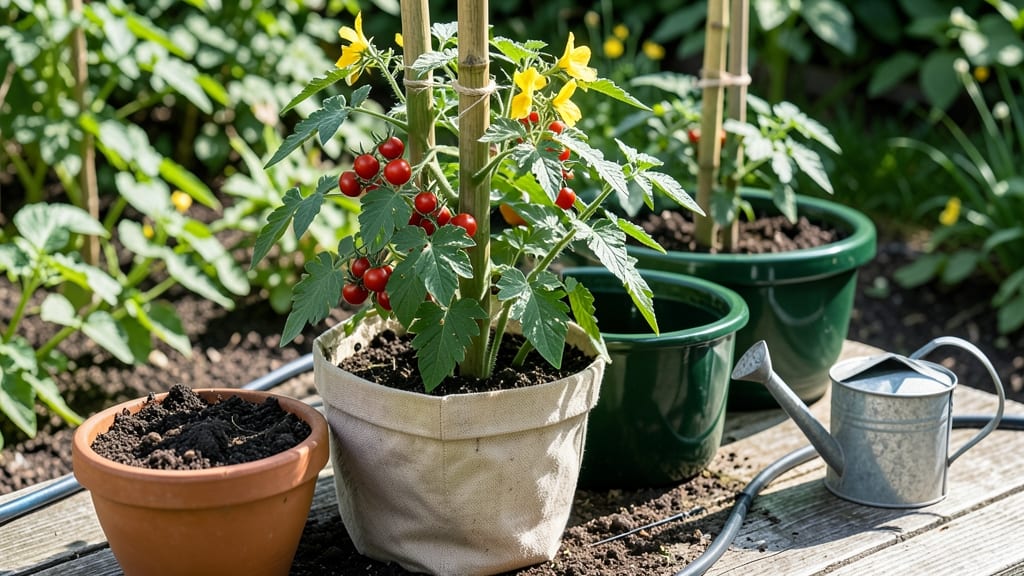
Your cherry tomato harvest depends on the right container size—too small and you’ll watch vines sprawl while fruit stays tiny. 🌱 I’ve grown cherry tomatoes in everything from 5-gallon buckets to window boxes, and the difference between a 5-gallon pot and a 1-gallon one isn’t just inches—it’s pounds of fruit.
The secret? Matching root space to plant ambition.
Most compact cherry tomato varieties (like 'Tiny Tim' or 'Balcony Red') thrive in 1-2 gallon containers, but indeterminate types need 5+ gallons to support their climbing habit. Fabric grow bags drain better than plastic, and ceramic holds moisture longer—but all need drainage holes.
Crowding plants saves space but cuts yield, so stick to one vine per 1-2 gallons of soil.
By midsummer, your properly sized container will be bursting with 100+ sweet tomatoes per plant, their bright red clusters dangling like edible jewels. The key is balancing depth (12+ inches for roots) with stability (wide base for wind). Even on a balcony, you’ll get harvests that put store-bought to shame.
For extra yield, try vertical training with cages or trellises—it turns a single container into a 3-foot-tall harvest tower. The same rules apply whether you’re growing on a patio, rooftop, or sunny windowsill. Let’s get those containers planted!
📚 In This Guide
- What you need
- Instructions
- Tips and common mistakes
- Wrapping up and next steps
What you need
- ● Container(s): At least 1 gallon (3.8 liters) per plant (minimum 5-gallon bucket for dwarf varieties). Opt for containers with drainage holes and a diameter of 12–18 inches for better root growth.
- ● High-quality potting mix: A lightweight, well-draining mix (avoid garden soil). Look for blends labeled for vegetables or tomatoes.
- ● Cherry tomato seedlings or seeds: Choose compact varieties like 'Tiny Tim,' 'Balcony Red,' or 'Micro Tom' (ideal for small containers).
- ● Slow-release fertilizer: A balanced, organic option (e.g., 10-10-10 or tomato-specific pellets) to nourish plants for 2–3 months.
- ● Support structure: Small cages, stakes, or trellises (for indeterminate varieties) to keep plants upright.
- ● Gloves & trowel: For planting and soil prep.
- ● Watering can or hose with gentle nozzle: Avoid overwatering—containers dry out faster!
- ● Mulch (straw or shredded leaves): Helps retain moisture and regulate soil temp.
- ○ Liquid fertilizer (optional): For mid-season boosts (e.g., fish emulsion or seaweed extract).
- ○ Self-watering system (optional): Great for vacations or busy schedules.
Step-by-step guide to selecting and using the right cherry tomato container size
Here's how to choose containers that maximize growth for your compact cherry tomato varieties.
🪴 Step 1: Determine Minimum Container Size for Your Variety
Cherry tomatoes need at least 5 gallons of soil per plant to thrive, but compact varieties like 'Tiny Tim' or 'Balcony Red' can grow well in 1-gallon containers if pruned aggressively. Standard bush varieties like 'Sweet 100' require 3-5 gallons—anything smaller restricts root growth and limits fruit production.
I always check the plant tag for recommended container size, but remember: the deeper the pot, the better. Roots need space to explore downward for stability and water access. A 12-inch deep container is ideal for most compact varieties, while indeterminate types need 18+ inches to support continuous growth.
🌱 Step 2: Choose Container Materials Based on Your Climate
Unglazed terra cotta pots wick moisture from the soil, which helps in hot climates where roots can dry out quickly. I use these for my balcony tomatoes in summer because they prevent overwatering. Plastic containers, on the other hand, retain moisture longer and work better in cooler climates or during winter growing seasons.
Whatever you choose, ensure containers have 4+ drainage holes—poor drainage leads to root rot, and cherry tomatoes are particularly sensitive. Add a 2-inch layer of gravel or broken pottery at the bottom to improve drainage while preventing soil from clogging holes.
✂️ Step 3: Prepare Containers with Proper Soil Mix
Fill containers with a lightweight 50/50 mix of potting soil and perlite or vermiculite to ensure excellent drainage and aeration. I avoid garden soil because it compacts in containers, suffocating roots. Add a slow-release fertilizer or compost at planting time—cherry tomatoes are heavy feeders and need consistent nutrients.
Leave 1 inch of space between the soil surface and container rim. This prevents soil from spilling when you water and allows for easy pruning. Press the soil gently around the roots when transplanting to eliminate air pockets, but don't compact it—roots need loose soil to expand.
☀️ Step 4: Position Containers for Optimal Sunlight
Cherry tomatoes need 6-8 hours of direct sunlight daily, but containers can overheat in full sun. I place mine on a reflective surface like a white tray or light-colored deck to maximize light while preventing heat stress. Rotate containers quarter-turn weekly to ensure even growth and prevent leaning.
Watch for signs of insufficient light—leggy stems with small leaves mean your plants need more sun. If indoors, supplement with a grow light positioned 6-12 inches above the plants for 14-16 hours daily. Too little light results in poor fruit set and smaller cherries.
💧 Step 5: Maintain Consistent Watering and Fertilizing
Containers dry out faster than garden beds, so water when the top inch of soil feels dry. I water deeply until it runs out the drainage holes, then let excess water drain completely—soggy soil causes blossom-end rot. Mulch the soil surface with 1 inch of straw or shredded leaves to retain moisture and regulate temperature.
Feed plants every 2-3 weeks with a balanced liquid fertilizer (10-10-10) or tomato-specific formula. Stop fertilizing when fruits begin to ripen to avoid reducing sweetness. Prune suckers (the shoots that grow between the stem and branches) regularly to encourage bushier growth and better air circulation.
Tips & tricks for perfect cherry tomato container setups
Between us, I've learned these tricks after watching too many compact tomato plants struggle in less-than-ideal containers. Here's what actually works:
Root Space Reality: That 1-gallon container for 'Tiny Tim'? It's only a good start if you're willing to prune aggressively—every single sucker. I've seen plants in 1-gallon pots produce 20 pounds of tomatoes, but only because I removed every side shoot within 2 inches of the main stem. The tradeoff is worth it for small spaces, but don't expect garden-scale yields.
Material Matters More Than You Think: Terra cotta wicks moisture so aggressively in heat that I've had to water my balcony plants twice daily during summer peaks. The fix? Bury the pots in a saucer of water for 10 minutes before planting—this creates a moisture reservoir at the roots. For plastic containers in cooler climates, I add a 1-inch layer of coconut coir at the bottom to help retain that moisture without compacting.
Soil Depth Secret: The 12-inch depth recommendation isn't just about roots—it's about stability. I've seen plants in shallow 6-inch pots topple over when they hit 3 feet tall. For indeterminate varieties, I actually use 5-gallon buckets with 18-inch depth and cut the top off at 12 inches to create a wider planting surface while maintaining the proper depth. The wider base prevents tipping while still giving roots room to grow downward.
Light Hack for Small Spaces: Those 6-8 hours of sunlight? In urban settings, I've had to get creative. I mount grow lights on adjustable arms above my containers and set timers for the full 14-16 hours when natural light drops below 6 hours. The key is keeping the lights 6-12 inches away—the closer they are, the more heat stress you'll cause, even with LED bulbs.
Pro Tips for Cherry Tomato Container Size
- Between us, I've learned these tricks after watching too many compact tomato plants struggle in less-than-ideal containers.
- Root Space Reality: That 1-gallon container for 'Tiny Tim'?
- Material Matters More Than You Think: Terra cotta wicks moisture so aggressively in heat that I've had to water my balcony plants twice daily during summer peaks.
Frequently asked questions
Got questions about growing cherry tomatoes in containers? You’re not alone! Here are some of the most common concerns—and their answers—to help you grow a thriving, space-friendly harvest.
What’s the ideal container size for cherry tomatoes?
For cherry tomatoes, aim for a minimum of 5-gallon containers (12–18 inches deep). Larger varieties like ‘Sweet Million’ thrive in 7–10 gallons, while compact types like ‘Tiny Tim’ can do well in 3–5 gallons. Deeper roots = happier plants!
How long does it take for cherry tomatoes to grow in containers?
From seed to harvest, cherry tomatoes typically take 60–70 days in containers, assuming warm weather and consistent care. Start seeds indoors 6–8 weeks before the last frost or buy transplants for a faster harvest. Patience pays off with sweet, juicy rewards!
Can I grow cherry tomatoes in hanging baskets?
Compact varieties like ‘Tumbling Tom’ or ‘Micro Tom’ are perfect for hanging baskets (at least 12 inches deep). Use a lightweight potting mix, and ensure the basket has drainage holes. Just be prepared for a vertical harvest—ladders optional!
Why aren’t my cherry tomatoes ripening in their container?
Underripe cherry tomatoes often signal insufficient sunlight, water, or nutrients. Move your container to a sunny spot (6+ hours/day), water deeply when the top inch of soil dries, and fertilize weekly with a balanced tomato feed. Yellow leaves? Time to check for overwatering or root-bound roots!
What can I do if my container is too small for cherry tomatoes?
If your container’s too cramped, upgrade to a larger pot ASAP or try succession planting—replace the current plant with a new transplant. For instant fixes, prune aggressively to redirect energy to fruit, or choose dwarf varieties like ‘Balcony Red’ for smaller spaces.
Wrapping up and next steps
Choosing the right cherry tomato container size is your first step to a thriving small-space garden—whether you’re a balcony gardener or just love fresh, sweet bites! 🌱 With compact varieties like Tiny Tim or Micro Tom, you’ll enjoy big harvests in minimal space, proving that even the tiniest pots can yield big rewards.
Ready to grow? Grab your containers, pick your favorite variety, and let your green thumb shine!
👉 Next step: Sketch a quick layout of your space, pick your containers, and start planting—your first cherry tomato is just weeks away! 🍅✨