
Neem Oil
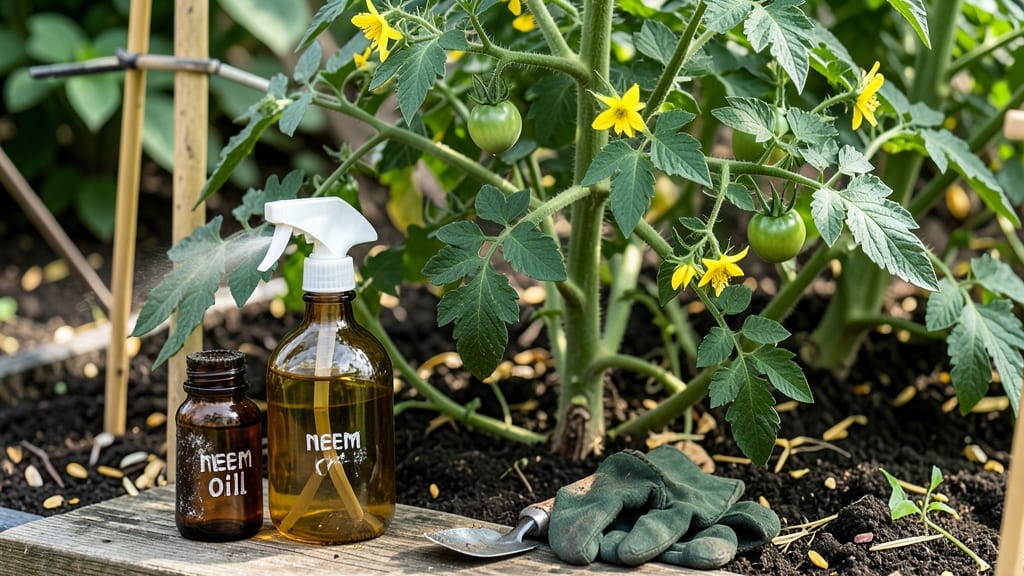
You can safely put neem oil on tomato plants, but only during early morning or late evening to avoid harming bees and beneficial insects. Use a diluted solution (1-2 teaspoons per quart of water) and reapply every 7-14 days for pest control, avoiding flowering or fruiting stages to protect pollinators.
Neem oil is a natural pesticide that disrupts the life cycles of common tomato pests like aphids, whiteflies, and spider mites through its active compound, azadirachtin. 🌿 When applied correctly, it creates a protective barrier without harming your plants if used at the right concentration and timing.
The key is avoiding application during peak pollinator activity—bees and other beneficial insects are most active midday, which is why early morning or late evening applications work best.
For best results, mix 1-2 teaspoons of neem oil per quart of water with a few drops of dish soap to help the solution adhere to leaves. Always test a small area first to check for sensitivity, and remember to cover the undersides of leaves where pests often hide.
After spraying, wait 24 hours before watering to let the oil work its magic.
💡 In This Article
- How Neem Oil Works on Tomato Plant Pests
- Best Practices for Neem Oil Application on Tomatoes
How neem oil works on tomato plant pests
Neem oil's power against tomato pests comes from its active compound, azadirachtin, which acts like a natural insect growth regulator. This compound disrupts the hormonal balance of insects, preventing them from molting properly and ultimately leading to their death.
For example, aphids—common tomato pests—will stop feeding within hours of exposure, while whiteflies and spider mites experience disrupted reproduction cycles. The oil also coats plant surfaces, creating a physical barrier that deters pests from settling down.
The effectiveness varies by pest type: neem oil is most potent against soft-bodied insects like aphids and whiteflies, where it can reduce populations by 70-90% within 3-5 days of application.
However, it's less effective on hard-bodied pests like beetles because their exoskeletons provide more protection. 🌿 The oil's natural scent (a blend of fatty acids and terpenes) also repels many insects, making tomato plants less appealing as a food source.
This dual-action approach—hormonal disruption plus repellency—makes neem oil one of the most versatile natural pesticides for gardeners.
Dilution is critical because neem oil's potency can harm tomato plants if applied undiluted. The recommended 1-2 teaspoons per quart of water ratio creates a solution that's strong enough to kill pests but gentle enough to avoid phytotoxicity (plant damage).
Undiluted neem oil can cause leaf burn, particularly in hot, sunny conditions, where the oil's concentration may increase due to evaporation. This is why timing matters—applying it during cooler parts of the day reduces stress on the plants while maximizing pest control effectiveness.
Timing also protects beneficial insects like ladybugs and lacewings, which help control tomato pests naturally. These pollinators are most active between 10 AM and 4 PM, so early morning or late evening applications (before 8 AM or after 6 PM) minimize collateral damage.
The oil's residual effects last 7-14 days, but reapplication is needed because pests can develop resistance over time, especially if neem oil is used repeatedly without rotation with other natural pesticides like insecticidal soap.
What makes neem oil particularly valuable for tomato plants is its systemic properties—when applied to leaves, it can translocate slightly into the plant's vascular system, offering some internal protection. However, this effect is limited compared to synthetic pesticides.
The oil's natural breakdown (within 24-48 hours of application) also means it won't linger in the environment, making it safer for organic gardening practices. For best results, combine neem oil treatments with regular monitoring of your tomato plants to catch pest outbreaks early.