
Planting
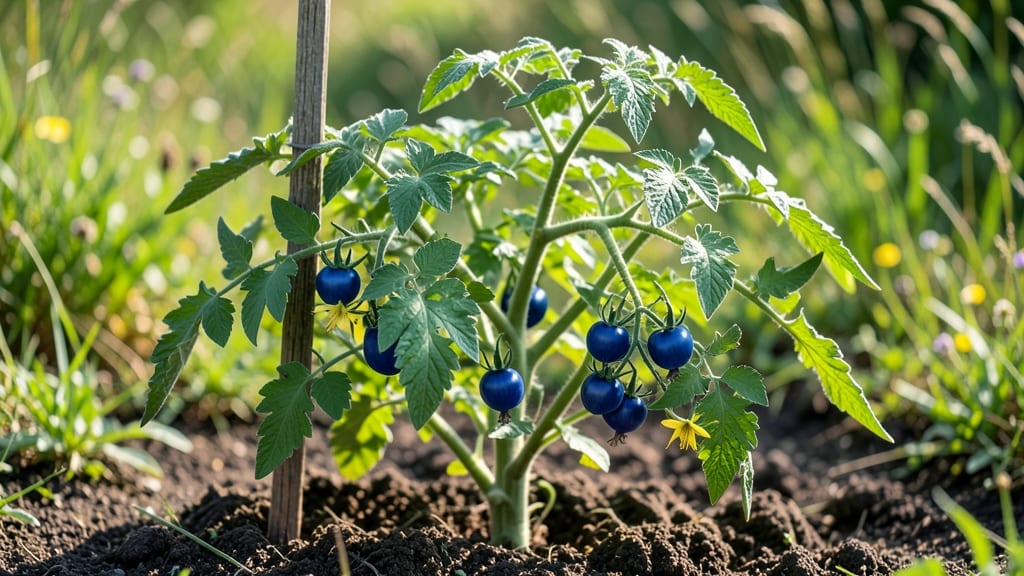
Growing a blue tomato plant like Indigo Rose transforms your garden into a living art piece—those deep purple fruits taste like classic tomatoes but with an unexpected twist. 🌱 I’ve grown heirloom varieties for years, and the secret to vibrant color lies in the right soil, sunlight, and a little patience with ripening.
The key starts with well-draining soil rich in organic matter—think compost and aged manure. These tomatoes crave full sun (6-8 hours daily) and consistent moisture, but avoid soggy roots.
Varieties like Blue Beauty or Indigo Rose need warm soil to germinate, so wait until night temps stay above 55°F before planting. By midsummer, you’ll harvest fruits that deepen to deep purple-black when fully ripe—perfect for salads, sauces, or just admiring their striking appearance.
The flavor is sweet and tangy, with a hint of smokiness that surprises even skeptics. This plant thrives in containers or garden beds, making it ideal for small spaces. Just watch for cracking (a common issue) and harvest early to preserve that stunning color.
📚 In This Guide
- What you need
- Instructions
- Tips and common mistakes
- Wrapping up and next steps
What you need
- ● Heirloom seeds: 1–2 packets of purple/indigo tomato seeds (e.g., 'Indigo Rose,' 'Black Beauty,' or 'Purple Cherokee').
- ● Seed-starting mix: 1–2 cubic feet of lightweight, sterile potting soil (avoid garden soil—it’s too dense!).
- ● Containers: 3–6 biodegradable seedling pots (3–4" diameter) or a seed tray with cell inserts.
- ● Grow lights or sunny windowsill: A full-spectrum LED grow light (12–16 hours/day) or a south-facing window (6+ hours of sunlight).
- ● Watering can or spray bottle: With a fine rose nozzle to avoid disturbing seeds.
- ● Fertilizer: A balanced organic fertilizer (5-5-5 or 3-4-6 NPK ratio) or compost tea for seedlings.
- ○ Seedling heat mat (optional for faster germination in cool climates).
- ○ Humidity dome (optional to retain moisture during germination).
- ○ pH test kit (optional to check soil acidity—ideal range: 6.0–6.8).
- ○ Pruning shears (optional for later plant maintenance).
- ○ Trellis or tomato cage (optional for vertical support as plants grow).
- ● Patience! Germination takes 7–14 days (sometimes longer for heirlooms).
- ● Consistent care: Water gently (avoid soggy soil) and keep temps warm (70–85°F).
- ● Sunlight access: Seedlings need 12+ hours of light daily after sprouting.
Step-by-step guide to growing heirloom blue tomato plants
Here’s how to coax those stunning indigo fruits from seed—my foolproof method for vibrant, flavorful harvests.
🌱 Step 1: Select and Prepare the Right Variety
Start with a true heirloom blue tomato like 'Indigo Rose' or 'Blue Beauty,' which develop their signature purple hues when exposed to sunlight. These varieties need at least 75 days of warm weather to mature, so begin seeds indoors 8-10 weeks before your last frost date. I always use organic, untreated seeds—the color intensity fades if you skip this step.
Sow seeds ¼ inch deep in 2-3 inch deep biodegradable pots filled with sterile seed-starting mix (never garden soil—it’s too dense and may harbor disease). Moisten the mix first so you don’t disturb the seeds when planting. Tap the pots gently to settle the soil, then cover lightly with a sprinkle of mix. This prevents seeds from washing away during watering.
☀️ Step 2: Provide Warmth and Light for Germination
Place the pots in a warm spot (75-85°F)—a seedling heat mat speeds germination dramatically. Without one, germination may take 10-14 days; with heat, you’ll see sprouts in 5-7 days. Keep the soil consistently moist but never soggy—water from the bottom by placing pots in ½ inch of water for 10 minutes daily until germination.
Once seedlings emerge, remove the heat mat and move them under grow lights (or a south-facing window). Blue tomatoes need 14-16 hours of light daily—insufficient light causes leggy, weak stems that can’t support heavy fruit. You’ll know your setup is right when seedlings grow compact and dark green, with stems thicker than a pencil. If they stretch toward the light, raise the lights closer.
🌿 Step 3: Harden Off and Transplant
Two weeks before your last frost, start hardening off seedlings by placing them outside in a sheltered, shaded spot for 1-2 hours the first day. Gradually increase outdoor time by 1 hour daily, ending with a full day in the garden. This process teaches plants to tolerate wind and sun without shock. Watch for wilting or yellowing leaves—if you see these, extend hardening off by a few days.
Transplant on a cloudy afternoon to reduce stress. Bury seedlings deeper than usual—up to ⅔ of the stem—since tomatoes develop roots along buried stems. Space plants 18-24 inches apart in full sun (6+ hours daily). Amend the soil with compost (if not already rich) and water deeply at planting to settle roots. Mulch with straw or grass clippings to retain moisture and prevent soil-borne diseases.
✂️ Step 4: Support and Prune for Maximum Fruit
Blue tomatoes need strong support—install cages or stakes at planting to avoid damaging roots later. Prune suckers (the small shoots in the leaf axils) regularly to direct energy into fruit production. I remove all suckers below the first flower cluster and leave only 1-2 per plant above to balance growth and yield. This ensures the plant puts energy into vibrant, flavorful fruit rather than excessive foliage.
Watch for color changes—blue tomatoes start green but develop deep purple hues when fully ripe. Harvest when the fruit feels firm but slightly soft, usually 2-3 weeks after color sets in. Cut stems with pruners to avoid damaging the plant. The longer you leave them on the vine, the more they’ll fade to pinkish-purple—harvest at peak indigo for the most striking color.
Tips & tricks for growing stunning heirloom blue tomatoes
Between us, these heirloom blue tomatoes are worth every extra step—here’s how to maximize that indigo magic from seed to harvest.
Seed Starting Precision: The ¼ inch depth for sowing seeds is critical—any deeper and they’ll struggle to break through. I use a toothpick to mark the exact depth on my biodegradable pots before planting. For even better results, place seeds directly on top of the sterile seed-starting mix rather than pressing them in, then cover with just a sprinkle of mix. This prevents over-compaction that can suffocate young sprouts.
Germination Environment: That 75-85°F range for warmth is non-negotiable—any cooler and germination slows dramatically. I’ve found that placing pots on top of my fridge (which stays warm) works perfectly when I don’t have a heat mat. The 10-minute daily watering from the bottom is a game-changer—it keeps moisture consistent without disturbing delicate seeds. Watch for condensation on the pot tops; if it’s heavy, you’re overwatering.
Lighting Strategy: The 14-16 hours of light requirement is where most beginners stumble. If your seedlings start stretching toward the light (a condition called etiolation), it’s too late—they’ll never recover their compact structure. I use a simple timer on my grow lights to automate this, but even a south-facing window works if you rotate pots daily. The pencil-thick stem test is your best friend—if stems are thinner than a pencil, increase light exposure immediately.
Transplanting Technique: Burying ⅔ of the stem might seem extreme, but tomatoes actually develop roots along their buried stems. I make a small trench with my finger before gently pressing the seedling in—this prevents soil from smothering the buried portion. For the 18-24 inch spacing, think of it as giving each plant room to spread its leaves and support heavy fruit without crowding neighbors.
Pro Tips for Blue Tomato Plant
- Between us, these heirloom blue tomatoes are worth every extra step—here’s how to maximize that indigo magic from seed to harvest.
- Seed Starting Precision: The ¼ inch depth for sowing seeds is critical—any deeper and they’ll struggle to break through.
- Germination Environment: That 75-85°F range for warmth is non-negotiable—any cooler and germination slows dramatically.
Frequently asked questions
Got questions about growing your own blue tomato plant (or its purple-fruited cousins)? You’re not alone! Here are answers to the most common queries to help you cultivate vibrant, heirloom tomatoes like a pro.
Can I grow a blue tomato plant indoors?
While Indigo Rose or Purple Cherokee tomatoes thrive outdoors, they’re not ideal for indoor pots due to their sprawling vines and heavy fruit. If you’re set on indoor growing, opt for compact cherry tomato varieties (like Tiny Tim) in a sunny windowsill or grow light. A 5-gallon container with trellis support works best!
How long does it take for a blue tomato plant to produce fruit?
Expect 70–90 days from transplant to harvest for heirloom purple tomatoes, assuming warm temps (70°F+) and 6+ hours of sunlight daily. Early blooms may drop if nights are chilly (<50°F)—use row covers or a cloche to protect them. Patience pays off: the first fruits will be deep violet, turning blue-green when ripe!
What’s the difference between purple and blue tomatoes?
No such thing as a "true blue" tomato—these are anthocyanin-rich varieties that start purple and ripen to a blue-gray hue. The color fades when cooked, but the flavor stays rich and smoky. For a truly blue look, harvest when fruits are fully mature (not overripe). Try Indigo Apple for a sweeter, apple-shaped variety!
Why are my blue tomato leaves turning yellow?
Yellowing leaves (chlorosis) usually signal nutrient deficiencies (like magnesium or iron) or overwatering. Test soil pH (aim for 6.0–6.8) and amend with Epsom salt (1 tbsp/gallon of water) if needed. Check for blossom end rot (dark spots) too—boost calcium with crushed eggshells or lime. Prune lower leaves to improve airflow and prevent disease.
Are there non-GMO alternatives to Indigo Rose tomatoes?
Yes! If you prefer open-pollinated, heirloom seeds, try:
- Purple Cherokee – Disease-resistant, beefsteak-style fruit.
- Black Krim – Deep purple-black, smoky flavor.
- Black Beauty – Large, meaty slices with a blue-black tint.
Wrapping up and next steps
Growing a blue tomato plant—like the stunning Indigo Rose or Blue Beauty—is a rewarding journey that brings a splash of color and unique flavor to your garden. These heirloom varieties thrive with patience, the right soil, and a little creativity in cooking their deep purple-blue fruits.
Whether you’re drawn to their beauty, nutritional benefits, or the joy of cultivating something extraordinary, your efforts will pay off in delicious, visually striking harvests.
Ready to take the next step? Start small—try a single plant in a pot or a dedicated garden bed—and experiment with recipes to unlock their full potential.
Share your progress with fellow gardeners, and who knows? You might just inspire others to embrace the magic of blue tomato plants too! 🌱✨