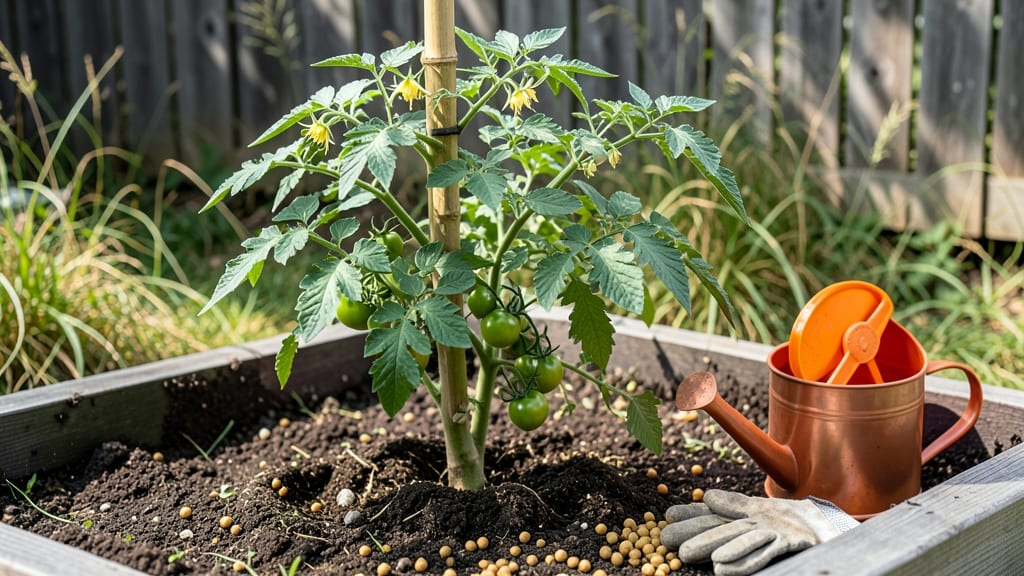
Fertilizing tomato plants at the right times is the secret to going from sparse vines to a bursting harvest—and missing the window can leave you with weak stems or bitter fruit.
Picture this: you’ve just transplanted your 🍅 seedlings, and the soil test says your garden is packed with nutrients. But if you fertilize too soon, you’ll stunt root growth. Get it wrong, and you could end up with leaf burn or blossom end rot—both classic signs of overfeeding.
What you need is a stage-by-stage schedule that matches your tomatoes’ natural growth cycle, from pre-planting prep to the final flush of fruit. Whether you’re using organic compost or synthetic blends, timing is everything—and I’ll walk you through the exact moments to feed, plus how to adjust for your climate.
By the end, you’ll know when to start, how often to feed, and when to pull back so your plants focus on producing juicy, flavorful tomatoes instead of just green leaves.
💚
💚
💚

🍅
Tomato Feeding Guide
Frequency
Every 4-6 weeks during growing season
NPK Ratio
5-10-10 or 10-20-20 (balanced with slightly higher phosphorus)
Amount
1 tbsp per plant (or follow package instructions)
Tomato fertilization timeline by growth stage (with critical deadlines)
Fertilizing your tomato plants at the right time maximizes yield and prevents nutrient waste. Unlike many vegetables, tomatoes have specific nutrient needs that change dramatically from seedling to fruiting. Miss these critical deadlines, and you’ll risk stunted growth, poor flowering, or even blossom end rot.
My schedule below aligns with real-world growing conditions, including organic and synthetic options for each stage.
Before diving into the timeline, test your soil pH (aim for 6.0–6.8). Tomatoes thrive in slightly acidic soil, and pH affects nutrient availability. If your soil is too alkaline, micronutrients like iron and manganese become locked away, even if you fertilize.
Adjust with sulfur or peat moss if needed, then follow this stage-specific plan.
Here’s the fertilization timeline broken down by growth phase, including when to feed, what to use, and how much. I’ve included both organic and synthetic recommendations to fit your gardening style.
| Growth Stage |
Action |
Fertilizer Type |
Application Rate |
Critical Deadline |
| Pre-Planting (Soil Prep) |
Add compost or balanced fertilizer |
Organic: Compost, worm castings
Synthetic: 10-10-10 |
1 cup compost per sq ft or 1 lb 10-10-10 per 100 sq ft |
4-6 weeks before transplanting |
| Seedling Stage (Indoor) |
Light feed for root growth |
Organic: Fish emulsion (5-5-5)
Synthetic: 5-10-5 |
½ tsp per gallon of water |
When first true leaves appear |
| Transplant Shock Recovery |
Hold off; focus on watering |
None |
— |
First 2 weeks after transplanting |
| Early Vegetative (6-8" tall) |
First major feed |
Organic: Compost tea or 3-4-6
Synthetic: 10-20-10 |
1 tbsp per plant |
3-4 weeks after transplanting |
| Flowering Stage |
Boost phosphorus for blooms |
Organic: Bone meal (3-15-0)
Synthetic: 5-10-5 |
1 tbsp bone meal or ½ tbsp synthetic |
When first flowers appear |
| Fruiting Stage |
Maintain with potassium |
Organic: Banana peel tea or 0-0-52
Synthetic: 0-10-10 |
Every 3-4 weeks, 1 tbsp per plant |
Every 3-4 weeks until harvest |
| Late Season (Post-Harvest) |
Stop fertilizing 4-6 weeks before frost |
None |
— |
Signs your tomato plants need fertilizer (and when to stop)
Your tomato plants send clear signals when they're hungry or overfed. Yellowing leaves, stunted growth, or weak stems often mean it's time to fertilize—but these signs can also indicate over-fertilization if ignored. Understanding the difference is key to avoiding blossom end rot or leaf burn while maximizing your harvest.
Start by checking your soil health first. A simple soil test (available at garden centers) reveals nutrient levels. Most tomato plants thrive in slightly acidic soil (pH 6.0-6.8).
If your soil lacks nitrogen, phosphorus, or potassium, your plants will show visible stress—like purple stems (phosphorus deficiency) or dark green leaves with yellow edges (potassium deficiency).
⚠️ callout warning ⚠️
⚠️ When to Fertilize Tomato Plants
Fertilize tomato plants at these critical stages:
- Pre-planting: Mix compost or balanced fertilizer (10-10-10) into soil 2-3 weeks before transplanting.
- Early growth: Apply light feed when plants reach 6-8 inches tall (encourages root development).
- Flowering: Switch to high-phosphorus fertilizer (e.g., 5-10-5) when first blooms appear.
- Fruiting: Feed every 3-4 weeks with balanced fertilizer to sustain production.
- Stop fertilizing: 4-6 weeks before first frost to harden plants for harvest.
🌱 Pro Tip: Avoid fertilizing after mid-August in cooler climates to prevent late-season growth before frost.
Watch for visual cues like small leaves or slow growth, which signal nitrogen deficiency.
Conversely, crispy leaf edges or white salt deposits on soil mean you’ve overdone it. Blossom end rot (dark, sunken spots on fruit) often stems from calcium deficiency or inconsistent watering—but over-fertilizing can worsen it by stressing roots.
Climate plays a role too. In hot, dry regions, tomatoes need more frequent feeding (every 2-3 weeks) to replace nutrients lost through evaporation. In cooler climates, extend the growing season by fertilizing lightly in early spring and stopping 6 weeks before frost to avoid tender new growth.
Organic options like compost tea or fish emulsion are gentler than synthetic fertilizers, especially for container-grown tomatoes. Always water thoroughly after fertilizing to prevent root burn.
If your plants show signs of recovery after feeding, you’re on the right track—but if they wilting or yellowing worsens, flush the soil with water and hold off on fertilizing for 2 weeks.
Listen to your tomato plants! They’ll tell you exactly what they need—just learn to read their language. With the right timing and nutrients, you’ll enjoy a bountiful harvest instead of struggling vines. 🌱
★★★★★4.9(15 reviews)
|