
Watering
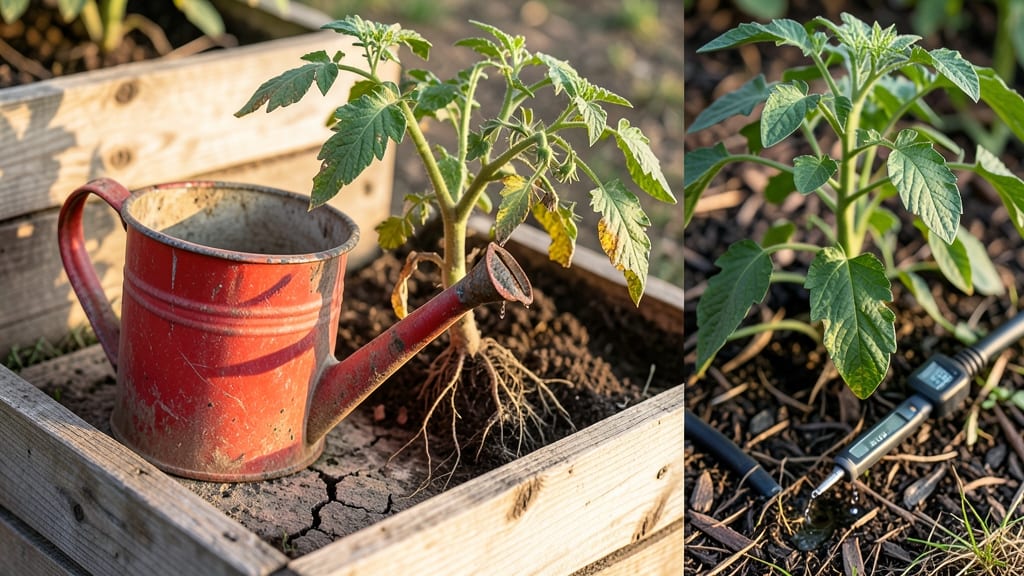
Your tomato plant’s crispy leaves and drooping vines scream one thing: underwatered tomato plant—and the good news is, you can turn this around fast. 🌱 I’ve nursed back more than my share of thirsty vines, and the fix isn’t complicated once you know what to watch for and how to hydrate right.
The first sign? Leaves that feel papery or curl like a question mark when you touch them. Soil pulling away from the pot edges or a dry top inch confirms it.
Tomatoes need 1-2 inches of water per week, but clay pots and hot sun can dry them out faster than you think. A quick soil check with your finger tells the whole story—if it’s bone-dry past the first knuckle, you’ve got catching up to do.
Here’s the game-changer: deep watering—not just a sprinkle. Soak the soil until water runs out the drainage holes (yes, even if it’s already wilting). Do this twice a week, then switch to a mulch blanket to lock in moisture.
Within 48 hours, you’ll see leaves perk up and new growth push out. Prevent future drama by sticking your finger in the soil every morning before watering. If it’s dry past your first knuckle, hydrate. If not, wait.
A moisture meter takes the guesswork out of it—worth the $10 for peace of mind. Your tomatoes will thank you with juicy, sun-ripened fruit by season’s end.
Root Causes Of Thirsty Tomatoes
Underwatered tomato plants don’t just happen by accident—they’re usually the result of a few key factors that disrupt their natural hydration balance. Understanding these causes helps you fix the issue and prevent it from happening again.
Let’s break down the science behind why your tomato plants might be gasping for water.
Tomatoes thrive on consistent moisture, not sporadic soaks. When watering fluctuates—like deep watering one day followed by neglect the next—roots struggle to adapt. Here’s why this backfires:
- Shallow Root Systems: Tomatoes develop deep taproots to access water, but inconsistent watering encourages shallow, weak roots that dry out fast.
Think of it like a straw sipping from a puddle vs. a deep well. - Osmotic Stress: Plants absorb water through osmosis, but when soil dries unevenly, cells lose turgor pressure (the "plumpness" that keeps leaves upright).
This causes wilting, even if the soil looks damp at the surface. - Fungal Invaders: Damp soil followed by dry spells creates the perfect conditions for root rot (from overwatering) and drought stress (from underwatering). A double whammy for your vines.
Actionable Fix: Water deeply 1–2 times per week (or daily in extreme heat) to encourage roots to grow downward. Use a moisture meter or the "finger test" (stick your finger 2 inches into soil—if it’s dry, water).
Even if you’re watering regularly, clay-heavy or compacted soil acts like a sponge that won’t release water. Here’s the science:
- Hydrophobic Soil: Clay or sandy soils can repel water, trapping air pockets that roots can’t penetrate.
This is called soil hydrophobicity, and it’s common in urban gardens with poor organic matter. - Root Suffocation: Compacted soil restricts oxygen flow to roots, forcing them to "starve" even when water is present.
Think of it like trying to breathe through a wet towel—your roots can’t function properly. - Salt Buildup: In hot climates, water evaporates quickly, leaving behind salts that further block water absorption. This is why some plants wilt despite soggy-looking soil.
Actionable Fix:
- Amend soil with compost or coconut coir to improve drainage.
- Aerate compacted soil with a garden fork or gypsum (for clay soils).
- Mulch heavily (3–4 inches) to retain moisture and prevent evaporation.
Tomatoes don’t just lose water through their leaves—they’re also battling hidden moisture thieves in their environment. These factors accelerate dehydration:
| Stressor | How It Drains Water | Solution |
|---|---|---|
| High Heat | Leaves transpire (release water vapor) 2x faster in temps above 85°F (29°C). | Water early morning or late evening. Use shade cloth if temps soar. |
| Low Humidity | Dry air increases transpiration rates, making plants "sweat" water faster. | Group plants together or use a humidity tray near containers. |
| Strong Winds | Wind strips moisture from leaves like a desert breeze. | Plant near windbreaks (e.g., tall grasses, fences) or use wind barriers. |
| Pests (Aphids, Spider Mites) | These sap-suckers damage leaves, reducing the plant’s ability to regulate water loss. | Spray with neem oil or introduce ladybugs for natural pest control. |
Pro Tip: 💡 Group tomato plants together—they create a microclimate with higher humidity around the leaves, reducing water loss.
Too much synthetic nitrogen (like quick-release fertilizers) can burn roots, making them less efficient at absorbing water. Here’s how:
- Salt Imbalance: Excess salts from fertilizers disrupt the osmotic gradient in root cells, making it harder for water to enter. - Root Burn: High concentrations of nutrients can sterilize soil microbes, which help break down water-soluble compounds.
Without them, roots suffocate. - Weak Root Growth: Plants focus energy on leafy growth (lush foliage) instead of developing a strong root system to support water uptake.
Actionable Fix:
- Switch to slow-release organic fertilizers (like compost tea or worm castings).
- Flush soil every 4–6 weeks with water to leach out excess salts.
- Side-dress with compost instead of dumping granular fertilizer near the stem.
Potted tomatoes dry out 3–5x faster than in-ground plants because containers have limited soil volume. Key issues:
- Edge Drying: Water evaporates from the outer edges of pots first, leaving the center dry. This creates a "donut effect" where roots in the middle starve. - No Reservoir: Small pots lack water-holding capacity, so they dry between waterings.
A 5-gallon pot may need watering daily in summer. - Root Circulation: Roots in containers circle the pot (a condition called root bound), reducing their ability to access moisture efficiently.
Actionable Fix:
- Upgrade to larger pots (at least 5 gallons per plant).
- Use self-watering containers or terracotta pots (they wick moisture better than plastic).
- Water at the base (not the top) to avoid evaporation and encourage deep root growth.
Revive Your Tomato Plants Fast
If your tomato plants are drooping, crispy at the edges, or looking like they’ve been left in the desert, don’t panic—revival is totally possible! The key is acting quickly and addressing the root (literally) of the problem.
Below are practical, step-by-step solutions tailored to common causes of underwatering, plus tips to keep your plants thriving long-term. Let’s get those vines perky again!
If your tomato plants are thirsty, a quick drink won’t cut it—they need a deep, satisfying soak to rehydrate their roots.
🔥 How to Do It:
- Water at the base (not the leaves) to avoid fungal diseases like blight.
- Use 1–2 gallons per plant, depending on pot size.
For container-grown tomatoes, check soil moisture by sticking your finger 2 inches deep—if it’s dry, water until it drains from the bottom. - Water in the morning so leaves have time to dry, reducing mildew risk. - Mulch after watering (with straw or shredded leaves) to lock in moisture and cool roots.
💡 Pro Tip:
If your plant is severely wilted, submerge the entire pot in 2–3 inches of water for 15–30 minutes. This mimics a slow drink and helps roots absorb water faster. 🌱
Overwatering is just as harmful as underwatering—tomatoes hate soggy roots. Here’s how to strike the perfect balance.
🍳 When to Water:
- Check soil moisture daily in extreme heat (90°F+), every 2–3 days in warm weather, and every 4–5 days in cooler temps.
- Stick your finger in the soil: If the top 1–2 inches are dry, it’s time to water.
If it’s still damp, wait. - Avoid light, frequent watering (like a sprinkle every day). This encourages shallow roots and stress.
👨🍳 Best Watering Methods:
- Drip irrigation or soaker hoses (best for consistency).
- Slow watering at the base (let it seep in over 10–15 minutes).
- Avoid overhead sprinklers (they waste water and spread disease).
✨ Prevention Tip:
Install a moisture meter ($10–$15) to take the guesswork out of watering. These gadgets tell you exactly when your soil is thirsty—no more second-guessing! 📊
Compacted or poor-quality soil can strangle roots, making it hard for plants to drink up even when watered. Let’s give those roots room to breathe!
🔪 How to Upgrade Your Soil:
- Add compost or aged manure (1–2 inches mixed into the top 6 inches of soil) to improve water retention and nutrient absorption.
- Loosen compacted soil gently with a fork or trowel—don’t damage roots, just fluff it up.
- For containers, repot into a larger pot with well-draining potting mix (avoid garden soil, which compacts).
🎯 Long-Term Soil Hacks:
- Use raised beds if your garden soil is heavy clay or sandy.
- Mulch heavily (3–4 inches) to keep moisture consistent.
- Avoid walking on garden beds—compacted soil = stressed roots.
When tomato plants are underwatered, they often drop leaves or fruit to conserve energy. Pruning and support can help them recover faster.
🔪 What to Trim:
- Remove lower leaves touching the soil to prevent disease.
- Prune suckers (those little shoots in the leaf axils) if the plant is struggling—fewer leaves mean less water loss.
- Cut back any blossoms or green tomatoes if the plant is severely wilted.
Let it focus on regrowing leaves first.
🌿 Support for Recovery:
- Install a cage or stake to keep the plant upright while it recovers.
- Fertilize lightly (with a balanced 10-10-10 or fish emulsion) once the plant shows new growth—don’t overdo it, or you’ll burn roots.
If your tomato plant is extremely wilted with crispy edges, try this last-resort trick (it’s saved many a sad-looking vine!):
- Trim all but the top 2–3 leaves to reduce water loss.
- Submerge the pot in water for 30 minutes (for containers) or deep-water the base for 20 minutes.
- Move to shade for 2–3 days to reduce stress.
- Monitor closely—if new leaves appear within a week, it’s recovering!
⚠️ Warning: If the stems are hollow or black inside, the plant is beyond saving. Start fresh with a new transplant! 🌱
With these fixes, your tomato plants should perk up within 3–7 days. Keep an eye on them, adjust your watering routine, and soon you’ll be harvesting juicy, sun-ripened tomatoes instead of wilting vines. Happy growing! 🍅💦
Frequently asked questions about reviving thirsty tomato plants
How can I tell if my tomato plant is truly underwatered vs. just hot?
Check the soil first—stick your finger 2 inches deep. If it's bone-dry, that's underwatering. Hot weather causes wilting too, but leaves will feel leathery and crispy (not just limp). Another clue: if lower leaves yellow first, it's usually water stress. For heat stress, leaves often curl upward like little boats.
Can I save a tomato plant that's been underwatered for a week?
Possibly! Start with a 30-minute deep soak (submerge the pot if possible). Trim all but the top 2-3 leaves to reduce water loss, then move to shade for 3 days. If stems feel mushy or black inside, it's too late—but if they're just limp, you'll see recovery in 5-7 days.
Why does my tomato plant wilt every afternoon even after watering?
This is classic transpiration stress—your plant is losing water faster than roots can absorb it. Try watering early morning only (never after 10am), use 3-4 inches of mulch, and group plants together to create humidity. For containers, upgrade to 5+ gallon pots with terracotta (it wicks moisture better).
Is it better to water tomato plants daily with small amounts?
No! Daily light watering creates shallow roots that dry out fast. Instead, give 1-2 gallons per plant 2-3 times weekly, soaking until water runs from drainage holes. This encourages deep roots that can handle drought. For extreme heat, water morning and evening but always deeply.
Can I use ice cubes to revive an underwatered tomato plant?
Not recommended! Ice can shock roots and create cold pockets in soil. Instead, use lukewarm water (60-70°F) for deep watering. For severe cases, submerge the pot in room-temperature water for 15 minutes—this mimics natural hydration without temperature stress. The key is slow, consistent moisture, not temperature extremes.