
Light Requirements
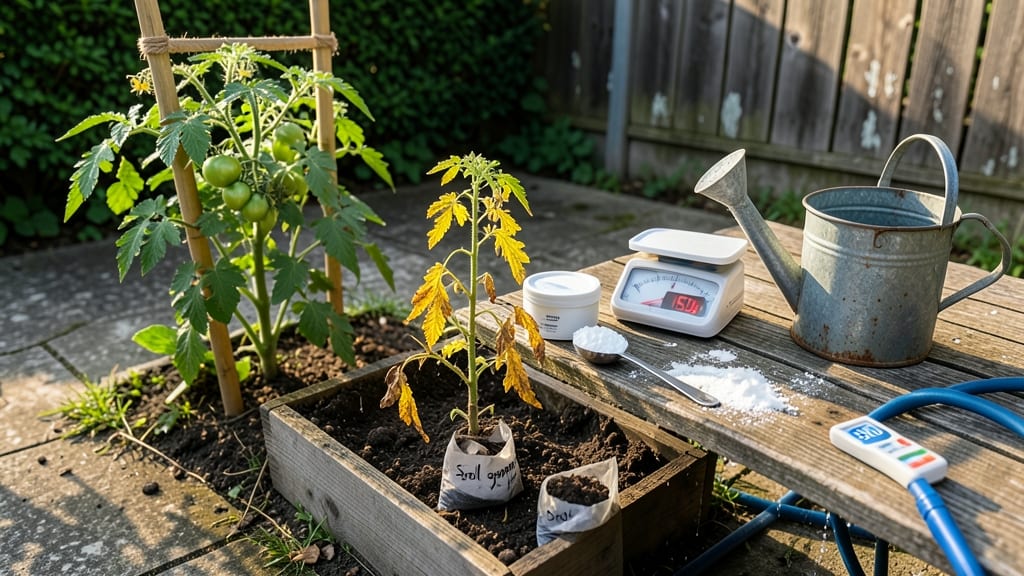
Your tomato plants are showing signs of distress after too much baking soda—yellowing leaves, crispy edges, and stunted growth. 🌱 The good news? This is fixable with a simple soil flush and pH reset.
I’ve saved my own plants from this exact problem by understanding how baking soda throws off the soil balance, and I’ll walk you through the steps to bring them back to health.
The issue isn’t just the baking soda itself—it’s how it disrupts the soil’s natural pH, often making it too alkaline for tomatoes.
Symptoms like leaf burn or slow growth are your plants’ way of saying, “We need a reset!” The fix starts with flushing the soil to remove excess sodium, followed by testing and adjusting the pH to the ideal range of 6.0–6.8 for tomatoes.
Within 2–3 weeks, you’ll see new, vibrant growth as the soil recovers. The key is acting fast—don’t wait for the problem to worsen. We’ll also cover how to prevent this in the future, so your plants stay thriving without overcorrecting pests again.
This method works for both container and in-ground tomatoes, and it’s 100% chemical-free. Let’s get your plants back on track—your next harvest depends on it!
Chemical Imbalance Causes Plant Stress
When baking soda (sodium bicarbonate) is overused on tomato plants, it disrupts the delicate balance of nutrients and pH in the soil, leading to stress and even death.
Unlike organic fertilizers or natural amendments, baking soda introduces high levels of sodium and alters soil chemistry in ways that can be harmful if not carefully managed. Here’s why this happens—and how to recognize the signs before it’s too late.
Baking soda is primarily sodium bicarbonate (NaHCO₃), and while sodium is an essential nutrient in tiny amounts, excessive levels become toxic. When you apply too much baking soda, the sodium ions (Na⁺) flood the soil, outcompeting other critical nutrients like potassium (K⁺), calcium (Ca²⁺), and magnesium (Mg²⁺).
This nutrient lockout prevents your tomato plants from absorbing what they need to thrive.
Here’s the science breakdown:
- Ion Competition: Sodium ions replace essential cations (positively charged minerals) on soil particles, making them unavailable to plant roots. Think of it like a crowd pushing out the VIPs—your tomatoes can’t access their favorite nutrients!
- Osmotic Stress: High sodium levels increase the soil’s osmotic pressure, making it harder for roots to pull in water. This causes wilting, even when the soil appears moist—a classic sign of over-salination.
- Toxicity Threshold: Tomatoes tolerate sodium poorly; concentrations above 50–100 ppm (parts per million) in soil solution can trigger stress symptoms like leaf burn or stunted growth.
💡 Pro Tip: Test your soil’s sodium levels with a home soil test kit (look for "sodium adsorption ratio" or SAR readings). If numbers climb above 10 meq/L, flush the soil immediately.
Baking soda is alkaline, and while it’s often used to raise soil pH (e.g., for acidic soils), overapplication can send pH levels soaring—sometimes into the 8.0–9.0 range, where tomatoes struggle. Here’s how pH affects your plants:
| pH Range | Tomato Plant Response | Nutrient Availability |
|---|---|---|
| 4.0–5.5 (Too Acidic) | Root damage, aluminum toxicity | Manganese, iron, zinc locked out |
| 6.0–7.0 (Ideal) | Healthy growth, vibrant foliage | Balanced uptake of N, P, K, Ca, Mg |
| 7.5–9.0+ (Too Alkaline) | Yellowing leaves, stunted growth, blossom-end rot | Phosphorus, iron, manganese become unavailable |
When pH skyrockets, micronutrients like iron (Fe) and manganese (Mn) precipitate into insoluble forms, leaving your tomatoes starving even if the soil looks fertile. This explains why leaves turn yellow between veins (a classic sign of iron deficiency) despite "rich" soil.
✨ Quick Fix: If your soil pH jumps above 7.5, amend with sulfur or peat moss to gradually lower it. Avoid quick fixes like vinegar, which can further disrupt sodium balance.
Baking soda isn’t just a chemical—it’s also a physical disruptor. When applied in excess, it can:
- Disperses Clay Particles: Sodium breaks apart soil aggregates (clumps of sand, silt, and clay), turning fertile loam into a dense, compacted mess. Roots suffocate, and water drains too quickly or pools poorly.
- Reduces Microbial Activity: Beneficial bacteria and fungi, which help decompose organic matter and fix nutrients, hate high-sodium environments. A dead soil microbiome = fewer nutrients for your tomatoes.
- Causes Salt Crusting: Sodium attracts water to the surface, leaving a white, salty crust on soil. This blocks oxygen and water from reaching roots, accelerating stress.
🔥 Warning Sign: If your soil feels gummy when wet or powdery when dry, sodium has likely ruined its structure. Flushing with 6 inches of water per week for 2–3 weeks can help, but you may need to repot or amend with compost or perlite for long-term recovery.
Understanding these root causes (pun intended) is the first step to saving your tomato plants. Next, we’ll cover how to diagnose the damage and take corrective action before it’s irreversible.
How to Fix and Prevent Overdosing
Too much baking soda can throw your tomato plants into chaos, but don’t panic—there are clear, actionable steps to revive them. The key is to act fast, flush the soil, and reset the pH balance gently.
Below, we’ll break down solutions based on the root cause of your problem, along with prevention tips to keep your plants thriving.
If your soil’s pH has skyrocketed (above 7.0), your tomato plants are struggling to absorb nutrients. Here’s how to bring it back to the ideal 6.0–6.8 range:
- 💦 Water Deeply to Leach Out Excess Soda - Pour 2–3 gallons of plain water (no additives) into the soil around the base of each plant.
Repeat every 2–3 days for a week to help flush out residual baking soda. - Pro Tip: Use a hose with a gentle spray nozzle to avoid compacting the soil.
- 🌱 Amend the Soil with Acidic Materials Once the soil drains, mix in organic matter to lower pH naturally:
- Peat moss or coco coir (1 part to 2 parts soil)
- Sphagnum peat (a handful per plant)
- Composted pine needles or oak leaves (for a slow-release acidity boost)
- Avoid lime or wood ash—these raise pH further!
- 📊 Test the Soil Again Use a digital pH meter or DIY test kit (available at garden centers) to confirm the pH is back in range before replanting or fertilizing.
If your tomato leaves are yellowing, crisping, or dropping, the baking soda may have caused salt buildup or chemical burn. Here’s how to nurse them back to health:
- 🚿 Rinse the Foliage (Gently!)
- Fill a spray bottle with distilled or rainwater (tap water can add minerals).
- Lightly mist the affected leaves to remove residual baking soda crystals.
- Avoid high-pressure sprays—they can damage tender leaves!
- 🌿 Apply a Foliar Feed for Recovery Mix 1 tsp of liquid seaweed extract or fish emulsion in a gallon of water, then spray on leaves every 3–4 days for 2 weeks. This provides quick nutrients without overloading the roots.
- ✂️ Prune Damaged Growth
- Snip off crispy, brown leaves (they won’t recover) to redirect energy to new growth.
- Pro Tip: Use sterilized scissors to prevent disease spread.
If your tomatoes are wilting, stunted, or refusing to fruit, the roots may be shocked. Try these root-reviving techniques:
- 🔄 Transplant into Fresh Soil (If Severe)
- If the soil is heavily compacted or toxic, dig up the plant and rinse the roots in water before replanting in new, pH-balanced soil.
- Best for: Small pots or container-grown tomatoes.
- 💧 Use a Root Stimulator
- Mix 1 tsp of hydrogen peroxide (3%) in a gallon of water and water the soil. This oxygenates roots and encourages regrowth.
- Alternative: Use mycorrhizal fungi powder (sprinkle on roots before replanting).
- 🌞 Give Them Time to Recover
- Move plants to a shadier spot (tomatoes hate stress + full sun).
- Avoid fertilizing for 2 weeks—let roots heal first.
Once your plants are back on track, prevent future overdoses with these smart habits:
| Risk | Prevention Fix |
|---|---|
| Using too much soda | Stick to 1 tsp per gallon of water (max) for fungal issues. |
| Frequent applications | Space treatments 2–3 weeks apart—don’t overdo it! |
| High pH soil | Test soil pH before treating—aim for 6.0–6.8. |
| No flushing routine | After baking soda sprays, rinse soil monthly with plain water. |
| Mixing with other sprays | Never combine baking soda with neem oil or soap—it can cause chemical burns. |
💡 Bonus Tip: If you’re using baking soda for blossom end rot prevention, switch to calcium-rich fertilizers (like crushed eggshells) instead—it’s safer and just as effective!
By following these steps, your tomato plants should bounce back within 2–4 weeks. Stay patient, monitor their progress, and soon you’ll be harvesting juicy, healthy tomatoes—not sad, soda-scorched leaves! 🍅🌟
Frequently asked questions
How quickly can baking soda damage tomato plants?
Symptoms like leaf burn or wilting can appear within 24–48 hours of overapplication, but root damage and nutrient lockout develop over 3–7 days. The faster you flush the soil, the better the recovery chances—don’t wait for visible signs to act.
Can I use vinegar to fix alkaline soil after baking soda?
No, vinegar is too harsh—it can further disrupt sodium balance and burn roots. Instead, use peat moss or composted pine needles to gradually lower pH. Test soil first to avoid overcorrecting!
What’s the safest baking soda ratio for tomato plants?
For fungal issues, use 1 teaspoon per gallon of water (max). Never exceed this—even once. Always flush soil afterward with plain water to prevent buildup.
Will my tomatoes recover if the leaves are already crispy?
Prune the damaged leaves immediately, but new growth depends on root health. Focus on flushing soil and using foliar feeds (like seaweed extract) to help recovery. Most plants bounce back in 2–4 weeks if roots are healthy.
Can I reuse the same soil after flushing baking soda?
Only if you’ve thoroughly flushed it (6+ inches of water weekly for 2 weeks) and amended with organic matter. Test pH before replanting—if it’s still off, repot or refresh the soil.