
Pruning
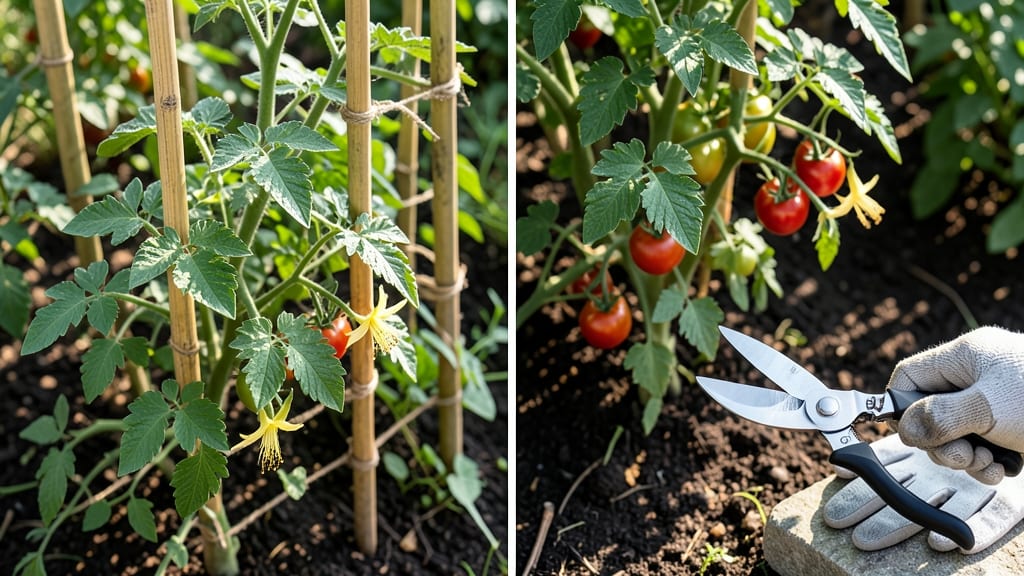
Trimming tomato leaves isn’t just pruning—it’s the secret to bigger, juicier tomatoes and healthier plants. 🌱 I’ve gone from struggling with blight-ridden vines to producing bushels of fruit by mastering this one technique.
The key? Removing the right leaves at the right time to boost airflow, sunlight, and energy flow to where it matters most.
You’ll need sharp pruners (or clean scissors), a sunny morning to work, and about 20 minutes per plant. Start by stripping lower leaves up to 12 inches from the ground—this prevents soil-borne diseases from splashing onto your fruit.
Then hunt for "suckers" (those little shoots in leaf axils) and snip them off before they drain energy from your main stems.
Within 2-3 weeks, you’ll notice thicker stems, more flowers, and fruit that actually ripens instead of rotting on the vine. The plants look bushier, the tomatoes grow heavier, and you’ll spend less time fighting pests.
It’s the difference between a handful of sad-looking tomatoes and a harvest that makes your neighbors jealous.
Timing matters: avoid trimming during heatwaves or when fruit is already setting. And never remove more than one-third of the foliage at once—gradual trimming keeps your plants happy. For indeterminate varieties (the ones that grow forever), this becomes a weekly habit; determinate tomatoes need less frequent attention.
📚 In This Guide
- What you need
- Instructions
- Tips and common mistakes
- Wrapping up and next steps
What you need
- ● Pruning shears or scissors: Sharp, clean, and sterilized (bypass pruners work best for clean cuts). 1 pair is all you need!
- ● Gloves: Thick, cut-resistant (to protect your hands from thorns and dirt). 1 pair recommended.
- ● Disinfectant: Rubbing alcohol (70% or higher) or bleach solution (1 part bleach to 9 parts water) (to sterilize tools and prevent disease spread).
- ● Trash bag or compost bin: For disposing of trimmed leaves (avoid leaving debris near plants).
- ○ Water spray bottle: Optional but helpful (to mist plants post-pruning for stress relief).
- ● Hand lens or magnifying glass: For close inspection (if you want to spot pests or diseases up close).
- ● Pruning saw: For thicker stems (if dealing with large, woody tomato plants).
- ● Garden twine or stakes: For support (if your tomatoes need extra structure post-pruning).
- ● Plant food or fertilizer: Balanced, water-soluble (to give your tomatoes a nutrient boost after trimming).
Step-by-step guide to pruning tomato leaves for stronger plants
Here's how to shape your tomato plants for better airflow, bigger yields, and fewer diseases.
🌿 Step 1: Identify Leaves to Remove
Start by examining the plant from top to bottom. Remove any leaves that touch the soil—these create damp conditions that invite fungal diseases like early blight. I like to work from the bottom up, making it easier to spot hidden leaves later. Look for yellowing or diseased leaves too; these need immediate removal to protect the plant.
Focus on leaves below the first flower cluster. These lower leaves don't contribute much to photosynthesis once fruit sets in, but they compete with developing tomatoes for energy. Use clean, sharp pruners to avoid tearing the stem. If you're unsure which leaves to cut, remember: "Out of sight, out of mind" applies here—any leaf that won't get sunlight can be removed.
✂️ Step 2: Prune for Airflow and Sunlight
Create space between branches by removing leaves that block sunlight from reaching the center of the plant. Aim for 3-4 inches of space between leaves to improve airflow. This prevents humidity buildup, which is where most tomato diseases start. I usually prune in the morning so any cuts have time to dry before evening dew settles.
For indeterminate varieties, focus on removing suckers—those small shoots that grow between the main stem and branches. These compete for nutrients, weakening your main plant. Pinch them off with your fingers or cut with pruners just above the leaf they're growing from. Never leave a stub; it can rot and invite pests.
☀️ Step 3: Maintain Balance for Fruit Production
Leave 3-5 main stems on indeterminate varieties to support fruit weight. For determinate tomatoes, let the plant grow naturally but prune lower leaves to keep the center dry. The goal is to redirect energy from foliage to fruit. You'll know you're doing it right when you see more blossoms and fewer leaves.
After heavy pruning, water deeply to help the plant recover. I like to add a balanced fertilizer (like 10-10-10) to the soil after trimming to give the plant a nutrient boost. Avoid over-fertilizing—too much nitrogen will encourage leafy growth instead of fruit production. Watch for new growth within 7-10 days; that's your signal the plant is healing.
⏰ Step 4: Schedule Regular Pruning Sessions
Prune weekly during the growing season to keep the plant in check. This prevents overgrowth and makes it easier to spot problems early. I set a reminder every Saturday morning—consistency is key. Always use sterilized pruners (wipe with rubbing alcohol between plants) to avoid spreading disease.
Stop pruning 4-6 weeks before your first frost to let the plant harden off. At this stage, you want leaves to photosynthesize and ripen existing fruit. If you prune too late, the plant may not have enough energy to produce a good harvest before cold weather sets in.
Tips & tricks for perfect tomato plant pruning
Between us, I've seen tomato plants go from thriving to struggling in just a few weeks because of poor pruning habits. Here's what nobody tells you about shaping your plants for maximum yield.
Timing Secret: Morning is your golden hour for pruning—literally. The cuts have time to dry completely before evening dew settles, which drastically reduces the risk of fungal infections. I've seen plants develop early blight within 48 hours of evening pruning, so trust me on this. If you must prune later in the day, wait at least 4 hours before sunset to let the wounds seal.
Tool Technique: Sterilize your pruners between each plant with rubbing alcohol, not just water. I learned this the hard way after losing three plants to bacterial wilt from contaminated tools. For suckers, pinch them off with your fingers when they're still small—this is faster and creates less trauma to the plant than cutting. Just be careful not to tear the stem when using this method.
Visual Cue for Balance: After pruning, your plant should look like an upside-down pyramid with the widest part at the top where sunlight hits. This shape ensures maximum light exposure for fruit production while maintaining airflow. If you're unsure about what to remove, hold your hand about 3-4 inches away from the plant—any leaves that would touch your hand need to go. This simple trick prevents overcrowding instantly.
Recovery Strategy: That 7-10 day recovery period after heavy pruning is critical. During this time, the plant is redirecting energy from leaves to fruit production. I've noticed that plants pruned in early morning show new growth within 5-7 days, while those pruned in the afternoon often take the full 10 days. This is why timing matters so much—it's not just about when you cut, but how quickly the plant can recover.
Pro Tips for Tomato Plants Trimming Leaves
- Between us, I've seen tomato plants go from thriving to struggling in just a few weeks because of poor pruning habits.
- Timing Secret: Morning is your golden hour for pruning—literally.
- Tool Technique: Sterilize your pruners between each plant with rubbing alcohol, not just water.
Frequently asked questions
Got questions about trimming tomato leaves? You’re not alone! Here are some of the most common concerns—plus clear, no-fuss answers to help you prune like a pro.
Why should I trim tomato leaves at all?
Trimming leaves improves airflow and sunlight exposure, which reduces disease risk (like blight) and boosts fruit production. Focus on removing yellow, diseased, or overly crowded foliage—especially lower leaves—to direct energy to the plant’s growth and fruit development.
When is the best time to trim tomato leaves?
Prune early in the morning when the plant is hydrated and temperatures are cooler. For indeterminate tomatoes, trim leaves as they grow (weekly checks work well). For determinate (bush) varieties, minimal trimming is needed—just remove damaged or diseased leaves to keep the plant healthy.
Can I trim too many leaves off my tomato plant?
Yes! Over-pruning stresses the plant and can reduce fruit yield. Never remove more than 20-30% of the foliage at once. Avoid trimming leaves directly above fruit clusters (the "fruit zone"), as they provide shade and protection. If you’ve already overdone it, water deeply and fertilize to help the plant recover.
What if my tomato leaves are already yellow or diseased?
Yellow or spotted leaves should be removed immediately to prevent disease spread. Use clean, sharp pruners and disinfect them with rubbing alcohol between cuts. For severe cases, isolate the plant and treat with neem oil or copper fungicide if fungal issues (like early blight) are suspected.
Do I need to trim leaves if my tomatoes are already producing well?
Even productive plants benefit from light maintenance trimming! Focus on selective pruning: remove suckers (side shoots), crowded leaves, and any foliage blocking sunlight from the lower fruit. This keeps energy flowing to existing fruits and prevents overcrowding, which can lead to rot or pest issues.
Wrapping up and next steps
Trimming your tomato plants isn’t just about tidying up—it’s a game-changer for healthier growth, bigger yields, and fewer pests! 🌱 By mastering the right techniques, you’ll encourage bushier plants and juicier fruits while keeping your garden thriving.
Now that you’re armed with the know-how, grab those pruners and get pruning with confidence.
Ready to take your tomato harvest to the next level? Start small—pick a few plants this week, practice your cuts, and observe the difference over time. Happy gardening! 🌟