
Size
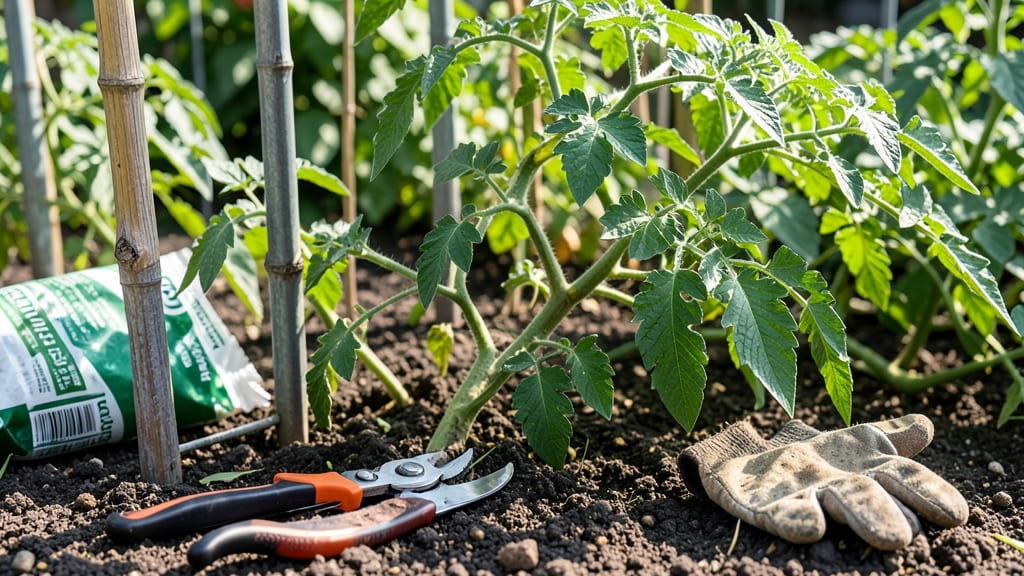
My tomato plants shot up like they were racing to the sky—tomato plants too tall means floppy stems, cracked fruit, and a tangled mess by harvest time. 🌱 Honestly, I've wrestled with this every summer until I discovered these cage-free trellis hacks that actually work without cages or staking headaches.
The real fix starts with pruning and support—not just hacking away at random. You want to encourage upward growth while keeping the plant stable. Use soft ties (old T-shirts or pantyhose) to guide stems along sturdy branches or DIY trellises made from bamboo stakes or even repurposed ladders.
The key is timing: prune in the morning when plants are hydrated, and never remove more than 1/3 of the foliage at once.
What you end up with is a structured, productive plant that ripens fruit evenly instead of dropping it on the ground. My cherry tomatoes now climb a simple wooden frame, and the heirlooms stay upright with just a few well-placed ties.
The best part? No more wrestling with cages or broken stems by August.
For next season, prevent the problem by choosing determinate varieties for containers or indeterminate plants with built-in support. And if you're dealing with a late-season surge, a quick prune and tie now can still save your harvest—just don’t go overboard. The goal is control, not stress.
Root Causes Of Towering Tomatoes
If your tomato plants are reaching for the sky like overzealous sunflowers, don’t blame your green thumb—yet. Tall tomato plants often result from a mix of genetic quirks, environmental factors, and even gardening habits.
Understanding these causes is the first step to bringing your plants back to a manageable height while still maximizing yield. Let’s dig into the science behind why your tomatoes are growing like skyscrapers.
Some tomato varieties are simply bred to grow tall. Indeterminate tomatoes (like 'Sungold,' 'Brandywine,' or 'Cherokee Purple') keep producing new flowers and vines throughout the season, often reaching 6–10 feet or more if left unchecked.
These plants rely on vertical support to channel energy into fruit production rather than sprawling horizontally.
If you planted seeds or seedlings labeled as indeterminate—or if your heirloom variety is known for its height—your towering tomatoes might just be following their genetic blueprint. Determinate varieties (like 'Roma' or 'Celebrity') stay compact (3–5 feet), so if yours are stretching skyward, genetics could be the culprit.
Actionable tip: If you love tall tomatoes but want control, choose semi-determinate varieties (e.g., 'Early Girl' or 'Better Boy'), which grow 5–8 feet but produce fruit in clusters rather than continuously.
Tomatoes crave sunlight—6–8 hours of direct sun daily is ideal. When they don’t get enough light, they stretch (a process called etiolation) to reach for the sun, resulting in weak, leggy stems and fewer flowers. This is especially common in:
- Shady gardens or north-facing plots
- Overcrowded plantings where competition blocks light
- Early spring/fall planting when days are shorter
Etiolated plants also develop longer internodes (the spaces between leaves) and pale, weak stems—perfect conditions for disease and breakage. If your tomatoes are leaning or have sparse foliage, light deprivation is likely the villain.
Actionable tip: Move potted tomatoes to sunnier spots or thin out nearby plants to improve airflow and light exposure. For ground tomatoes, ensure they’re spaced 18–24 inches apart (36 inches for indeterminates).
Watering plays a huge role in tomato height. Inconsistent moisture—whether from drought stress or overwatering—can trigger erratic growth:
Underwatering: When soil dries out, roots struggle to absorb nutrients, causing plants to bolt (shoot up rapidly) in search of water. This leads to weak stems and reduced fruit set.
Overwatering: While it might seem counterintuitive, soggy soil can dilute nutrients and encourage leggy growth as the plant focuses on reaching for air and light rather than developing a sturdy structure.
Additionally, uneven watering (e.g., deep soaks followed by dry spells) stresses the plant, prompting it to grow taller to escape the "drought" at its roots.
Actionable tip: Water deeply 1–2 times per week (1–1.5 inches of water) rather than daily shallow drinks. Use drip irrigation or soaker hoses to keep moisture consistent at the root zone.
Tomatoes are warm-season crops, thriving in temperatures between 70–85°F (21–29°C). When conditions stray from this range, growth patterns go haywire:
- Cool nights (<60°F/15°C): Slows photosynthesis, causing plants to stretch toward the sun in a desperate bid for energy.
- Hot days (>90°F/32°C): Can stunt growth or cause blossom drop, but some varieties (like heat-tolerant 'Solar Fire') may compensate by growing taller to escape the heat.
- Rapid temperature swings: Confuses the plant’s hormonal signals, leading to uneven, leggy growth.
If your tomatoes are tall but not flowering, heat stress (especially above 85°F) is likely preventing pollination while the plant focuses on vertical growth.
Actionable tip: Use shade cloth (30–50%) during peak summer heat or plant in morning sun/afternoon shade. For cool nights, add row covers or mulch heavily to retain soil warmth.
Tomatoes are heavy feeders, and nutrient deficiencies or excesses can send them on a growth spree—or a crash. Here’s how:
| Nutrient Issue | Effect on Height | Signs to Watch For |
|---|---|---|
| Nitrogen (N) excess | Promotes leafy, leggy growth at the expense of fruit. | Dark green, lush foliage; few flowers; weak stems. |
| Phosphorus (P) deficiency | Stunts root and flower development, causing plants to "reach" for nutrients. | Purple-tinged stems/leaves; slow growth; delayed flowering. |
| Potassium (K) deficiency | Weakens structural integrity, leading to floppy, tall growth. | Yellowing leaf edges; weak stems; poor disease resistance. |
| Calcium (Ca) deficiency | Causes blossom end rot and weak cell walls, making stems prone to snapping under weight. | Dead spots on fruit; distorted new growth; brittle stems. |
Actionable tip: Test your soil (or use a DIY nutrient test kit) and amend with:
- Balanced fertilizer (10-10-10 or 5-10-10) for general growth.
- Bone meal or phosphate-rich compost for flowering.
- Banana peels or wood ash for potassium.
- Crushed eggshells or lime for calcium.
Avoid high-nitrogen fertilizers (like fresh manure) once flowering begins—this will encourage more leaves, fewer tomatoes.
Now that you know the why behind your sky-high tomatoes, the next step is what to do—and luckily, DIY trellises and pruning hacks can bring them back under control without sacrificing yield. Stay tuned!
Fixing Towering Tomato Plants
Now that you know why your tomato plants are reaching for the sky, let’s tackle the solutions! Whether your vines are stretching due to overcrowding, poor sunlight, or a lack of support, these practical fixes will bring your plants back into balance—without sacrificing yield or flavor.
Below, we’ve mapped the most common causes to their fixes, plus proactive tips to keep your tomatoes in check next season.
If your tomato plants are competing for nutrients and light, their vertical growth will skyrocket. Pruning and thinning are your best friends here.
- 🔪 Prune Aggressively (But Strategically) - Use clean, sharp shears to trim suckers (the small shoots growing between the main stem and branches).
Focus on removing suckers below the first flower cluster to encourage bushier growth. - For indeterminate varieties (like 'Cherry Roma' or 'Sungold'), prune 1/3 of the plant’s height to redirect energy to fruit production. - Pro Tip: 💡 Prune in the morning when the plant is hydrated, and avoid over-pruning—never remove more than 25% of the foliage at once.
- 📏 Thin Out Plants
- If seedlings are too close (less than 18–24 inches apart), transplant the weakest ones to give remaining plants room to breathe.
- For determinate varieties (like 'Roma' or 'Celebrity'), space them 2–3 feet apart; for indeterminate types, allow 3–4 feet of space.
- 🌿 Mulch to Suppress Weeds
- Apply 2–3 inches of organic mulch (straw, grass clippings, or shredded leaves) around the base to block weeds that steal nutrients and light.
Tomatoes crave 6–8 hours of direct sunlight daily. If your plants are stretching toward a window or neighboring structures, they’re begging for more light.
- 🏡 Relocate or Rotate Plants
- Move containers to a sunnier spot (south-facing is ideal in the Northern Hemisphere).
- If indoors, place under grow lights (12–16 hours/day) to compensate for weak natural light.
- Pro Tip: 🌡️ Rotate pots weekly to ensure even growth and prevent lopsided stretching.
- 🌿 Trim Obstructing Foliage
- Remove leaves or branches from nearby plants (like peppers or herbs) that cast shade.
- For indoor growers, trim lower leaves to improve air circulation and light penetration.
Tall, unsupported tomato plants flop over, leading to disease and poor fruit development. DIY trellises are cheap, easy, and customizable.
- 🔨 Build a Simple Trellis in 30 Minutes - Materials Needed: Bamboo stakes, twine, wooden dowels, or even old wire hangers. - Method 1: Stake and Twine 1. Drive a 5–6 ft stake into the soil near each plant. 2.
Tie the main stem to the stake with soft twine every 12 inches. 3.
Gently weave side branches through the twine to guide growth upward. - Method 2: A-Frame Trellis (For Bushier Plants) - Hammer two stakes 3–4 ft apart and connect them at the top with a horizontal dowel or wire. - Train vines to grow along the dowel as they climb. - Pro Tip: ✨ Use tomato cages as a last resort—they’re flimsy for tall varieties and often collapse under weight.
- 🍅 Prune for Trellis Compatibility
- For indeterminate tomatoes, prune lower branches to encourage upward growth along the trellis.
- For determinate types, let them bush out naturally but remove suckers to prevent sprawl.
Too much water or soggy soil can weaken stems, causing plants to grow tall and leggy in search of stability.
- 💦 Water Deeply, Less Frequently
- Water at the base (not overhead) to encourage deep root growth.
- Let the top 1–2 inches of soil dry out between waterings—tomatoes hate wet feet!
- Pro Tip: 🎯 Use a moisture meter or the "finger test" to check soil dryness.
- 🪴 Improve Drainage
- If using pots, ensure they have drainage holes and elevate them slightly.
- Amend garden soil with perlite or sand to prevent compaction.
- For container growers, repot into larger containers (at least 5 gallons for bush types, 10+ for vining varieties).
Too much nitrogen (the first number in fertilizer labels) promotes leafy growth at the expense of fruit. Balanced feeding keeps plants sturdy.
- 📊 Switch to a Low-Nitrogen Fertilizer
- Use a 5-10-10 or 3-4-6 formula (lower nitrogen, higher phosphorus/potassium) to encourage flowering and fruiting.
- Organic options: Fish emulsion, compost tea, or worm castings.
- Pro Tip: 💪 Side-dress with banana peels (rich in potassium) to boost fruit production.
- 🍅 Avoid Over-Fertilizing
- Follow package instructions—more isn’t better! Over-fertilized plants grow fast but weak.
- Flush soil every 4–6 weeks with water to prevent salt buildup.
Once your tomatoes are under control, plan ahead to avoid another vertical takeover:
- 🌱 Choose the Right Variety
- Bush tomatoes (determinate) stay compact—great for containers.
- Vining tomatoes (indeterminate) need trellises but produce longer.
- 📅 Start Early Indoors
- Give seedlings 14–16 hours of light daily in early growth stages to prevent legginess.
- 🌿 Succession Planting
- Space out plantings 2–3 weeks apart to avoid overcrowding.
- 🔄 Rotate Plant Locations
- Avoid planting tomatoes in the same spot yearly to prevent soil-borne diseases that weaken stems.
With these fixes, your tomato plants will shift from sky-scrapers to productive powerhouses—yielding more fruit with less flopping. Happy growing! 🍅🌿
Frequently asked questions
Why do my tomato plants grow so tall so quickly?
Tall, rapid growth usually happens when tomatoes get too much nitrogen or not enough sunlight. Indeterminate varieties (like 'Sungold') naturally grow tall, but poor light causes them to stretch even more. Check if your plants are getting 6-8 hours of sun daily and consider switching to a balanced fertilizer (5-10-10) once flowering begins.
Can I cut down tall tomato plants to make them shorter?
Never cut down healthy stems—this stresses the plant and reduces fruit production! Instead, prune selectively: remove only suckers (side shoots) and lower leaves to improve airflow. For extreme cases, you can pinch back the top growth by 1/3 to encourage bushier, stronger growth.
What's the best DIY trellis for tall tomato plants?
For indeterminate tomatoes, use a 5-6 ft bamboo stake tied with soft twine every 12 inches. For bushier varieties, try an A-frame trellis made from two stakes connected at the top with wire. Avoid tomato cages—they collapse under weight! Use old T-shirts or pantyhose as ties to avoid damaging stems.
Will pruning tall tomato plants reduce my harvest?
Not if done correctly! Pruning actually increases yield by directing energy to fruit production. Focus on removing suckers (shoots between stem and branches) and lower leaves. Never prune more than 25% of foliage at once, and always prune in the morning when plants are hydrated.
How do I prevent tomato plants from getting too tall next season?
Start with determinate varieties for containers or choose semi-determinate types like 'Early Girl'. Plant in full sun, space properly (18-24 inches apart), and use low-nitrogen fertilizer after flowering begins. For tall varieties, install trellises early to guide growth upward.