
Planting
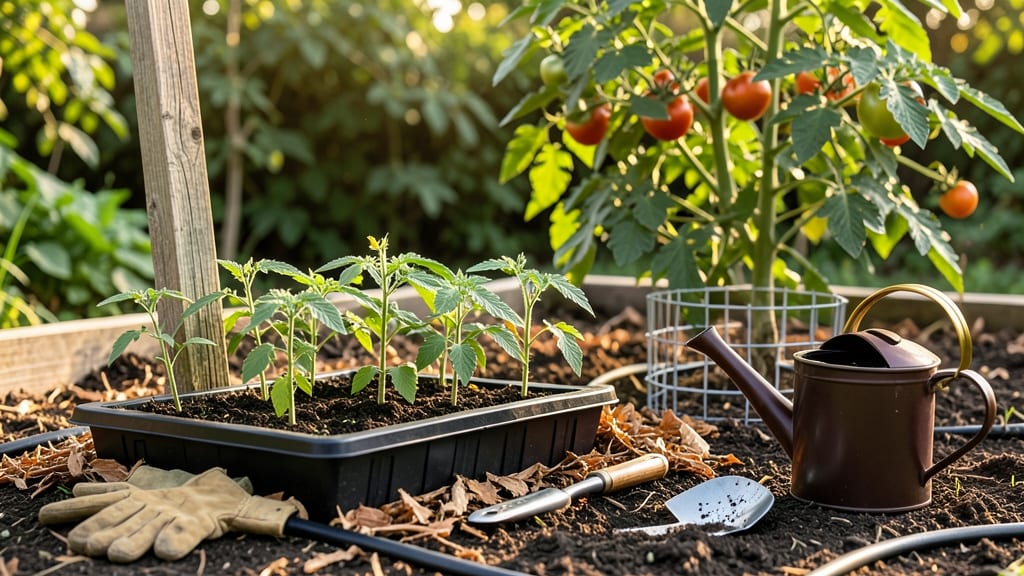
Timing the tomato planting season right is the key to a garden full of juicy, vine-ripened 🍅 instead of sad, stunted plants.
Picture this: you’ve got your seedlings ready, the soil is prepped, and then—BAM—a late frost wipes out everything. Or worse, you plant too early in hot zones, and the heat knocks out the flowers before they set fruit.
Getting it wrong isn’t just frustrating; it’s a waste of time, money, and your favorite heirloom seeds.
But here’s the good news: with the right frost-free dates for your climate zone, soil temperature tricks, and a few variety tweaks, you can stretch your harvest from summer straight into fall.
Whether you’re in Zone 6a or a sweltering coastal area, I’ll break down exactly when to plant—and how to adjust for your microclimate.
By the end, you’ll know the perfect window for your region, how to pick varieties that thrive in early or late starts, and even how to cheat the system with row covers or cold frames. Let’s get those tomatoes in the ground the right way.

When to plant tomatoes by USDA climate Zone (exact dates)
Getting your tomato planting season right depends on your USDA climate zone and local frost patterns. Tomatoes are warm-season crops that need soil temperatures above 60°F (15°C) to thrive. Planting too early risks frost damage, while waiting too long can shorten your harvest.
Let’s break down the exact planting windows for each zone, including cold-hardy varieties for early zones and heat-tolerant types for late zones.
Coastal areas often have later frost dates than inland regions due to ocean moderation, while high-elevation gardens may need to start 2-4 weeks earlier. Always check your local frost-free date from the National Weather Service or USDA Plant Hardiness Map for precise timing.
For example, Zone 3 gardeners might plant in late May, while Zone 10 can start as early as February.
In Zones 1-2, where frost lingers late, opt for early-maturing varieties like 'Stupice' or 'Glacier' that can tolerate brief chills. Start seeds indoors in March and transplant after May 15.
Use row covers to protect young plants from unexpected frost. For Zones 3-4, plant transplants in early May and choose cold-resistant types like 'Siletz' to maximize your short growing season.
Gardeners in Zones 5-6 have the most flexibility, with mid-April to mid-May being ideal. This is perfect for staggered planting: sow a cold-tolerant variety like 'Early Girl' in April, followed by heat-loving types like 'Arkansas Traveler' in May.
This ensures a continuous harvest from summer into early fall. If you live in a high-elevation area within these zones, plant 2 weeks earlier since soil warms more slowly.
For Zones 7-8, where winters are mild, you can start planting as early as mid-March in coastal areas or early April inland. Varieties like 'Better Boy' and 'Roma' thrive here, but avoid planting too early—soil must reach 60°F (15°C) to prevent blossom end rot.
In Zone 9, where frost is rare, plant in February for an early start, but shift to late summer planting to avoid extreme heat stress
How to adjust tomato planting season for your local microclimate
Your local microclimate can shift tomato planting windows by 2-4 weeks compared to official USDA zone guidelines. Factors like elevation, urban heat islands, and soil warmth create unique growing conditions that demand flexibility.
For example, high-altitude gardens often experience cooler soil temperatures, delaying planting by 10-14 days until soil reaches 60°F. Meanwhile, city gardens surrounded by pavement may warm up faster, allowing earlier starts.
Even within the same zip code, microclimate variations can create challenges. A north-facing yard might need cold-hardy varieties planted 3 weeks earlier than a south-facing bed. Understanding these nuances helps you avoid late-season frost damage or heat stress that stunts growth.
Let’s explore how to fine-tune your planting schedule for your specific conditions.
Planting tomatoes based on average frost dates alone can backfire. For instance, a 1,000-foot elevation gain drops temperatures by 3.5°F—enough to delay planting by 2 weeks if unaccounted for. Urban areas can be 5-10°F warmer than rural zones, allowing earlier starts. Always test soil temperature with a thermometer (60°F minimum) before planting, and monitor weekly frost forecasts for your exact location.
Start by assessing your garden’s sun exposure patterns. Shady spots caused by trees or buildings may require dwarf or determinate varieties that mature faster.
If your yard has partial shade, consider staggered planting: sow heat-tolerant varieties like 'Solar Fire' in full sun and early-maturing types like 'Stupice' in partial shade. This ensures a continuous harvest even if some plants struggle with less sunlight.
For gardens in high-elevation areas, use row covers or cold frames to extend the season. These protective barriers can add 2-4 weeks of growing time by trapping heat. Place them over seedlings when nighttime temperatures dip below 50°F, and remove them during the day to prevent overheating.
In my Zone 6a garden at 5,000 feet, cold frames let me plant cherry tomatoes 3 weeks earlier without frost risk.
Urban gardeners often face heat islands where pavement and buildings raise temperatures. If your soil stays above 70°F for prolonged periods, opt for heat-resistant varieties like 'Heatmaster' or 'Arkansas Traveler'. These tomatoes thrive in 90°F+ conditions and produce fruit even when traditional varieties bolt.
To mitigate heat stress, mulch heavily with straw or wood chips to keep roots cool and water deeply in the early morning.
Don’t overlook unexpected frost risks, especially in transitional zones. Even if your average last frost is in early May, a late cold snap can occur. Use frost cloths or black plastic mulch to protect young plants.
In my experience, staggered planting every 2 weeks ensures at least one batch survives unexpected frosts. For extra insurance, keep a few seedlings indoors under grow lights until the coast is clear.
Finally, track your garden’s performance each year. Note which varieties thrive in your microclimate and adjust planting dates accordingly. Over time, you’ll develop a customized schedule that maximizes your harvest.
For example, I now plant heirloom tomatoes 1 week later than the recommended date because my soil warms slowly, but my cherry tomatoes go in 2 weeks early thanks to their faster maturity.