
Plants
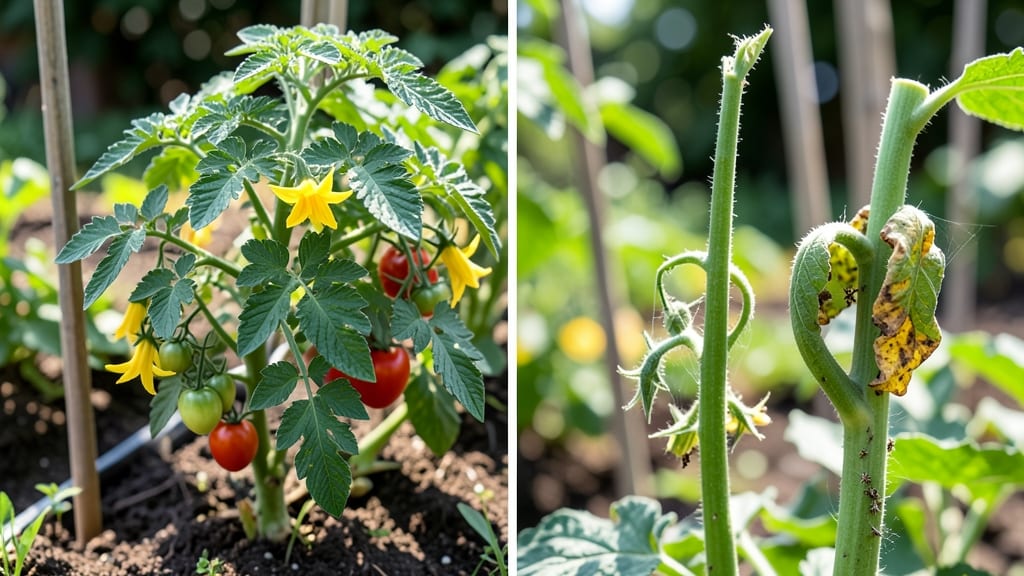
When tomato plant stems curl down, it’s usually a silent SOS from your plants—whether from pests, disease, or stress. ✨ I’ve seen this happen after just one hot afternoon or when aphids move in like tiny squatters, and the good news is most cases have simple fixes before the plant gives up.
The culprits range from spider mites hiding on the undersides of leaves to early blight creeping up from the soil, or even overwatering that drowns roots. My first step is always checking the stems and leaves for telltale signs: sticky residue (aphids), webbing (spider mites), or dark spots (blight).
Once you spot the problem, you can act fast. With the right approach—neem oil for pests, proper spacing for airflow, or adjusting watering—you’ll see those stems straighten in days. The key is catching it early, before the plant’s energy drains completely. Your tomatoes will bounce back stronger than ever.
For pests, a strong spray of water or insecticidal soap works wonders, while blight needs copper fungicide and better airflow. I’ve saved plants that looked doomed just by adjusting watering schedules or moving them to partial shade.
The goal isn’t just fixing the curl—it’s restoring the plant’s confidence to grow upright and productive again.
Prevention is easier than repair: regular inspections, balanced watering, and mulch to keep soil moisture steady. My garden stays healthy because I treat these issues like early warnings, not emergencies.
Once you master the fixes, you’ll spot the signs before they spiral—and your tomatoes will thank you with bigger, juicier fruit.
Root Causes Behind Curling Stems
Understanding why your tomato plant stems are curling downward is the first step toward reviving a thriving vine. 🌱 The issue often stems from a mix of environmental stressors, pest attacks, or underlying health problems.
Let’s break down the most common culprits—each with a clear scientific explanation and actionable insights to help you diagnose the problem accurately.
When tomato plants receive too much water, their roots suffocate from a lack of oxygen. This leads to root rot, a fungal infection that weakens the plant’s ability to absorb nutrients and water.
As roots deteriorate, the stems curl downward in an attempt to conserve energy. Additionally, soggy soil can attract pests like aphids or whiteflies, which further stress the plant.
Signs to watch for:
- Yellowing leaves (chlorosis)
- Mushy, discolored roots when inspected
- A foul, damp smell around the base
Quick fix: 💡 Improve drainage by amending soil with compost or perlite, and water only when the top 1–2 inches of soil are dry. If root rot is severe, prune affected roots and repot in fresh, well-draining soil.
On the flip side, insufficient water causes osmotic stress, where the plant’s cells lose turgor pressure. Without proper hydration, stems weaken and curl downward as the plant wilts in self-defense. Tomato plants are particularly sensitive to drought because their deep root systems struggle to recover quickly.
Signs to watch for:
- Dry, crispy leaf edges
- Soil pulling away from the pot (if container-grown)
- Leaves curling inward (not just downward)
Quick fix: 🌡️ Water deeply at the base (1–2 inches per week, depending on climate) and mulch to retain moisture. Avoid overhead watering, which can encourage fungal diseases.
Tiny pests like aphids or spider mites suck sap from leaves and stems, causing curling as the plant’s defenses trigger abnormal growth. These pests thrive in dry, dusty conditions and often target the undersides of leaves, leaving behind sticky residue (honeydew) or fine webbing.
Signs to watch for:
- Sticky leaves or ants (attracted to honeydew)
- Visible pests on stems/leaves (use a magnifying glass if needed)
- Stunted growth or yellowing between veins
Quick fix: 🔥 Blast pests off with a strong spray of water, then apply neem oil or insecticidal soap. Introduce beneficial insects like ladybugs or lacewings for long-term control.
Tomato plants rely on nitrogen for leafy growth and potassium for structural strength. A deficiency in either nutrient weakens stems, causing them to curl or flop. Nitrogen deficiency often appears as pale, yellow leaves, while potassium deficiency may show as brown leaf edges or weak stems.
Signs to watch for:
- Slow growth or pale new leaves (nitrogen)
- Weak stems that bruise easily (potassium)
- Purple undersides on leaves (phosphorus deficiency, less common)
Quick fix: 📊 Use a balanced fertilizer (10-10-10 or 5-10-10) and supplement with compost. For potassium, try wood ash or banana peel tea (rich in potassium).
Tomato plants are sensitive to extreme heat (above 90°F) or strong winds, which cause transpiration stress. When leaves lose too much moisture too quickly, stems curl downward to reduce surface area and conserve water. Heat stress can also scorch leaves, while wind damages delicate stems.
Signs to watch for:
- Wilting even after watering
- Sunburnt or bleached leaf edges
- Physical damage to stems (e.g., bending from wind)
Quick fix: ✨ Provide afternoon shade in hot climates and use windbreaks (like burlap screens) if growing in exposed areas. Mulch to keep roots cool.
Fungal diseases like early blight or Fusarium wilt attack stems and roots, causing curling as the plant’s vascular system clogs. Early blight appears as concentric rings on leaves, while Fusarium wilt turns stems brown and mushy at the base.
Signs to watch for:
- Dark spots with yellow halos (early blight)
- Wilting that spreads upward (Fusarium)
- Stems that snap easily when bent
Quick fix: 🔪 Remove infected plants immediately, sterilize tools with bleach, and apply copper fungicide preventatively. Improve airflow between plants to reduce humidity.
Accidental damage from weeding tools, string trimmers, or herbicide spray can sever stems or introduce toxic chemicals. Herbicide drift (even from neighboring lawns) can cause curling as the plant’s growth hormones are disrupted.
Signs to watch for:
- Jagged stem breaks or discoloration
- Uneven growth patterns
- Chemical burns on leaves
Quick fix: 👨🍳 Prune damaged stems cleanly with sterilized shears and avoid herbicides near tomato plants. Use physical mulch to suppress weeds instead.
Fixing Curled Tomato Stems Naturally
Now that you know the likely culprits behind your tomato plant’s drooping stems, let’s tackle the solutions—without harsh chemicals and with minimal fuss. Below are targeted fixes for each common cause, along with preventive tips to keep your plants thriving.
Grab your gardening gloves, and let’s get those vines back to standing tall!
Fix it fast:
- 🔥 Step 1: Check the soil moisture Stick your finger 1–2 inches deep into the soil. If it’s soggy (like a damp sponge), your plant is drowning. Tomatoes hate "wet feet"—excess moisture suffocates roots and invites fungal diseases.
- 🍳 Step 2: Adjust your watering routine Water deeply but infrequently—aim for 1–1.5 inches per week (adjust for rain). Use a soaker hose or drip irrigation to deliver water at the base, avoiding wet leaves (which attract pests and diseases).
- 👨🍳 Step 3: Improve drainage If your pots lack drainage holes, transfer your plant to a container with holes or add a mix of perlite, vermiculite, or coarse sand to the soil to boost aeration.
- ⏰ Step 4: Let the soil dry out between waterings Wait until the top 1–2 inches of soil feel dry before watering again. A moisture meter can help if you’re unsure.
💡 Prevention tips:
- Use well-draining potting mix (avoid garden soil alone).
- Elevate pots slightly to prevent water pooling.
- Water in the early morning so excess moisture evaporates quickly.
Cool it down:
- 🌡️ Step 1: Provide afternoon shade If your tomatoes are wilting in the midday sun, use shade cloth (30–50%) or move potted plants to a spot with morning sun and afternoon shade.
- 💦 Step 2: Mulch to retain moisture Spread 2–3 inches of organic mulch (straw, wood chips, or grass clippings) around the base to lock in moisture and regulate soil temperature.
- 🌿 Step 3: Boost humidity (if needed) On extremely hot days, mist the leaves lightly in the early morning or place a tray of water near the plant to increase humidity.
🎯 Prevention tips:
- Choose heat-tolerant tomato varieties (e.g., ‘Solar Fire’, ‘Heatmaster’).
- Water deeply in the morning to cool roots.
- Avoid fertilizing during peak heat—it stresses plants.
Kick those critters to the curb:
- 🔪 Step 1: Inspect for pests Look for tiny eggs, chewed leaves, or sticky residue (aphid honeydew). Common culprits: aphids, spider mites, whiteflies, or tomato hornworms.
- 🍅 Step 2: Blast them off (literally) Spray plants with a strong stream of water to dislodge pests. Repeat every 2–3 days for severe infestations.
- 🌿 Step 3: Introduce natural predators
- Ladybugs (eat aphids)
- Praying mantises (devour caterpillars)
- Nematodes (for soil-dwelling pests like grubs)
- 🧴 Step 4: Use homemade sprays Mix 1 tsp mild liquid soap + 1 quart water and spray directly on pests (avoid flowers to protect pollinators). For fungal gnats, add 1 tbsp hydrogen peroxide (3%) to water.
✨ Prevention tips:
- Rotate crops—don’t plant tomatoes in the same spot yearly.
- Remove debris (fallen leaves, weeds) where pests hide.
- Plant companion plants like basil, marigolds, or nasturtiums to repel pests.
Stop the spread:
- 🧼 Step 1: Prune infected areas Use sterilized scissors to cut off curled, yellowed, or spotted leaves and dispose of them in the trash (not compost).
- 🌡️ Step 2: Improve airflow Space plants 18–24 inches apart and prune lower leaves to reduce humidity near the soil.
- 💧 Step 3: Apply a fungicide (gentle options)
- Baking soda spray: Mix 1 tsp baking soda + 1 tsp oil + 1 tsp soap per quart of water. Spray every 7–10 days.
- Neem oil: Follow package instructions for preventive treatment.
- 🌱 Step 4: Adjust care
- Water at the base (avoid wetting leaves).
- Remove mulch temporarily if soil stays too damp.
💡 Prevention tips:
- Solarize soil (cover with clear plastic for 4–6 weeks in hot sun) to kill pathogens.
- Plant resistant varieties (e.g., ‘Celebrity’, ‘Mountain Merit’).
- Rotate crops annually to prevent soil-borne diseases.
Balance the soil:
- 📊 Step 1: Test your soil Use a DIY soil test kit to check pH (ideal: 6.0–6.8) and nutrient levels. Tomatoes need nitrogen (N), phosphorus (P), and potassium (K) in balance.
- 🥗 Step 2: Feed wisely
- For nitrogen deficiency (yellow leaves): Apply compost or a balanced fertilizer (10-10-10).
- For potassium deficiency (weak stems): Use wood ash or a banana peel tea (steep peels in water for 24 hours).
- For over-fertilizing (burnt leaves): Flush soil with water to leach excess salts.
- 🍎 Step 3: Use organic amendments Mix in aged compost, worm castings, or fish emulsion for a slow-release nutrient boost.
💪 Prevention tips:
- Fertilize lightly—too much causes salt buildup, which stresses plants.
- Side-dress (add fertilizer beside roots) instead of top-dressing.
- Monitor growth—healthy plants grow 2–3 inches per week in warm weather.
Final Pro Tip: 🌿 Keep a garden journal! Note what you plant, when you water/fertilize, and any issues. Patterns will help you prevent problems next season.
With these fixes, your tomato plants should perk up within days to weeks. Stay patient—some issues (like fungal diseases) take time to fully resolve, but consistent care wins every time! 🍅💚
Frequently asked questions
Why do tomato stems curl downward suddenly?
Sudden curling often signals stress from pests like spider mites or aphids feeding on sap, or environmental factors such as extreme heat or underwatering. Check for tiny webs (spider mites) or sticky residue (aphids), and inspect soil moisture—both can cause stems to weaken and droop within hours.
Can overwatering cause tomato stems to curl?
Yes! Overwatering leads to root rot, which suffocates roots and prevents nutrient absorption. When roots can't support the plant, stems curl downward to conserve energy. Test soil moisture by sticking your finger 1–2 inches deep—if it's soggy, reduce watering immediately.
How do I tell if curling is from pests or disease?
Pests (like aphids or mites) often leave visible signs: sticky residue, webbing, or tiny bugs on stems/leaves. Disease (e.g., early blight) shows as dark spots with yellow halos on leaves. Check both the undersides of leaves and the base of stems—pests hide there, while diseases appear on surfaces.
Will pruning help if my tomato stems are curling?
Pruning alone won’t fix the root cause, but it can help! Remove yellowed, spotted, or severely curled leaves to redirect energy to healthy growth. Sterilize shears with rubbing alcohol first to avoid spreading disease. Pair pruning with targeted fixes (e.g., neem oil for pests or fungicide for blight).
How long does it take to fix curled tomato stems?
With immediate action, stems often straighten within 3–7 days for pest/disease issues, or 1–2 weeks for nutrient deficiencies. Root rot or fungal diseases may take longer (up to 3–4 weeks) to fully recover. Consistency is key—adjust watering, apply treatments, and monitor daily.