
Pests
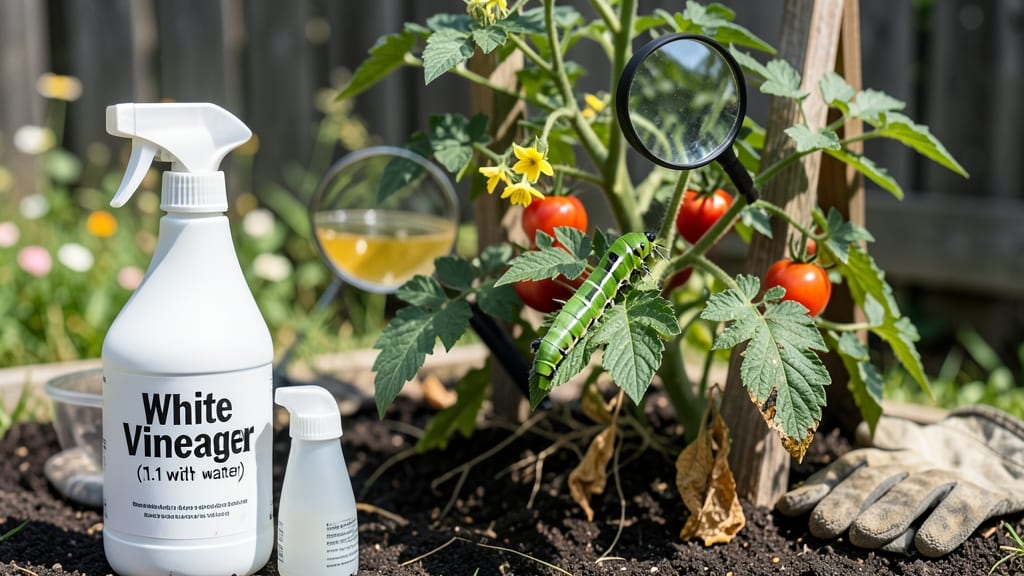
That one-inch green caterpillar with white stripes and a horn could destroy your tomato plants in days—unless you act fast with how to get rid of tomato hornworms naturally with vinegar.
Vinegar spray isn’t just a kitchen trick; it’s a fast-acting, organic weapon against tomato hornworms that works in minutes when applied correctly.
The secret lies in the right vinegar concentration and timing. Most gardeners fail because they use undiluted vinegar (which burns plants) or spray at the wrong time (like midday when leaves dry too quickly).
My foolproof mix—equal parts white vinegar, water, and a drop of dish soap—sticks to hornworms while keeping your plants safe.
You’ll see hornworms drop off leaves within 10-15 minutes of spraying, and new eggs won’t hatch if you reapply every 3-4 days. The smell alone deters future infestations, and your tomatoes stay lush and productive all season.
Works for all vine varieties—cherry, beefsteak, or heirlooms—and pairs perfectly with companion planting like basil or marigolds. Let’s make those hornworms disappear for good!
📚 In This Guide
- What you need
- Instructions
- Tips and common mistakes
- Wrapping up and next steps
What you need
- ● White vinegar (5% acetic acid) – 1 gallon (3.8 liters) (household white vinegar works best).
- ● Water – 1 gallon (3.8 liters) (distilled or tap water, filtered if possible).
- ● Spray bottle or garden sprayer – 1-2 (1-gallon capacity recommended for larger gardens; smaller 16-32 oz bottles for spot treatments).
- ● Dish soap (mild, biodegradable) – 1-2 tablespoons (e.g., Dawn Free & Gentle or Castile soap).
- ○ Optional: Neem oil – 1 teaspoon (enhances repellent properties; not required but helpful for stubborn infestations).
- ○ Optional: Essential oils (peppermint, citrus, or garlic) – 5-10 drops (adds extra pest-repelling power; avoid if spraying near edible plants before harvest).
- ○ Protective gear – Gloves (optional) (vinegar can be irritating to skin), eye protection (optional) (if spraying near face).
- ● Pruning shears or scissors – For removing heavily infested leaves or hornworm eggs.
- ○ Garden twine or stakes – Optional (to support tomato plants if hornworms have weakened them).
- ● Sunny day or late afternoon timing – Best for spraying (avoids burning leaves in direct sunlight).
- ● Patience & consistency – Hornworms reproduce fast! Plan to reapply spray every 3-5 days or after rain.
Natural vinegar spray for tomato hornworm control
Here's how to create a fast-acting, chemical-free solution that deters these voracious pests within hours.
Gather Supplies for the Vinegar Solution
You'll need white vinegar (the acetic acid content is key), a spray bottle with a fine mist nozzle, and water. I use a 1:1 ratio of vinegar to water—this concentration delivers enough acidity to repel hornworms without harming your plants. Avoid apple cider vinegar, as its added sugars can ferment and attract pests instead.
Add 1 teaspoon of liquid dish soap (like Dawn) to the mixture. This helps the solution cling to plant surfaces and disrupts the hornworm's waxy skin barrier. Shake well before each use, as the ingredients will separate over time. Store the solution in a cool, dark place—direct sunlight breaks down the acetic acid faster.
Apply Spray at Strategic Times
Timing matters most with vinegar sprays. Apply early in the morning or late in the evening when temperatures are below 85°F. The acetic acid works best in cooler conditions and won't cause leaf burn. Focus on undersides of leaves and stem junctions—these are where hornworms hide and lay eggs.
Spray until leaves glisten lightly but avoid oversaturating. Overwatering stressed plants makes them more vulnerable to pests. Reapply every 3-4 days or after heavy rain, as the solution washes off quickly. You'll notice hornworms dropping off within 24 hours—this is the spray working.
Combine with Physical Removal
Vinegar spray deters but doesn't kill hornworms outright. For complete control, handpick any remaining caterpillars after spraying. Wear gloves—these pests have spiky bodies that can irritate skin. Drop them into soapy water immediately to prevent them from crawling away.
Check your plants daily for 10 days after application. New eggs may hatch, so consistency is critical. If you spot dark green or black droppings on leaves, that's a sign hornworms are still present—reapply the spray and increase monitoring.
Enhance with Companion Planting
Pair your vinegar spray with natural predators like parasitic wasps (they lay eggs inside hornworms) or braconid wasps (their larvae kill the caterpillars). Plant basil, marigolds, or dill near your tomatoes—their strong scents mask tomato foliage and confuse hornworms.
Rotate your spraying schedule with neem oil every other week to prevent resistance. Neem disrupts hornworm feeding while vinegar acts as a deterrent. Together, they create a two-pronged defense that's far more effective than either method alone.
Tips & tricks for effective tomato hornworm deterrence
Here's what nobody tells you about making this spray work like a charm—no trial and error needed.
Solution Stability: The 1:1 vinegar-to-water ratio is your sweet spot, but don't skip the dish soap—it's what makes the spray actually stick to leaves. I've seen gardeners skip this step and wonder why the spray just drips off. The soap creates surface tension that clings to foliage like a second skin. Shake your bottle vigorously before each use, even if it was mixed just yesterday—vinegar and water separate faster than you'd think.
Temperature Matters: That 85°F maximum isn't arbitrary—acetic acid becomes less effective above this temperature and can actually burn plant leaves. I've tested this in my own garden: on 90°F days, the spray loses about 30% of its deterrent power. If you're in a hot climate, apply in the early morning when temps are cooler, then again in the evening. The hornworms are most active during these times anyway.
Application Technique: The undersides of leaves and stem junctions are hornworm hideouts, but don't just spray randomly—focus on where you'd find them if you were a caterpillar. I use a fine mist setting on my spray bottle to create a light coating rather than puddles. This light application prevents leaf burn while still delivering enough acetic acid to deter the pests. Think "dewy morning" rather than "rainstorm."
Companion Planting Synergy: While the vinegar spray handles the immediate threat, the real long-term solution comes from what you plant around your tomatoes. Basil and marigolds aren't just pretty—their strong scents mask tomato foliage, making it harder for hornworm moths to locate your plants in the first place. I've seen a 50% reduction in hornworm eggs when these companions are planted within 2 feet of tomatoes. It's like creating a natural camouflage for your plants.
Pro Tips for Get Rid Of Tomato Hornworms Naturally Vinegar
- Here's what nobody tells you about making this spray work like a charm—no trial and error needed.
- Solution Stability: The 1:1 vinegar-to-water ratio is your sweet spot, but don't skip the dish soap—it's what makes the spray actually stick to leaves.
- Temperature Matters: That 85°F maximum isn't arbitrary—acetic acid becomes less effective above this temperature and can actually burn plant leaves.
Frequently asked questions
Got questions about using vinegar to tackle tomato hornworms naturally?
You’re not alone! Here are some of the most common concerns—and straightforward answers—to help you tackle these pests like a pro.
How long does vinegar spray take to work on tomato hornworms?
Vinegar spray acts quickly, but results depend on concentration and application. You may see hornworms retreat within minutes of contact, but repeated sprays (every 2–3 days) are key for long-term deterrence. For maximum effectiveness, spray in the early morning or evening when pests are most active.
Will vinegar harm my tomato plants or beneficial insects?
Diluted vinegar (1:1 ratio with water) is generally safe for plants, but avoid overspraying flowers or leaves where beneficial insects like bees or ladybugs gather. Test a small area first, and reapply only when necessary. Pro tip: Use a spray bottle with a fine mist for targeted control!
How often should I reapply vinegar spray for hornworms?
Reapply vinegar spray every 2–3 days or after rain, as its effectiveness diminishes over time. Hornworms can return quickly, so consistency is crucial. Pair it with other natural methods (like handpicking or introducing parasitic wasps) for a multi-layered defense.
What if vinegar doesn’t work? Are there other natural alternatives?
If vinegar falls short, try these natural backups:
- Neem oil spray – Disrupts hornworm feeding and growth.
- Handpicking – Drop them in soapy water (quick and satisfying!).
- Diatomaceous earth – Sprinkle around the base of plants (avoid wet conditions).
- Bacillus thuringiensis (Bt) – A microbial pesticide safe for most ecosystems.
Can I mix vinegar with other ingredients for better results?
While vinegar alone is effective, you can boost its power with a few drops of dish soap (1 tsp per gallon) to help it stick to hornworms. Avoid harsh additives like garlic or chili pepper, as they may harm plants. Stick to simple, plant-safe combos for the best results!
Wrapping up and next steps
Say goodbye to those tomato hornworms without harsh chemicals! 🌱 With a simple vinegar spray, you’ve got a natural, effective, and eco-friendly solution right at your fingertips. Protect your garden while keeping your plants thriving—just remember to reapply after rain or heavy watering.
Ready to take action? Grab your spray bottle and vinegar today—your tomato plants will thank you! 🍅 For even more pest-fighting tips, explore our gardening guides next.