
Plants
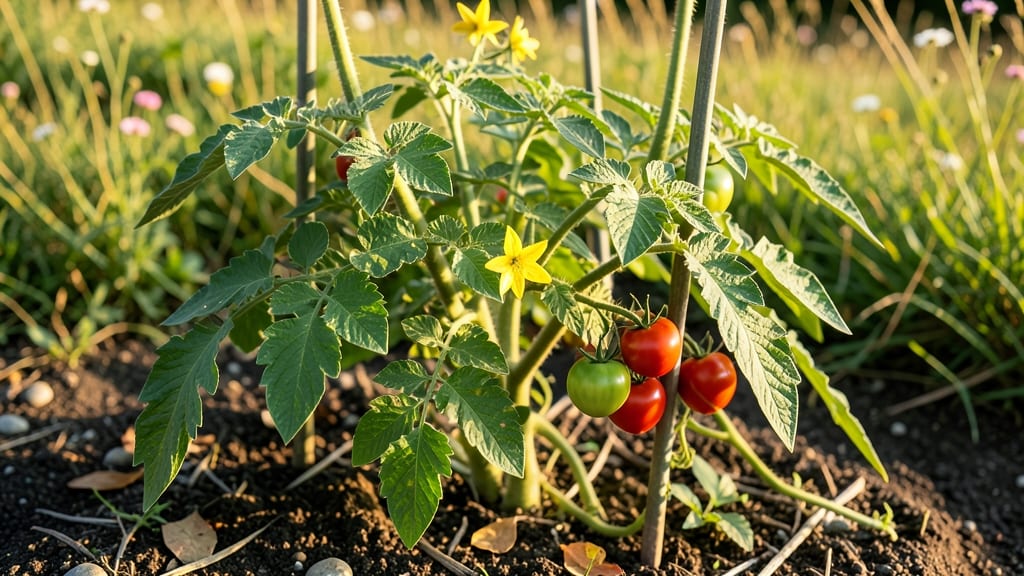
Your tomato plant's wilted leaves don't mean the end—tomato plant health can bounce back faster than you think. 🌱 I've nursed back more than a few struggling plants using these three natural fixes that work even when the leaves look crispy beyond saving.
The real culprits are often hidden: overwatering that drowns roots, nutrient starvation from poor soil, or pests sucking the life out of stems. Most gardeners fix the wrong problem first—like spraying for pests when the plant just needs water.
The key is checking the roots and leaves first before reaching for solutions. You'll see new growth within 3-5 days of the right fix—firm stems, perky leaves, and plants that keep producing. The best part? These fixes prevent future wilting too, so your tomatoes stay strong all season.
Works for backyard gardens, containers, and even greenhouse plants. Let's get those plants thriving again!
Root Causes of Leaf Wilting
When your tomato plants start showing signs of distress—like drooping, yellowing, or crispy leaves—it’s often a cry for help from the roots upward. Understanding why this happens is the first step to bringing your plants back to full, vibrant health.
Below, we break down the most common culprits behind wilting leaves, explained in clear, actionable science.
Tomatoes are thirsty plants, but their roots are delicate. Wilting can stem from two extreme watering mistakes:
- Underwatering:
When soil dries out, roots struggle to absorb water, causing leaves to wilt as a survival mechanism. Think of it like a straw too far from a glass—your plant can’t "drink" enough. Signs: Dry, crispy leaf edges and soil that pulls away from the pot.
- Overwatering:
Excess water suffocates roots by cutting off oxygen, leading to root rot (a fungal infection). Roots can’t function, so leaves droop even when soil is soggy. Signs: Yellowing leaves, mushy stems, and a foul smell from the soil.
💡 Pro Tip: Stick your finger 1–2 inches into the soil. If it’s dry, water deeply until it drains from the bottom. If it’s damp, wait 1–2 days before watering again. Mulch helps retain moisture without over-saturating.
Tomatoes thrive in warmth (70–85°F), but they’re sensitive to sudden swings. Here’s how temperature plays a role:
| Cause | Effect on Plant | What to Watch For |
|---|---|---|
| Heat Stress (Above 90°F) | Leaves wilt to reduce water loss, and enzymes slow down, stunting growth. | Drooping leaves that recover at night, sunburned patches (white/yellow spots). |
| Cold Shock (Below 50°F) | Cell membranes rupture, disrupting water uptake. Roots may freeze in extreme cases. | Blackened or purple-tinged leaves, stunted growth, wilting that doesn’t improve. |
🌡️ Fix It: Provide afternoon shade in extreme heat (use shade cloth or a lightweight row cover). For cold snaps, use row covers or move potted tomatoes to a sheltered spot. Avoid sudden temperature changes—acclimate plants gradually.
Not all wilting is water-related—some tiny (or not-so-tiny) invaders can wreak havoc. Here’s how they attack:
- Sap-Sucking Pests (Aphids, Spider Mites, Whiteflies):
These pests pierce leaves to feed on sap, disrupting the plant’s vascular system (the "plumbing" that moves water). As a result, leaves wilt and may develop sticky residue ("honeydew") or webbing.
- Fungal Infections (Early Blight, Fusarium Wilt):
Fungi like Fusarium oxysporum clog root vessels, blocking water transport. Early blight causes brown spots on leaves, which force the plant to "shut down" affected areas, leading to wilting.
- Nematodes (Microscopic Worms):
These soil-dwelling pests eat roots, reducing their ability to absorb water. Infested roots may look gnarled or have tiny lesions.
🔍 Spot the Difference:
- Pest damage often starts at leaf tips or undersides.
- Fungal wilting spreads upward from the bottom leaves.
- Nematode stress causes stunted growth despite regular watering.
💡 Pro Tip: Inspect leaves daily for pests. Use a neem oil spray (1 tsp per quart of water) for aphids/mites. For fungi, remove infected leaves and treat with copper fungicide. Rotate crops yearly to prevent nematodes.
Wilting can also signal a hunger strike—your tomato plant isn’t getting the nutrients it needs to stay hydrated. The most critical deficiencies:
- Potassium (K) Deficiency:
Potassium regulates water balance in cells. Without it, leaves wilt even when soil is moist. Signs: Yellowing edges ("scorching") on older leaves.
- Magnesium (Mg) Deficiency:
Magnesium helps produce chlorophyll, but it also supports water transport. A lack of it causes leaves to yellow between veins (a classic "lime deficiency" look) and wilt.
- Nitrogen (N) Deficiency:
While nitrogen fuels leafy growth, a severe lack weakens the plant’s overall structure, making wilting worse under stress. Signs: Pale green or yellow leaves starting at the bottom.
📊 Fix It Fast:
- Test your soil (a $20 kit from a garden center works).
- Add potassium-rich amendments like banana peel tea or greensand.
- For magnesium, use Epsom salt (1 tbsp per gallon of water, sprayed on leaves).
- Use a balanced fertilizer (like 10-10-10) to address nitrogen.
✨ Bonus: Tomato plants are heavy feeders—side-dress with compost every 3–4 weeks for a steady nutrient supply.
Quick Fixes for Reviving Tomato Plants
When your tomato plants show signs of distress—whether it’s drooping leaves, yellowing foliage, or stunted growth—acting fast can make all the difference. Below are practical, step-by-step solutions tailored to common tomato plant health issues, complete with prevention tips to keep your garden thriving.
Wilting leaves are often a sign of water stress, but the fix depends on whether your plant is drowning or dehydrated.
🔥 Step-by-Step Fix:
- Check the Soil Moisture
- Stick your finger 1–2 inches deep into the soil. If it’s soggy, you’re overwatering. If it’s bone-dry, you’re underwatering.
- Pro Tip: 💡 Use a moisture meter for accuracy—no more guesswork!
- Adjust Watering Immediately - Overwatered? Stop watering for 2–3 days and let excess moisture drain. If the soil stays waterlogged, amend it with perlite or sand to improve drainage. - Underwatered? Water deeply at the base (not the leaves) until moisture seeps out the bottom.
Repeat every 2–3 days until leaves perk up.
- Support Recovery
- Trim severely wilted leaves to redirect energy to healthy growth.
- Move the plant to a shadier spot (if wilting from heat stress) or back to full sun once revived.
🌡️ Prevention Tips:
✔ Water in the morning to reduce evaporation and fungal risks. ✔ Use drip irrigation or soaker hoses to deliver water directly to roots. ✔ Mulch around the base to retain moisture and regulate soil temperature.
Yellow leaves can signal nutrient deficiencies (like nitrogen or magnesium) or fungal/bacterial infections (e.g., early blight or septoria leaf spot).
🍳 Step-by-Step Fix:
- Diagnose the Cause
- Yellowing between veins? Likely magnesium deficiency (fix below).
- Yellowing with brown spots? Fungal disease—act fast!
- Uniform yellowing (pale leaves)? Nitrogen deficiency.
- Apply Targeted Fixes
- For Magnesium Deficiency (Yellow Edges):
- Mix 1 tbsp Epsom salt (magnesium sulfate) per gallon of water and spray on leaves weekly for 3–4 weeks.
- For Nitrogen Deficiency (Pale Leaves):
- Use a balanced fertilizer (10-10-10) or compost tea to boost nitrogen.
- For Fungal Diseases (Spots/Crust):
- Remove infected leaves immediately.
- Spray with a copper fungicide or baking soda solution (1 tsp baking soda + 1 quart water + a drop of dish soap).
- For Magnesium Deficiency (Yellow Edges):
- Boost Plant Immunity
- Strengthen roots with mycorrhizal fungi (available as a powder).
- Improve airflow by pruning crowded foliage.
🎯 Prevention Tips:
✔ Rotate crops annually to prevent soil-borne diseases. ✔ Water at the base (not overhead) to reduce fungal spores. ✔ Use disease-resistant varieties (e.g., ‘Celebrity’ or ‘Mountain Merit’ tomatoes).
If your tomato plants are short, leggy, or not flowering, they’re likely suffering from poor soil health or pest damage (like aphids or spider mites).
👨🍳 Step-by-Step Fix:
- Test and Amend the Soil
- Low fertility? Mix in compost or worm castings for a nutrient boost.
- Compacted soil? Loosen the top 6 inches with a garden fork and add organic matter.
- Fertilize for Growth
- Use a low-nitrogen, high-phosphorus fertilizer (e.g., 5-10-10) to encourage flowering.
- Fish emulsion (1 tbsp per gallon of water) provides quick nutrients.
- Pest Control
- Aphids/Spider Mites? Spray with neem oil or insecticidal soap.
- Caterpillars? Handpick them or use Bt (Bacillus thuringiensis) spray.
- Root-knot nematodes? Plant marigolds nearby as a natural deterrent.
✨ Prevention Tips:
✔ Plant tomatoes in well-draining, nutrient-rich soil (pH 6.0–6.8). ✔ Rotate planting locations every year to break pest cycles. ✔ Encourage beneficial insects (ladybugs, lacewings) with dill or fennel nearby.
Final Note: 🌟 Most tomato plant issues are preventable with consistent care. Monitor your plants weekly, and don’t hesitate to act at the first sign of trouble—your harvest depends on it!
Frequently asked questions
Why do my tomato leaves turn yellow but stay crispy instead of wilting?
Crispy yellow leaves usually signal overwatering or nutrient burn from too much fertilizer. If the soil stays soggy, roots suffocate from root rot. For nutrient burn, flush soil with water and reduce fertilizer to half-strength for 2 weeks. Always check soil moisture before watering.
Can I save a tomato plant with blackened stems at the base?
Blackened stems indicate severe fungal infection (like Fusarium wilt) or cold damage. Unfortunately, these issues often mean the plant is beyond saving. Remove it immediately to prevent spreading. For future plants, use sterilized soil and avoid overhead watering to reduce fungal spores.
How often should I fertilize tomato plants without burning them?
Feed tomato plants every 2-3 weeks with a balanced fertilizer (10-10-10) or compost tea. Too much nitrogen causes leafy growth but fewer tomatoes. For flowering stages, switch to low-nitrogen, high-phosphorus (5-10-10). Always water deeply after fertilizing to prevent root burn.
What's the fastest way to fix tomato plants wilting in extreme heat?
Move plants to partial shade immediately and water deeply at the base during early morning. Use a lightweight row cover to reduce heat stress. For container plants, place them in a shaded area with a fan for airflow. Avoid watering leaves to prevent sunburn.
Can I reuse soil from a tomato plant that died from disease?
Never reuse soil from diseased plants—it likely contains fungal spores or nematodes. Sterilize soil by baking it at 200°F for 30 minutes or solarizing it by covering with clear plastic for 4-6 weeks in hot sun. For containers, replace soil completely to prevent reinfection.