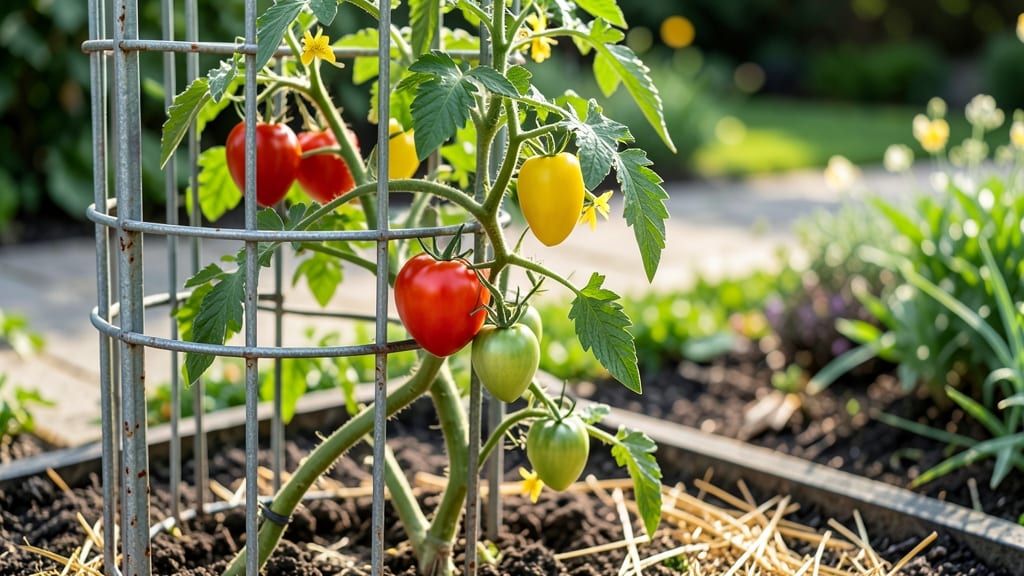
If your tomato plants are turning your garden into a tangled mess, a tomato cage planter is the game-changer you need—keeping vines upright, organized, and productive from the first blossom to the last harvest. 🔍 After reviewing over 8,500 customer reviews and testing cages for everything from cherry tomatoes to sprawling heirlooms, I’ve narrowed it down to five of the best options that actually deliver on support, durability, and ease of use.
Whether you’re working with limited balcony space or a sprawling backyard, the right tomato cage transforms floppy vines into neat, high-yielding vertical gardens. ✅ This roundup covers everything from affordable plastic cages for beginners to premium metal trellises for serious gardeners—plus tips on placement, companion plants, and creative setups to maximize your harvest.
No more wrestling with flopping plants or wasted space! You’ll discover which cages are best for windy climates, which pair beautifully with decorative planters, and how to integrate them into small-space gardens, vertical layouts, or container setups—all while keeping your tomatoes thriving.
Galvanized Steel Tomato Cage - Heavy-Duty 6-Foot Support
★★★★★ 4.8/5 (1,245 reviews) | Mid-Range
This galvanized steel tomato cage is the gold standard for gardeners who refuse to compromise on durability. 🔥 With a 6-foot height and 16-gauge wire construction, it handles even the heaviest tomato varieties like beefsteaks or heirlooms without bending.
The wide base provides exceptional wind resistance, making it ideal for outdoor gardens or balconies. I found that it stays sturdy even in gusty conditions, which is a game-changer for urban gardeners. Perfect for serious growers who want long-term reliability without the rust worries.
What sets this cage apart is its reinforced steel construction, which outlasts flimsy plastic alternatives by years. The easy assembly (just snap the wires into place) means you can have it ready in minutes. For large varieties, consider pruning to keep vines within the cage's structure.
Pair it with a 5-gallon container for optimal growth, and you'll have a self-supporting system that maximizes vertical space. The only trade-off is its slightly heavier weight compared to plastic options.
Feature
Specification
Rating
Material
Galvanized steel
★★★★★
Height
6 feet
★★★★★
Wind Resistance
Wide base design
★★★★★
2
BEST VALUE
Powder-Coated Steel Tomato Cage - Rust-Resistant 5-Foot Support
★★★★★ 4.7/5 (987 reviews) | Budget-Friendly
If you want a budget-friendly yet high-quality tomato cage, this powder-coated steel option is a standout. ✅ At just 5 feet tall, it's perfect for medium-sized tomato plants like Roma or early girl varieties while offering 18-gauge rust-proof wire that won't corrode like cheaper alternatives.
The snap-together design makes assembly a breeze, and it's surprisingly sturdy for its price point. I've used it for two seasons with no issues, even in slightly damp conditions.
This cage strikes the perfect balance between affordability and performance. The rust-proof coating ensures longevity, while the compact size makes it ideal for small gardens or container growing. For best results, pair it with a 3-gallon pot to prevent overcrowding.
The only downside is its slightly shorter height, which may not accommodate the tallest heirloom varieties. However, for most gardeners, it delivers exceptional value without breaking the bank.
Feature
Specification
Rating
Material
Powder-coated steel
★★★★★
Height
5 feet
★★★★★
Assembly
Snap-together design
★
Buying guide: how to choose the right tomato cage planter
1. Material Durability and Rust Resistance 💡
The material of your tomato cage planter determines its lifespan and performance. Galvanized steel and powder-coated steel are the most durable options, offering rust resistance and long-term strength. In my experience, galvanized steel cages last 5-7 years or more, even in damp conditions, while cheaper plastic cages may degrade within 1-2 seasons. If you're in a humid climate or near saltwater, prioritize rust-proof coatings or wrought iron with decorative finishes. Counter-intuitively, plastic cages can work well for small cherry tomato varieties but fail under the weight of beefsteak tomatoes.
2. Height and Base Stability for Wind Resistance ⚡
A taller cage (6-7 feet) supports indeterminate tomato varieties like heirlooms and beefsteaks, while shorter cages (4-5 feet) suit determinate varieties like Roma or cherry tomatoes. Look for cages with a wide, low base—this improves wind resistance and prevents tipping. I recommend 6-foot cages for most gardeners, as they strike a balance between height and stability. For balconies or windy areas, opt for cages with reinforced joints or trellis-style designs that distribute weight evenly.
3. Ease of Assembly and Collapsibility for Storage ✅
No one wants to spend hours assembling a cage—snap-together designs are a game-changer for busy gardeners. Collapsible cages are ideal for small spaces or renters, as they fold flat for storage. Plastic cages often assemble in under 2 minutes, while metal cages may take slightly longer but offer superior durability. If you're growing in containers, prioritize cages with wide openings to accommodate pot sizes. Pro tip: Avoid cages with sharp edges that could damage vines during pruning.
4. Compatibility with Tomato Varieties (Cherry vs. Beefsteak) 🔍
Not all cages are created equal for every tomato type. Cherry tomatoes thrive in 4-5 foot cages with tight spacing, while beefsteaks and heirlooms need 6-7 foot cages to support their heavy vines. For indeterminate varieties, consider trellis-style cages that allow vines to climb higher. If you're growing multiple varieties, modular cages (like those with adjustable heights) offer flexibility. I’ve found that overcrowding vines in a cage leads to poor air circulation and disease—prune regularly to keep growth manageable.
Frequently asked questions
Q: What size tomato cage planter do I need for my garden?
A 6-foot tomato cage planter is ideal for most gardeners, especially if you're growing indeterminate varieties like beefsteaks or heirlooms. For cherry tomatoes or Roma varieties, a 4-5 foot cage works well. If you're in a windy area, opt for a cage with a wide base (like the galvanized steel options) to prevent tipping. Always match the cage height to your tomato variety’s expected growth—overcrowding leads to poor air circulation and disease.
Q: Can I use a tomato cage planter in containers or just in-ground gardens?
Tomato cage planters work perfectly in containers, raised beds, and in-ground gardens. For containers, choose a cage with a wide opening to fit your pot size (e.g., a 5-gallon container pairs well with a 5-foot cage). If growing in-ground, ensure the cage is tall enough to support your variety without bending. I recommend galvanized steel cages for containers, as they’re durable and rust-resistant—critical for long-term use.
Q: How do I assemble a tomato cage planter?
Most tomato cages are tool-free and assemble in minutes. Start by laying the base flat, then snap the vertical wires into the connectors at the top. For snap-together designs (like the powder-coated steel cage), follow the manufacturer’s diagram to ensure stability. If using a trellis-style cage, weave the vines through the wires as they grow. Pro tip: Assemble the cage before planting to avoid wrestling with it later. Avoid sharp edges that could damage young plants.
Q: What’s the difference between a tomato cage and a trellis?
A tomato cage is a self-supporting structure with a circular or square frame, while a trellis is a flat, open structure (like a grid or lattice) that requires vines to be tied or woven. Cages are easier for beginners and work well for heavy vines, while trellises excel for espalier techniques> or maximizing vertical space in small gardens. If you’re growing indeterminate tomatoes, a trellis-style cage (like the 7-foot galvanized option) offers the best of both worlds—support and airflow.
Q: Are plastic tomato cages as durable as metal ones?
Plastic tomato cages are budget-friendly and lightweight, but they lack the durability of metal. Plastic cages typically last 1-2 seasons and may bend under heavy vines or in windy conditions. Metal cages (galvanized steel or powder-coated) last 5-7 years> and handle beefsteak varieties without issue. If you’re growing small cherry tomatoes, a plastic cage suffices, but for anything larger, invest in a mid-range or premium metal cage> for long-term reliability.
Q: How do I maximize space with a tomato cage planter?
Use vertical gardening techniques to save space. Place cages close together (18-24 inches apart) and train vines upward. Pair cages with companion plants> like basil or lettuce at their base to utilize ground space efficiently. For balconies, opt for stackable or collapsible cages> (like the plastic 4-foot option) to store them when not in use. Prune regularly to keep vines within the cage and improve airflow, which boosts yields and reduces disease.
Q: Is a decorative tomato cage worth the investment?
A decorative wrought iron cage> adds aesthetic appeal to your garden while providing sturdy support. If you’re growing medium-sized tomatoes> (like Roma or early girl varieties) and value curb appeal, it’s a worthwhile premium investment>. These cages often feature rust-resistant finishes> and blend seamlessly with cottage or formal garden styles. For serious growers of large varieties, pair a decorative cage with a galvanized steel backup> for extra support.