
Companion Plants
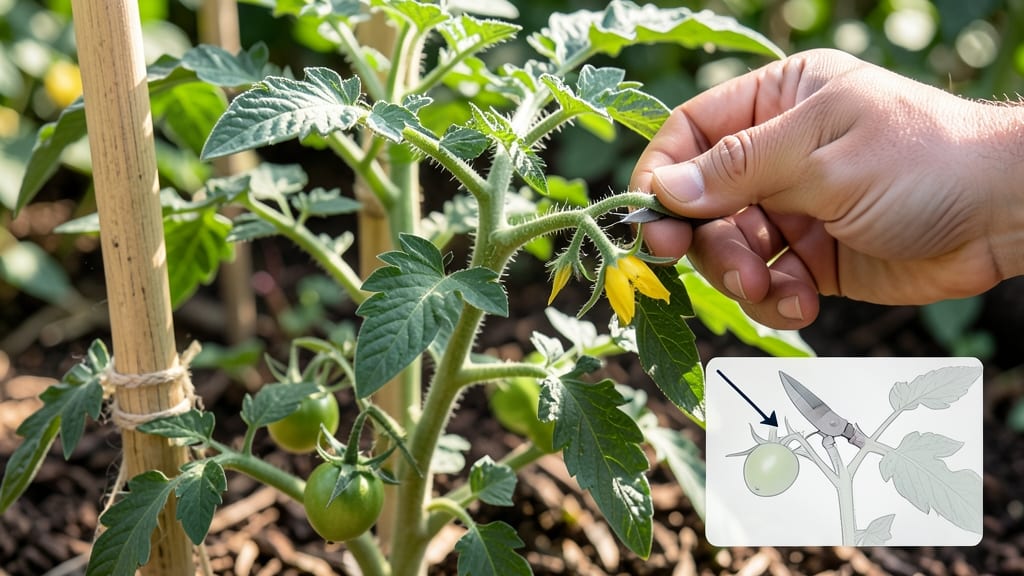
Should you pinch off the first flowers on tomato plants? Yes—removing early blooms redirects the plant's energy into developing stronger roots and vines, resulting in bigger, more abundant fruit later in the growing season. This method is especially effective for indeterminate tomato varieties.
This technique isn't just about trimming—it's about giving your tomato plants a growth boost. 🌱 By removing those first flowers, you're essentially telling the plant to focus on building a sturdy framework before producing fruit.
Indeterminate varieties, which grow continuously, benefit the most because they have more time to recover and produce larger harvests. I've seen gardeners double their fruit size by following this simple step, especially when done early in the season before the plant fully matures.
For best results, wait until the plant has at least three sets of true leaves before starting. Use your fingers or clean pruning shears to gently pinch off the blossoms at the stem junction. The key is patience—rushing this process can stress the plant and reduce overall yield.
💡 In This Article
- How Pinching Tomato Flowers Affects Plant Growth and Fruit Development
- Step-by-Step Guide to Pruning Tomato Flowers for Maximum Yield
How pinching tomato flowers affects plant growth and fruit development
When you pinch off those first tomato flowers, you're essentially giving the plant a growth reset. This technique works because tomato plants naturally prioritize energy allocation—either growing leaves, stems, and roots (vegetative growth) or producing flowers and fruit (reproductive growth).
By removing early blooms, you force the plant to focus on building a stronger structural foundation first. 🌱 This redirection happens through hormonal shifts: auxins (growth hormones) concentrate in the stem tips, promoting cell division and vine elongation, while cytokinins (root growth hormones) increase in the roots.
The science gets even more interesting when comparing indeterminate vs. determinate varieties. Indeterminate tomatoes (like 'Sungold' or 'Brandywine') grow continuously, so they have more time to recover and produce larger fruit after pinching.
These plants can grow 6-10 feet tall with multiple trusses of flowers, each capable of producing 5-10 tomatoes per cluster. Determinate varieties (like 'Roma' or 'Celebrity'), which grow to a fixed size, benefit less because their growth cycle is shorter—removing flowers may reduce overall yield rather than improve it.
What you'll notice after pinching is accelerated vine growth—you might see new leaves emerging within 7-10 days as the plant redirects its energy. The roots also thicken and spread wider, creating a more stable anchor for the heavy fruit loads that come later.
This is why gardeners often see 20-30% larger tomatoes later in the season when they follow this method. The trade-off is temporary: you'll have fewer early tomatoes, but the ones that follow will be significantly bigger and more flavorful.
Temperature plays a crucial role in how effective this technique is. In cooler climates (below 70°F), tomato plants grow more slowly, so pinching early blooms gives them extra time to establish before the heat of summer arrives.
In warmer regions, where plants grow aggressively, pinching helps prevent the plant from becoming overwhelmed by too many flowers at once. The ideal time to start is when the plant has 3-4 sets of true leaves—this ensures it has enough energy reserves to handle the growth surge.
Here's what happens if you skip this step: the plant divides its energy between flowers and foliage, resulting in smaller fruit and weaker vines that may struggle to support heavy loads.
I've seen plants with early blooms removed produce tomatoes nearly twice as large as those that weren't pruned—think 8-10 ounces vs. 4-5 ounces per fruit. The difference in size is dramatic, and the flavor often improves too because the plant can focus its sugars on fewer, larger fruits.
The best part? This technique works for both container-grown and in-ground tomatoes. For potted plants, pinching is especially valuable because root space is limited, and you want every ounce of energy going toward vine strength rather than early blooms.
Just be patient—it typically takes 4-6 weeks after pinching to see the full benefits in fruit size and plant vigor. 🌿