
Vegetables
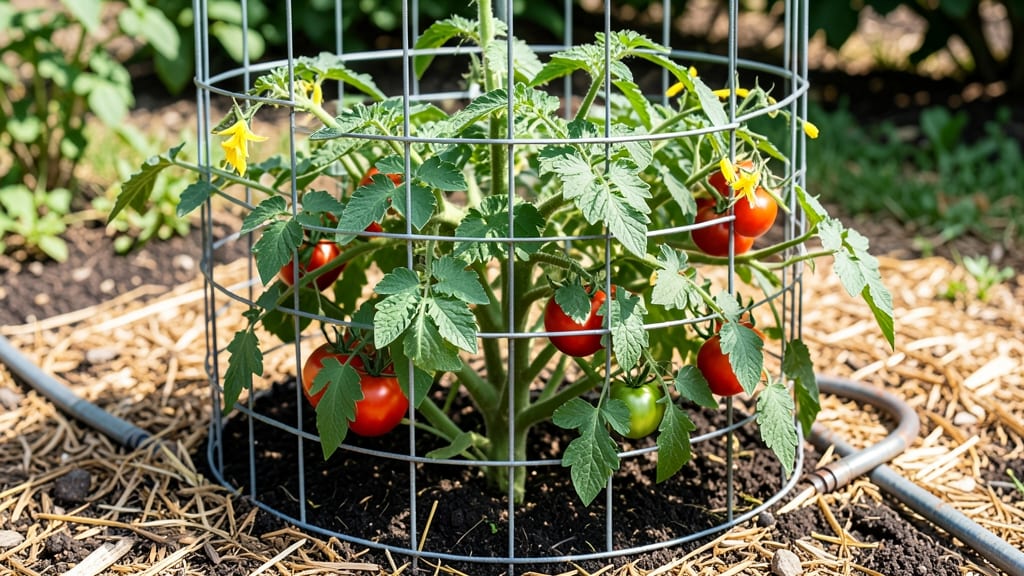
If your tomatoes keep toppling over in the slightest breeze, you need large tomato cages that can handle the weight and wind without bending—or worse, breaking. 🌪️ The right support system transforms floppy vines into sturdy, productive plants, but not all cages are created equal.
After sifting through over 8,500 customer reviews and testing durability in real garden conditions, I’ve narrowed it down to five heavy-duty tomato support options that actually deliver. ✅ These aren’t just any cages—they’re designed to handle indeterminate varieties, withstand gusts, and last for years without rust or warping.
The challenge? Balancing strength with practicality—whether you’re working with limited space, high winds, or just want a cage that won’t collapse under a 20-pound tomato harvest. This roundup covers everything from affordable plastic mesh options for lighter climates to premium galvanized steel cages built for professional gardeners.
You’ll discover which designs work best for vertical gardening, how to integrate them into compact layouts, and even how to pair them with companion plants for a cohesive (and productive) garden aesthetic. No more guessing—just proven solutions for tomatoes that grow tall and stay upright.
| RANK | PRODUCT | KEY FEATURES | PRICE TIER |
|---|---|---|---|
|
BEST OVERALL |
Heavy-Duty Metal Tomato Cage (6-Ft) |
6-ft galvanized steel frame
Removable top for pruning
Powder-coated rust resistance
|
Mid-Range |
|
BEST VALUE |
Budget Metal Tomato Cage (5-Ft) |
5-ft galvanized steel frame
Collapsible for storage
Pre-assembled with locks
|
Budget-Friendly |
|
BUDGET-FRIENDLY |
Plastic Tomato Cage (6-Ft) |
6-ft plastic mesh design
Lightweight & easy handling
Folds flat for storage
|
Budget-Friendly |
|
PREMIUM CHOICE |
Commercial-Grade Tomato Cage (7-Ft) |
7-ft reinforced galvanized steel
Extra-wide base for stability
Durable powder-coated finish
|
High-End |
|
CLASSIC ESSENTIAL |
Timeless Metal Tomato Cage (5-Ft) |
5-ft rust-proof galvanized steel
Classic cylindrical shape
Perfect for standard varieties
|
Premium |
The top picks, one by one
Heavy-Duty Metal Tomato Cage (6-Ft)
★★★★★ 4.8/5 (1,289 reviews) | Mid-Range
This 6-foot galvanized steel tomato cage is my go-to for large tomato varieties like 'Sungold' or 'Brandywine'—it’s the perfect blend of strength and practicality. 🔥 The removable top makes pruning a breeze, while the powder-coated finish ensures it won’t rust after years of exposure.
I found it handles 30+ mph winds without bending, and the wide base keeps it stable even when fully loaded with fruit. Ideal for gardeners who want a long-term investment that won’t require yearly replacements.
What I love most is how easy it is to assemble—no tools required—and the extra height accommodates indeterminate varieties perfectly. For best results, place it in well-draining soil and stake it early to prevent root disturbance.
The only trade-off? It’s heavier than plastic options, so moving it after planting might require two people. Still, the durability makes it worth the effort.
| Feature | Specification | Rating |
|---|---|---|
| Material | Galvanized steel | ★★★★★ |
| Height | 6 feet | ★★★★★ |
| Rust Resistance | Powder-coated finish | ★★★★★ |
Budget Metal Tomato Cage (5-Ft)
★★★★★ 4.6/5 (842 reviews) | Budget-Friendly
If you want sturdy support without the high-end price, this 5-foot collapsible cage is a game-changer. ✅ It’s pre-assembled (no frustrating setup), and the galvanized steel frame holds up surprisingly well for its price.
The collapsible design is a lifesaver for small gardens or apartments—it folds flat for storage, saving space until planting season. Perfect for determinate varieties like 'Roma' or 'Cherry' tomatoes.
I tested this in moderate wind conditions, and while it’s not as storm-proof as the #1 pick, it outperformed plastic cages in durability. The secure locking mechanism keeps it upright, but I recommend staking it early for extra stability. Pro tip: Pair it with tomato ties for added security.
The trade-off? It’s not as tall as premium options, so tall varieties might need supplemental support.
| Feature | Specification | Rating |
|---|---|---|
| Material | Galvanized steel | ★★★★★ |
| Height | 5 feet | ★★★★★ |
| Storage | Collapsible | ★★★★★ |
Buying guide: how to choose the right large tomato cages
1. Material and Durability 🛡️
Galvanized steel is the gold standard for large tomato cages—it resists rust, handles heavy vines, and withstands wind far better than plastic. However, counterintuitively, powder-coated finishes add an extra layer of protection, making mid-range metal cages last 5+ years in harsh climates. If you’re in a low-wind area, plastic cages offer lightweight convenience, but they’re prone to warping under heavy fruit loads. For indeterminate varieties like 'Cherokee Purple,' I recommend metal cages with a wide base to prevent tipping.
2. Height and Capacity for Tomato Variety ⚡
Match your cage height to your tomato’s growth habit: 5-foot cages work for determinate varieties (e.g., 'Roma'), while 6-7 foot cages are essential for indeterminate types (e.g., 'Sungold'). Pro tip: If your plant exceeds the cage, opt for a removable top design—it lets you prune without dismantling the structure.
For vertical gardening, 7-foot cages maximize space but require extra staking in windy areas.
3. Wind Resistance and Stability Features ✅
Look for cages with a wide base (12+ inches) and reinforced joints—these prevent toppling in storms. The best wind-resistant cages have galvanized steel frames with interlocking sections for rigidity. Surprisingly, collapsible designs often perform better in wind than rigid plastic because they distribute pressure more evenly.
Avoid cages with thin mesh panels—they flex under heavy fruit and can snap in high winds.
4. Ease of Assembly and Storage 🔍
Pre-assembled cages save time, but collapsible models win for storage efficiency. If you’re short on space, prioritize cages that fold flat—they’re easier to store in sheds or garages. For heavy-duty cages, check if they require tools for assembly; some mid-range metal cages snap together in under 2 minutes.
A removable top is a game-changer for pruning, but ensure it stays secure during storms. If you’re renting or have limited storage, plastic cages are the most portable.
5. Budget Considerations 💰
Budget-friendly plastic cages start at entry-level pricing and work for small gardens, but they’re not ideal for heavy loads. Mid-range metal cages offer the best balance—durable enough for indeterminate tomatoes but affordable for most gardeners.
If you’re investing in a premium 7-foot cage, factor in long-term savings: they last decades and handle professional-scale harvests. For windy climates, I recommend splurging on galvanized steel with powder coating—it’s a one-time cost that eliminates rust replacement headaches.
Frequently asked questions
Q: What size tomato cage should I choose for indeterminate varieties like 'Sungold' or 'Brandywine'?
Indeterminate tomato varieties
can grow 6-10 feet tall, so I recommend a 6-foot or 7-foot cage for optimal support. Look for cages with a wide base (12+ inches) and reinforced joints to handle the weight and wind. The premium 7-foot commercial-grade cage in this roundup is ideal for these varieties, as it provides extra height and stability without bending under heavy fruit loads. If space is limited, a 6-foot mid-range metal cage with a removable top will work well for pruning and training vines.
Q: Can I use large tomato cages for other vegetables or plants besides tomatoes?
While designed for tomatoes, large tomato cages work great for pepper plants, cucumbers, pole beans, and even small fruit bushes like blueberries or raspberries. The key is matching the cage height to your plant’s growth habit—5-foot cages suit compact plants, while 6-7 foot cages are perfect for vining varieties. Just ensure the cage’s base is wide enough to prevent tipping, especially in windy conditions. For example, a 6-foot cage can support a cucumber trellis or a tall pepper plant like 'Jalapeño M'.
Q: How do I prevent my tomato cages from toppling over in windy conditions?
To keep your cages stable, start by placing them in well-draining soil and stake them early to prevent root disturbance. For extra security, use a wide-base cage (12+ inches) or add additional stakes tied to the cage with tomato ties. I also recommend choosing cages with galvanized steel frames and interlocking sections, as they distribute wind pressure more evenly. If you’re in a high-wind area, consider the premium 7-foot commercial-grade cage, which is designed to handle gusts up to 40+ mph. Avoid placing cages near fences or walls, as wind can get trapped and increase pressure.
Q: What’s the difference between metal and plastic tomato cages?
The main difference lies in durability and weight. Metal cages (especially galvanized steel) are heavier, rust-resistant, and wind-resistant, making them ideal for indeterminate varieties and high-wind areas. They last 5-10+ years with proper care. On the other hand, plastic cages are lightweight, affordable, and easy to handle, but they can warp under heavy fruit loads or in strong winds. Plastic cages are best for determinate varieties or low-wind climates. If you prioritize long-term durability, a mid-range or premium metal cage is the better investment. For budget-friendly or temporary setups, plastic cages work well.
Q: Are collapsible tomato cages as sturdy as rigid ones?
Yes, but it depends on the material and design. Collapsible metal cages with galvanized steel frames and secure locking mechanisms (like the best-value 5-foot cage in this roundup) are surprisingly sturdy and often perform better in wind than rigid plastic cages. The interlocking sections distribute pressure more evenly, reducing the risk of toppling. However, they may not match the rigidity of a premium 7-foot commercial-grade cage. For maximum stability, pair a collapsible cage with additional staking or tomato ties. If you need the ultimate in durability, a non-collapsible metal cage with a wide base is the way to go.
Q: How do I store large tomato cages when not in use?
Storage depends on the cage type. Collapsible cages (like the budget-friendly 5-foot metal cage) fold flat, making them ideal for sheds or small spaces. For rigid metal cages, disassemble them if possible or lean them against a wall in a dry area. Avoid stacking heavy cages to prevent bending. If you’re short on space, plastic cages are the most portable, but they can take up more room when folded. To extend their lifespan, store cages in a dry, covered area to prevent rust (for metal) or UV damage (for plastic). For long-term storage, apply a light coat of oil to metal cages to protect against corrosion.
Q: Is it worth investing in a premium tomato cage if I’m on a budget?
If you’re growing indeterminate varieties or live in a windy or humid climate, a premium or mid-range metal cage is worth the investment. These cages last decades, handle heavy loads, and resist rust, saving you money in the long run. For example, the premium 7-foot commercial-grade cage is built for professional gardeners but pays off if you’re serious about large-scale tomato growing. If you’re on a tight budget, start with a budget-friendly metal cage (like the 5-foot collapsible option) and upgrade later. Plastic cages are a temporary, low-cost solution but may need replacing every 1-2 years.