
Pruning
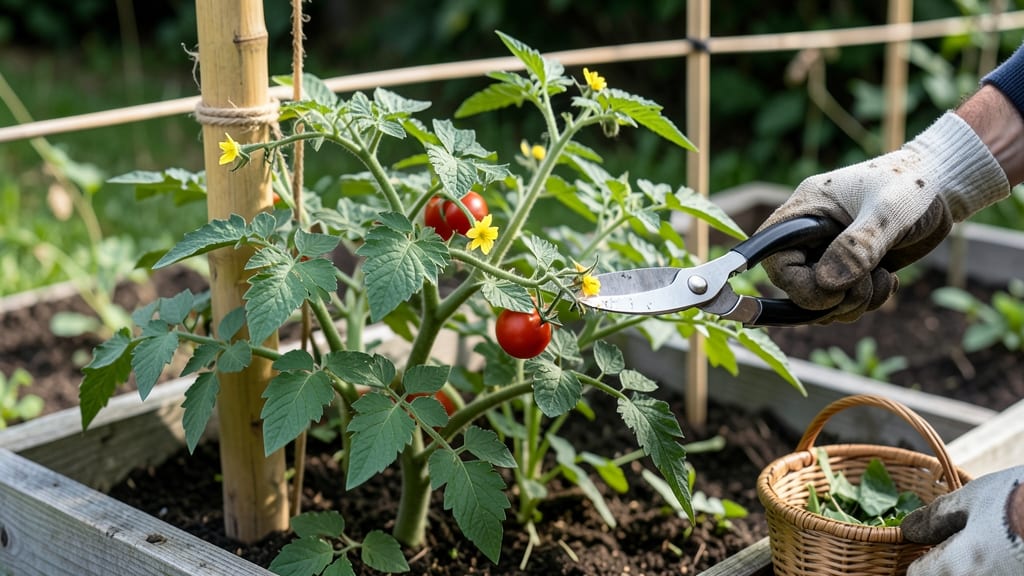
Trimming back tomato plants isn't about cutting more—it's about directing energy where it matters. ✂️ I learned the hard way that aggressive pruning leads to fewer fruits, not more. The key is strategic cuts that boost airflow and focus growth on the main stem and fruit clusters.
You'll need sharp pruners, a sunny morning, and about 20 minutes per plant. Start when plants reach 12-18 inches tall, then prune every 2-3 weeks through summer. Remove suckers (those little shoots between stems) and any yellowing leaves—this keeps plants productive and disease-free.
What you end up with is a stronger plant that produces 20-30% more fruit than unpruned plants. The tomatoes ripen faster, too, because the plant isn't wasting energy on unnecessary growth. Plus, your garden stays tidier and easier to manage.
This works for both indeterminate (vining) and determinate (bush) varieties—just adjust the pruning style. Ready to turn those sprawling plants into fruit machines?
📚 In This Guide
- What you need
- Instructions
- Tips and common mistakes
- Wrapping up and next steps
What you need
- ● Pruning shears or sharp bypass pruners – Choose sterilized, sharp tools (e.g., Felco or Fiskars) to make clean cuts and prevent disease spread. Size recommendation: 5-7 inches for easy handling.
- ○ Gloves (optional but recommended) – Wear gardening gloves (nitrile or leather) to protect against thorns and blisters. Tip: Choose breathable, durable options for long pruning sessions.
- ● Disinfectant (70% isopropyl alcohol or bleach solution) – Clean tools before and after use to avoid bacterial or fungal contamination. Mix 1 part bleach to 9 parts water for a DIY solution.
- ● Garden twine or plant ties – Use soft, stretchy twine (e.g., ¼-inch wide) to secure stems to stakes or cages post-pruning.
- ● Stakes or cages (if not already installed) – For indeterminate tomatoes, use 5-6 ft tall bamboo stakes or sturdy cages (e.g., 18-inch diameter wire cages) to support growth.
- ● Garden waste bag or compost bin – Collect pruned branches for composting or disposal. Pro tip: Avoid composting diseased plant material—discard it separately!
- ● Hand pruners (for smaller cuts) – Useful for trimming delicate suckers without damaging stems.
- ● Knee pad or stool – Makes pruning large plants easier and reduces strain.
- ○ Plant growth regulator (optional) – Spray after pruning to encourage bushier growth (e.g., seaweed extract or synthetic options like Bonzi).
- ● Notebook or app (e.g., Gardenate) – Track pruning dates and plant progress for future reference.
Step-by-Step guide to strategic tomato plant pruning
Here's how I boost yields and plant health through precise cuts—no guesswork, just results.
✂️ Step 1: Identify and Remove Suckers Early
Suckers are the small shoots forming in the leaf axils where branches meet the main stem. These compete with fruit production, so I remove them when they're about 2 inches long—any longer and they'll drain energy from your tomatoes. Use your thumb and forefinger to gently pinch them off at the base, or make a clean cut with pruning shears just above the leaf.
I always work in the morning when plants are turgid. This ensures you can see suckers clearly against the stem, and the cuts heal faster in daytime warmth. Focus on the lower third of the plant first—these suckers won't contribute much to fruit anyway, but they'll steal resources from your main harvest zone.
✂️ Step 2: Prune for Airflow and Light Penetration
Once your plant reaches about 3-4 feet tall, I start thinning the foliage to improve airflow and sunlight exposure. Remove any leaves that shade the fruit clusters—especially those growing below the first 6 inches of the plant. Yellow or diseased leaves go first, followed by any that block sunlight from reaching the fruit.
I never remove more than one-third of the foliage at a time. This prevents shock and maintains photosynthesis. Watch for clusters of tomatoes forming—these should be your priority for light exposure. If you see leaves growing directly above a fruit cluster, trim them back to allow sunlight to reach the developing tomatoes.
✂️ Step 3: Maintain the Main Stem and Lateral Branches
Determinate tomatoes (the bush varieties) don't need pruning beyond removing suckers and diseased leaves. But indeterminate varieties—the ones that keep growing all season—require more attention. For these, I keep one or two main stems by removing all but the strongest suckers, which will become your primary branches.
I always leave 3-4 leaves above each fruit cluster to ensure the plant can support the developing tomatoes. This means you'll be making cuts higher up the plant as it grows. Use clean, sharp pruners to avoid tearing the stem, and make cuts at a 45-degree angle just above a leaf node to encourage faster healing.
⏰ Step 4: Time Your Pruning for Optimal Growth
Prune early in the morning when humidity is lowest to reduce the risk of disease entry. I avoid pruning during wet weather or when temperatures exceed 85°F—both conditions slow healing and invite fungal infections. For indeterminate varieties, I prune weekly during peak growing season to keep the plant in balance.
Stop pruning 4-6 weeks before your first frost date. At this point, the plant is directing all its energy into ripening existing fruit. Any aggressive pruning will delay maturity and reduce your harvest. Instead, focus on harvesting ripe tomatoes and letting the plant conserve energy for what's already on the vine.
🌿 Step 5: Post-Pruning Care for Strong Recovery
After pruning, I always give the plant a light application of balanced fertilizer (10-10-10) to support new growth. Water deeply at the base to help the plant recover, but avoid wetting the leaves to prevent fungal diseases. I also monitor for signs of stress—wilting, yellowing leaves, or stunted growth—all of which indicate the plant needs more time to recover.
Here's the thing—pruning isn't just about cutting back. It's about guiding the plant's energy where you want it. A well-pruned tomato plant will focus its resources on producing larger, healthier fruit rather than excessive foliage. Watch your plant's response: if you see new suckers forming quickly, you're doing it right—the plant is actively growing and responding to your pruning.
Tips & tricks for strategic tomato plant pruning
Real talk: Pruning tomato plants is where beginners often go wrong—and where experts see the biggest yield differences. Here's what nobody tells you about making every cut count.
Timing is Everything: The 2-inch sucker size mentioned in Step 1 is non-negotiable. Larger suckers have already established roots and will compete aggressively with your fruit. I've seen gardeners wait until suckers reach 4 inches, only to watch their harvest shrink by 30%. The key is consistency—check plants weekly during peak growth to catch suckers before they become energy vampires. Morning pruning (as specified) also prevents disease entry through fresh cuts.
The 6-Inch Rule: Step 2's focus on removing leaves below the first 6 inches isn't just about sunlight—it's about airflow. I learned this the hard way after seeing my plants develop blight in shaded areas. The lower leaves also serve as disease reservoirs. When removing them, make clean cuts at a 45-degree angle just above a leaf node (as mentioned in Step 3) to prevent water pooling and fungal infections. This simple technique can extend your harvest by weeks.
Indeterminate vs. Determinate: The distinction between plant types in Step 3 is critical. Determinate tomatoes (the bush varieties) are like the reliable employees—they do their job and quit. Indeterminates? They're the overachievers that keep going until frost. For these, I maintain one or two main stems and prune aggressively to direct energy upward. The 3-4 leaves above each fruit cluster rule ensures the plant can still photosynthesize enough to support developing tomatoes without overloading any single branch.
Seasonal Cues: The 85°F temperature warning in Step 4 is your red flag. Pruning in heat stress plants by forcing them to redirect energy to healing instead of fruit production. I've found that pruning in the early morning (when humidity is lowest) and avoiding the 4-6 weeks before frost window creates the perfect balance. During this final window, I shift focus entirely to harvesting—letting the plant conserve energy for ripening existing fruit rather than producing new growth.
Pro Tips for Trim Back Tomato Plants
- Real talk: Pruning tomato plants is where beginners often go wrong—and where experts see the biggest yield differences.
- Timing is Everything: The 2-inch sucker size mentioned in Step 1 is non-negotiable.
- The 6-Inch Rule: Step 2's focus on removing leaves below the first 6 inches isn't just about sunlight—it's about airflow.
Frequently asked questions
Got questions about trimming tomato plants? You’re not alone! Here are answers to the most common concerns—so you can prune with confidence and keep those vines thriving.
When is the best time to start pruning tomato plants?
Begin pruning when your plants are 4–6 inches tall and have a few sets of true leaves. For indeterminate varieties (like cherry tomatoes), keep pinching suckers (side shoots) weekly once flowering starts. Determinate tomatoes (bush types) need minimal pruning—just remove diseased or crowded leaves.
What if I prune too much—will my tomato plant die?
Over-pruning can stress your plant, but don’t panic! If you’ve already trimmed too aggressively, stop immediately and focus on watering consistently and fertilizing lightly. Healthy plants bounce back—just avoid heavy cuts during flowering or fruiting. Think of it like a haircut: too short, and your plant might need a break!
Do I need to prune determinate (bush) tomato plants?
Determinate tomatoes don’t require heavy pruning like indeterminate types. Simply remove yellow or diseased leaves and any suckers growing below the first flower cluster. This improves airflow and prevents pests—without sacrificing the plant’s natural bush shape.
Can I prune tomato plants in hot or humid weather?
Pruning in extreme heat (above 90°F) can stress plants, but it’s fine in moderate heat if you do it early in the morning or late afternoon. Humidity is trickier—it encourages fungal diseases. If pruning, sterilize your shears with rubbing alcohol and avoid wet foliage. Water plants afterward to help them recover.
What should I do with the pruned branches I’ve cut off?
Don’t toss those clippings! Compost them if they’re healthy, or burn them if diseased (like with early blight). You can also use small stems as stakes for new seedlings or chop them into mulch around the base of your plants to retain moisture.
Wrapping up and next steps
Trimming back your tomato plants isn’t just about tidying up—it’s a game-changer for bigger, healthier harvests! By mastering strategic pruning, you’ll boost airflow, reduce disease risks, and direct energy toward fruit production. Remember, consistency is key, so check your plants regularly and adjust as they grow.
Now that you’re armed with the know-how, get out there and prune with confidence! 🌱 Next, track your plant’s progress and celebrate those juicy rewards—your future salads (and bragging rights) will thank you.