
Vegetables
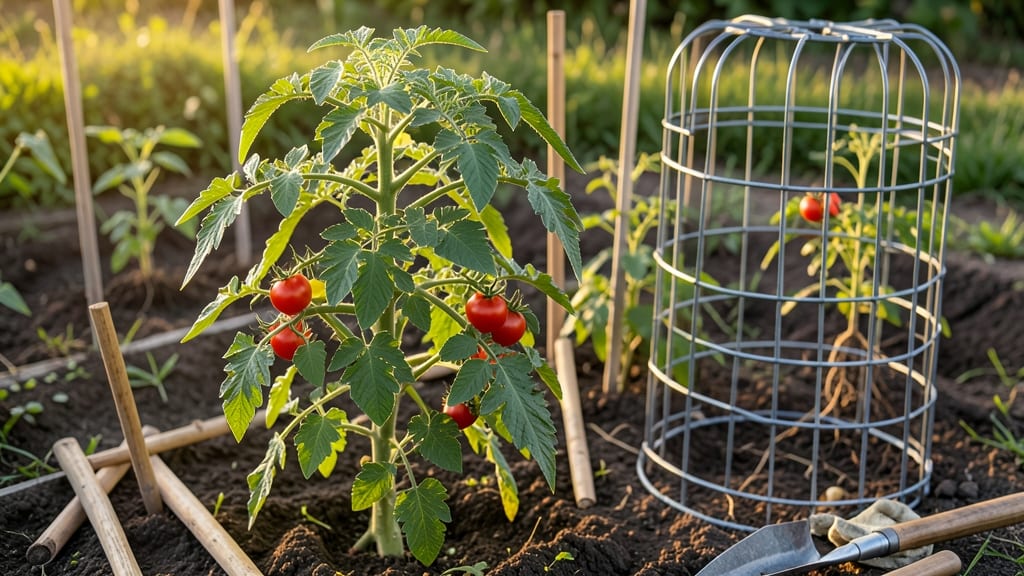
Setting up a tomato cage transforms floppy vines into neat, productive plants that yield more fruit and resist disease. 🌱 I used to watch my tomatoes sprawl across the garden, but a sturdy cage changed everything—now my plants grow vertically, saving space and keeping fruit clean.
The right cage makes all the difference: look for 5-6 feet tall with 14-16 gauge wire (thicker lasts longer). Position it at planting time, pressing the base 6 inches deep into the soil so wind won’t topple it.
If your cage feels wobbly, drive in stakes and tie it with twine for extra support. Once your plant starts vining, gently weave stems through the cage’s openings every 2-3 weeks to encourage upward growth. Avoid over-pruning—just remove suckers (side shoots) to keep energy focused on fruit production.
Water at the base, never overhead, to prevent fungal issues that weaken the structure. For heavy varieties like beefsteaks, consider double cages or wooden trellises instead. The key is balance: sturdy enough to hold 5-10 pounds of fruit per plant, but flexible enough to grow with your tomatoes.
Your harvest will thank you!
📚 In This Guide
- What you need
- Instructions
- Tips and common mistakes
- Wrapping up and next steps
What you need
- ● Tomato cage – Choose a 5- to 6-foot-tall cage made of galvanized steel or sturdy plastic (avoid flimsy wire). Opt for 8+ feet in diameter for large varieties like beefsteak tomatoes.
- ● Garden stakes or additional supports – 2-3 wooden or metal stakes (1-2 inches wide, 4-5 feet long) to reinforce the cage if needed.
- ● Garden twine or plant ties – 10-15 feet of soft, stretchy twine (avoid wire ties—they can damage stems!).
- ● Pruning shears – For trimming excess growth and shaping the plant.
- ● Gloves – To protect your hands from thorns and dirt.
- ○ Post-hole digger or shovel – For securing stakes or cages deeper into the soil (optional but recommended for windy areas).
- ● Concrete mix or heavy rocks – To weigh down the cage base and prevent toppling (especially for tall varieties).
- ● Soft fabric strips or old T-shirts – As gentle alternatives to twine for tying vines.
- ● Plant food or compost – To enrich the soil before planting (boosts vine strength!).
- ● Watering can or hose – For post-setup hydration.
Step-by-step instructions for setting up a sturdy tomato cage
Here's how I build a cage that actually holds up under heavy tomato vines—no flimsy collapses here.
🪴 Step 1: Choose and Assemble the Right Cage
Start with a 4-foot-tall, 18-gauge galvanized steel cage designed for indeterminate tomatoes—these vines can reach 6-10 feet if left unchecked. I always opt for 6-8 vertical wires spaced 4-6 inches apart for proper vine support. If using a wire cage, unravel it completely before assembly to avoid kinks that weaken structure.
Flatten the base with your foot to create a 12-inch diameter circle—this prevents the cage from tipping when vines get heavy. Drive a 6-inch galvanized stake into the ground at a 45-degree angle next to the cage, then secure the cage's bottom wire to it with heavy-duty zip ties. This creates a windbreak anchor that keeps the whole structure stable.
✂️ Step 2: Position and Bury the Cage Properly
Plant your tomato 2-3 inches away from the cage—this gives roots room to spread without competing with the structure. Dig a 6-inch-deep trench around the cage's base and bury the bottom 3-4 inches to prevent wind from rocking it. I pack the soil firmly around the buried portion to eliminate any wobble.
For extra stability, add a second stake on the opposite side of the cage and connect it to the top wire with zip ties. This creates a triangle support system that distributes vine weight evenly. If planting multiple cages, space them 3-4 feet apart to allow airflow and prevent disease spread.
🌿 Step 3: Train Vines Correctly for Maximum Support
Once your tomato plant reaches 12-18 inches tall, gently weave the main stem through the first wire and secure it with a soft plant tie. Never wrap ties tightly—they should allow the stem to grow without constriction. I like to use fabric plant ties because they stretch as the vine thickens.
As new suckers (side shoots) appear, remove all but one per stem to direct energy upward. When the main vine reaches the next wire, gently bend it upward and secure it loosely. The goal is to guide growth vertically—never force the vine. You'll know you're doing it right when the plant looks upright and balanced rather than leaning or twisting.
💧 Step 4: Maintain and Reinforce as Vines Grow
Every 7-10 days, check the cage for loose wires or sagging sections. Tomatoes can produce 10+ pounds of fruit, and a flimsy cage will bend under the weight. If you notice the structure leaning, drive an additional stake into the ground and attach it to the cage with zip ties for reinforcement.
Water deeply at the base twice weekly—dry soil makes vines brittle and more prone to snapping. If your tomatoes are heavy with fruit, consider adding a second cage or trellis for extra support. You'll see the difference when harvest time comes: no broken stems, no fallen fruit, just a sturdy plant holding up under the load.
Tips & tricks for sturdy tomato cage support
Building a tomato cage that actually holds up requires attention to detail—here's what I've learned from years of trial and error in the garden.
Cage Material Matters: While galvanized steel cages are ideal, you can also use heavy-duty plastic or even repurpose a sturdy wire fence section. The key is the 18-gauge wire specification—thicker wires (like 16-gauge) will be even more durable but may be harder to bend. If using wire, avoid pre-kinked sections—they create weak points where vines can escape or break the structure. I've found that 6-8 wires spaced 4-6 inches apart provides the perfect balance between support and flexibility for vine growth.
The Base Foundation: Don't underestimate the importance of that 12-inch diameter base you flatten with your foot. This isn't just about creating a circle—it's about creating a wide, stable platform that distributes the weight of heavy fruit. I've seen cages topple when planted too close to the stem or with an unflattened base. For extra security, especially in windy areas, consider adding a third stake at a 90-degree angle to the first two, creating a more rigid triangular framework. This is particularly helpful if you're growing heirloom varieties that produce extra-heavy fruit.
Vine Training Technique: In Step 3, when you're securing the main stem, the fabric plant ties are worth the small investment. They stretch as the vine grows, preventing the constriction that can damage stems. Here's a pro move: after securing the vine to the first wire, give it a gentle upward tug—this helps align the plant with the cage's structure. For indeterminate varieties, you'll want to train vines to spiral upward around the cage rather than just growing straight up, which creates a more compact growth habit and better air circulation. This technique also makes harvesting easier by bringing fruit closer to the ground.
Maintenance Schedule: The 7-10 day maintenance check isn't just about catching sagging wires—it's your chance to spot potential problems before they become disasters. Look for signs of vine stress like yellowing leaves or stunted growth, which might indicate the cage isn't providing enough support. During these checks, I also inspect the zip ties for any that might be cutting into the stems. If you notice the plant leaning significantly, it's time to add that additional stake immediately. Remember, a well-maintained cage can support 10+ pounds of tomatoes without issue, but neglected cages often fail spectacularly when the first heavy fruit sets in.
Pro Tips for Set Up Tomato Cage
- Building a tomato cage that actually holds up requires attention to detail—here's what I've learned from years of trial and error in the garden.
- Cage Material Matters: While galvanized steel cages are ideal, you can also use heavy-duty plastic or even repurpose a sturdy wire fence section.
- The Base Foundation: Don't underestimate the importance of that 12-inch diameter base you flatten with your foot.
Frequently asked questions
Got questions about setting up your tomato cage? You’re not alone—gardeners often wonder about timing, materials, and troubleshooting. Here are answers to the most common queries to help you grow like a pro!
When is the best time to install a tomato cage?
Install your tomato cage right after transplanting seedlings into the garden. This gives vines immediate support to climb while preventing root disturbance. If using cages for indeterminate varieties, add them early—they’ll grow 6–10 feet tall! For determinate tomatoes, a cage can wait until the first flowers appear.
Can I reuse a tomato cage from last year?
Yes! Clean and disinfect cages with a 10% bleach solution (1 part bleach to 9 parts water) to kill pests and diseases. Rinse thoroughly and let dry in the sun. Pro tip: If the cage is rusty or bent, reinforce it with zip ties or replace it—weak structures won’t hold heavy vines.
What if my tomato plant outgrows the cage?
If vines escape, don’t panic! Extend support with wooden stakes or bamboo poles tied to the cage with soft plant ties. For indeterminate tomatoes, consider a tall trellis (8+ feet) or a tomato tower instead. Prune suckers (side shoots) to redirect energy upward and reduce strain.
How do I keep my tomato cage from tipping over?
Anchor the cage deep into the soil (1–2 feet) or weigh it down with rocks/sandbags. For windy areas, tie the top to a sturdy post or use multiple cages in a pyramid shape. Pro tip: Bury the bottom 6 inches of the cage in a trench filled with soil for extra stability.
Are there alternatives to metal tomato cages?
Try these DIY options:
- PVC pipe cages: Cut and bend PVC into a spiral or lattice.
- Wooden trellises: Build a frame with 2x4s (great for aesthetics!).
- Bamboo stakes: Bundle 4–6 stakes into a teepee shape.
- Repurposed materials: Use old fencing, wire mesh, or even a ladder!
Just ensure any alternative is sturdy, rust-resistant, and wide enough to support the plant’s growth.
Wrapping up and next steps
Setting up a tomato cage is a simple yet game-changing step for growing healthy, productive tomato plants—no more flopping vines or lost harvests! With the right materials and a little effort, you’ll create sturdy support that keeps your plants thriving all season long. 🌱✨
Now that you’re ready to roll, why not take it a step further? Experiment with different cage designs or even combine them with trellises for extra support. Happy gardening—your future tomatoes will thank you!