
How To
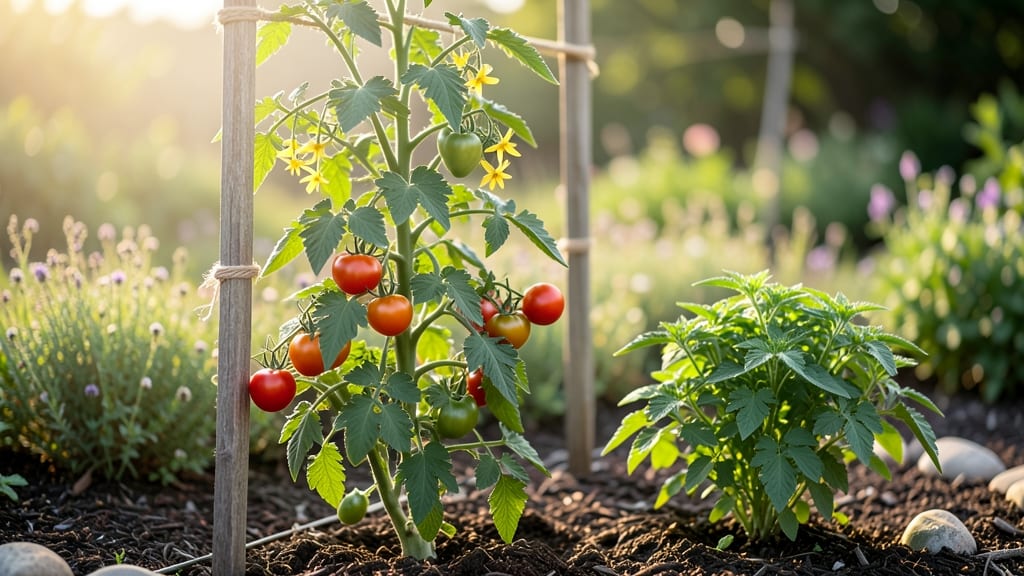
How tall tomato plants grow can be a fascinating mystery—some stay compact at 3 feet, while others climb to 10 feet or more with the right care.
Ever wondered why your 🍅 plants are either reaching for the sky or staying stubbornly short? The answer lies in the variety you’ve chosen, how you prune them, and the conditions you provide.
Determinate types like Roma max out at 5 feet, while indeterminate varieties like Cherokee Purple can stretch to 10 feet if left unchecked.
Beyond variety, sunlight, soil nutrients, and even your pruning habits play a huge role in how tall your tomato plants grow. Too much pruning can stunt growth, while neglecting support can lead to sprawling vines that break under the weight of fruit.
In this guide, I’ll break down the height ranges by variety, share pruning tips to control growth, and reveal the factors that influence how tall your tomato plants will get—so you can grow the perfect-size plants for your garden.


Tomato plant height ranges by variety: determinate vs indeterminate explained
Understanding tomato plant height starts with knowing the two main growth types: determinate (bush) and indeterminate (vining). These categories determine everything from garden space needs to harvest timing.
Determinate varieties stop growing once they flower, while indeterminate types keep climbing until frost. This fundamental difference affects how you'll support and prune your plants for maximum yield.
The average height of tomato plants varies dramatically between these types. Determinate varieties typically reach 3-5 feet tall, making them ideal for containers or small gardens. Indeterminate varieties, however, can soar to 6-10 feet or more if unchecked—requiring sturdy trellises or cages.
Your choice of variety directly impacts your garden layout and maintenance routine.
Popular determinate varieties like Roma (3-5 ft) and Celebrity (4 ft) are perfect for gardeners with limited space. Their compact growth means they don’t need staking, but they produce all their fruit in a 2-3 week window.
This makes them great for canning or sauces. In contrast, indeterminate varieties like Cherokee Purple (6-10 ft) or Brandywine (8+ ft) keep growing and producing fruit until frost.
If you're growing indeterminate tomatoes, plan for vertical space. A 6-foot trellis or cage system is essential to support their weight and prevent sprawling. Without proper support, these vining plants can sprawl across 10+ square feet of garden space, competing with nearby plants for sunlight and nutrients.
My Cherokee Purple plants last year reached 9 feet tall and produced 20 lbs of tomatoes over the season—all thanks to a sturdy bamboo trellis.
For small-space gardening, consider dwarf varieties like Tiny Tim (1-2 ft) or Patio Princess (2-3 ft). These are bred specifically for containers and balconies, producing pint-sized tomatoes without the height.
Even in 5-gallon buckets, these varieties thrive with proper watering and sunlight. The trade-off? You’ll get fewer tomatoes per plant compared to larger varieties.
Your garden layout should account for these height differences. Place tall indeterminate varieties along fences or trellises to maximize vertical space, while keeping determinate types in the middle of garden beds where they won’t be overshadowed.
I once crammed Roma tomatoes next to my Sungold cherry tomatoes—big mistake! The Sungold vines (7-8 ft) smothered the Roma bushes, reducing their yield by half.
Another key factor is harvest timing. Determinate varieties offer a single, abundant harvest all at once, while indeterminate types provide fruit over several months. If you prefer a steady supply of tomatoes for salads, indeterminate varieties are the way to go.
For canning or preserving, determinate types ensure you have enough tomatoes ready to process simultaneously.
Don’t forget that pruning habits can also influence height. Even indeterminate varieties can be topped at 6 feet to control their size, while determinate types benefit from light pruning to improve airflow and reduce disease risk. My Brandywine plants last summer stayed under 7 feet after regular pruning, making them
How to control tomato plant height: pruning techniques for different goals
Pruning tomato plants isn’t just about keeping them tidy—it’s a game-changer for yield, airflow, and plant health. Whether you’re dealing with a 6-foot indeterminate vine or a 3-foot determinate bush, the right pruning techniques can help you control height, boost fruit production, and prevent disease.
The key? Understanding when and how to prune based on your garden space, goals, and variety.
Indeterminate tomatoes (like ‘Brandywine’ or ‘Sungold’) grow continuously until frost, while determinate varieties (like ‘Roma’ or ‘Celebrity’) set all their fruit at once and stop growing after flowering. Your pruning approach should match these natural growth patterns.
For example, topping an indeterminate plant at 6 feet directs energy to fruit instead of endless vines, while suckering determinate plants encourages a bushier, more productive shape.
Step-by-Step Pruning Guide
- Step 1: Identify Your Variety
- Determinate: Prune to remove lower leaves and encourage airflow.
- Indeterminate: Prune to limit height and remove suckers for better fruit.
- Step 2: Gather Tools
- Sharp pruning shears or clean scissors (avoid tearing stems).
- Gloves to protect from prickly stems and disease spores.
- Disinfectant (rubbing alcohol) to sterilize tools between cuts.
- Step 3: Prune for Airflow (All Varieties)
- Remove lower leaves touching soil to prevent blight and rot.
- Trim crowded foliage to improve sunlight penetration.
- Step 4: Sucker Removal (Indeterminate Plants)
- Pinch off suckers (side shoots) between main stem and branches.
- Leave 1-2 strong suckers per branch if you want bushier growth.
- Step 5: Topping (Indeterminate Plants)
- Cut the top 2-3 leaves off the main stem to stop vertical growth.
- Do this when the plant reaches your desired height (e.g., 6 ft).
- Step 6: Post-Pruning Care
- Water deeply to reduce stress on the plant.
- Apply balanced fertilizer (5-10-10) to support recovery.
Timing is everything when it comes to pruning. For indeterminate tomatoes, I recommend pruning every 1-2 weeks during the growing season to keep suckers in check. For determinate varieties, focus on removing lower leaves early (within the first 2-3 weeks) to prevent soil-borne diseases.
Avoid pruning during hot afternoons, as this can stress the plant and invite pests.
Common mistakes can turn your pruning session into a disaster. Over-pruning weakens the plant and reduces fruit production, while under-pruning leads to tangled vines and poor airflow. Another pitfall? Pruning too late in the season—once flowers or fruit are forming, focus on minimal trimming to avoid stunting growth.
Always use sterilized tools to prevent spreading diseases like early blight.
Pro tip: If you’re growing tomatoes in containers or small spaces, prune more aggressively to limit height and encourage compact growth. For example, dwarf varieties like ‘Tiny Tim’ need little to no pruning, but even they benefit from removing yellow or diseased leaves.
By mastering these techniques, you’ll not only control your tomato plant’s height but also maximize your harvest—no matter how limited your space! ✂️🌱