
How To
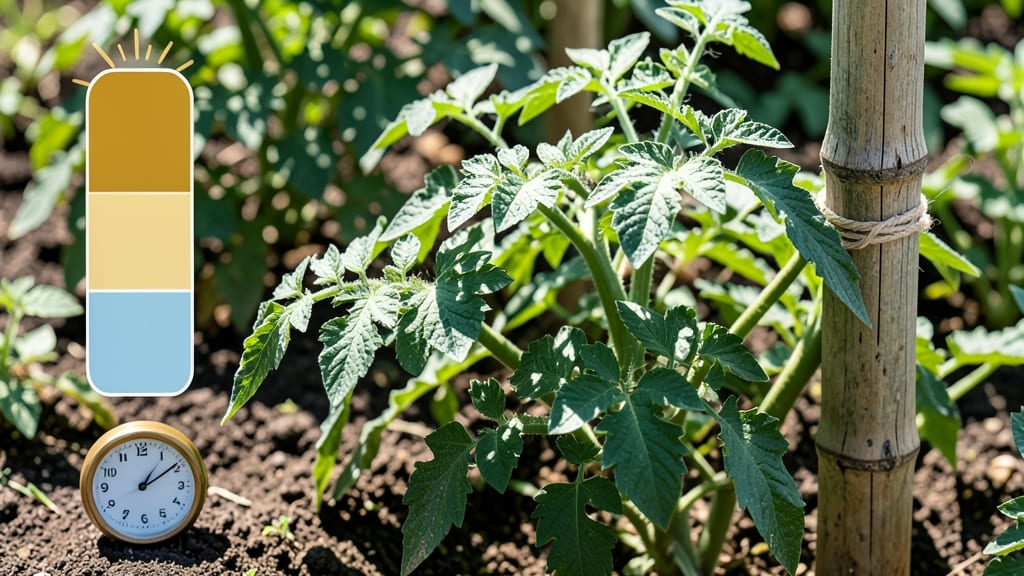
A tomato plant needs how many hours of sun does a tomato plant need—specifically 6 to 8 hours of direct sunlight daily—the magic number that turns seedlings into fruit-loaded vines.
If your 🍅 plants are struggling, you’re likely not hitting that sweet spot, and the results show in stunted growth or bitter fruit.
Most gardeners overestimate how much shade their tomatoes can handle, especially in hot climates. Too little sun leads to leggy plants, while too much can scorch leaves and reduce yields. The key is finding that balance where your tomatoes thrive without stress.
Determinate varieties (the bush types) tolerate slightly less sun, while indeterminate vining tomatoes demand full sun to climb and produce. I’ll break down exactly how to adjust for your climate zone and the subtle signs your plants are telling you they’re getting it wrong.
By the end, you’ll know how to position your tomatoes—whether in garden beds or containers—for maximum sun exposure, plus how to fix common mistakes before they ruin your harvest.


Tomato sunlight requirements by variety type: determinate vs indeterminate needs
When growing tomatoes, sunlight isn't just important—it's the foundation of a successful harvest. But here's the catch: not all tomato varieties have the same needs. Determinate (bush) tomatoes and indeterminate (vining) tomatoes require different sunlight approaches to thrive.
Understanding these differences can mean the difference between a bountiful harvest and underwhelming yields. Let's break down why your tomato variety matters so much when it comes to sunlight.
The growth habit of your tomato plant directly impacts its sunlight needs. Determinate varieties grow in compact bushes, while indeterminate types produce unlimited vines that keep growing all season. This structural difference means indeterminate tomatoes often need more intense sunlight to support their continuous growth and fruit production.
Meanwhile, determinate varieties can sometimes tolerate slightly less direct sun because their growth cycle is shorter and more concentrated.
Most gardeners assume all tomatoes need full sun, but the reality is more nuanced. Determinate varieties typically flourish with 6-8 hours of sunlight daily, while indeterminate types often require 8-10+ hours to reach their full potential.
This distinction is crucial because indeterminate tomatoes produce fruit along their entire vines, demanding more energy from the plant. Without adequate sunlight, you'll see fewer blossoms, smaller fruits, and weaker vines that struggle to support the weight of your tomatoes.
Here's where many gardeners go wrong: they assume partial shade will work for both types. While determinate varieties might tolerate 4-6 hours of morning sun with afternoon shade in cooler climates, indeterminate tomatoes will suffer in anything less than full sun.
The difference comes down to how each variety allocates energy. Determinate plants focus their energy on a single harvest cycle, while indeterminate plants must continuously produce new growth and fruit throughout the season.
| Variety Type | Ideal Sunlight Hours | Growth Habit | Yield Impact of Insufficient Sun | Partial Shade Tolerance |
|---|---|---|---|---|
| Determinate (Bush) | 6-8 hours daily | Compact, 3-4 ft tall | Reduced fruit set, smaller tomatoes | Moderate (4-6 hrs morning sun) |
| Indeterminate (Vining) | 8-10+ hours daily | Vining, 6-10+ ft tall | Stunted growth, fewer blossoms, weak vines | Poor (requires full sun) |
| Key Consideration: Indeterminate varieties need consistent full sun to support continuous fruit production, while determinate types can handle slightly less intense light conditions. | ||||
Let's look at some popular varieties to illustrate these differences. Determinate types like Roma or Celebrity tomatoes thrive with 6-7 hours of sunlight and produce a single, concentrated harvest.
These varieties are perfect for gardeners with limited space or those who want a quick, heavy yield in a short window. On the other hand, indeterminate varieties like Sungold or Brandywine need full sun exposure to produce their signature sweet, continuous harvest throughout the growing season.
If you're growing tomatoes in containers, the sunlight requirements become even more critical. Indeterminate varieties in pots need at least 8 hours of direct sunlight because their root systems are more limited. Without enough light, these plants will outgrow their containers and produce fewer, smaller fruits.
Determinate varieties in containers can sometimes tolerate partial shade, but they'll still benefit from morning sun to kickstart their growth each day.
One common mistake I see is assuming that afternoon shade is always beneficial. While it can help in hot climates (like the desert Southwest), it's not a universal solution. In cooler regions, afternoon shade might reduce overall sunlight below the minimum requirements for your tomato variety.
Always consider your local climate and microclimate when positioning your plants. For example, tomatoes near a north-facing wall might get less than ideal sunlight, while those in a south-facing garden bed will bask in the sun.
For gardeners in shadier climates, consider choosing determinate varieties that can handle slightly less sun. Varieties like Stupice or Patio Princess are bred to tolerate partial shade better than most.
If you're set on growing indeterminate tomatoes, you might need to use reflective surfaces or grow lights to supplement natural sunlight, especially during overcast periods. The key is to match your variety to your available sunlight, not the other way around.
Remember, sunlight isn't just about the number of hours—it's also about the quality of light. Tomatoes need direct sunlight, not just bright, diffused light. If your plants are growing tall and leggy with small leaves, they're likely stretching toward light but not getting enough of it.
This is a classic sign that your indeterminate tomatoes need more intense sunlight. For determinate varieties, this symptom might indicate
How to calculate your tomato plant's sunlight needs based on climate zone
Your USDA hardiness zone dramatically impacts how much sunlight your tomatoes can handle. In zones 3-5, cooler summers mean tomatoes need full sun (8+ hours) to ripen properly, while zones 8-10 may require afternoon shade to prevent sunscald. The key is balancing intensity and duration—not just hours.
Start by checking your local average sunlight hours during peak growing months (June-August). Use a sunlight tracker app or ask your local Cooperative Extension Service for zone-specific data.
For example, zone 6 gardens often get 6-7 hours of direct sun, while zone 9 may see 10+ hours—too much for heat-sensitive varieties like Cherokee Purple.
| USDA Zone | Ideal Sun Hours | Adjustments Needed | Best Varieties |
|---|---|---|---|
| 3-5 | 8-10 hours | Use reflective mulch; extend season with row covers | Early Girl, Stupice |
| 6-7 | 6-8 hours | Provide afternoon shade in July; prune nearby trees | Brandywine, Sungold |
| 8-10 | 4-6 hours (morning sun) | Use shade cloth (30-50%); water deeply at noon | Black Krim, Roma |
Account for seasonal sun shifts. In spring and fall, your garden may receive 6 hours of sun when summer peaks at 10 hours. If planting in partial shade (e.g., under fruit trees), choose determinate varieties like Patio or Tiny Tim, which tolerate 4-5 hours of direct light.
For indeterminate types, supplement with a grow light during cloudy stretches.
Buildings and trees cast moving shadows. Measure sunlight at solar noon (1-2 PM) when shadows are shortest. If your tomato cage is shaded for 2+ hours daily, relocate or prune obstructions.
In urban gardens, south-facing walls reflect 30% more light—position plants 2-3 feet away for a sunlight boost.
For container-grown tomatoes, rotate pots quarter-turns weekly to ensure even sun exposure. If your balcony only gets 4 hours, opt for cherry tomatoes (e.g., Tumbling Tom) or use a reflective pot to maximize light.
In zone 10, afternoon shade isn’t optional—it’s survival. Install a shade sail or plant near a north-facing fence to block 3 PM-6 PM sun.
Test your setup with a DIY sunlight gauge: Place a white board near your plants for 24 hours. Mark shadow lines every hour. If less than 6 hours of unshaded time remain, your tomatoes will struggle.
Adjust by moving plants, pruning foliage, or adding reflective surfaces like white gravel or aluminum foil near the base. ☀️