
Planting
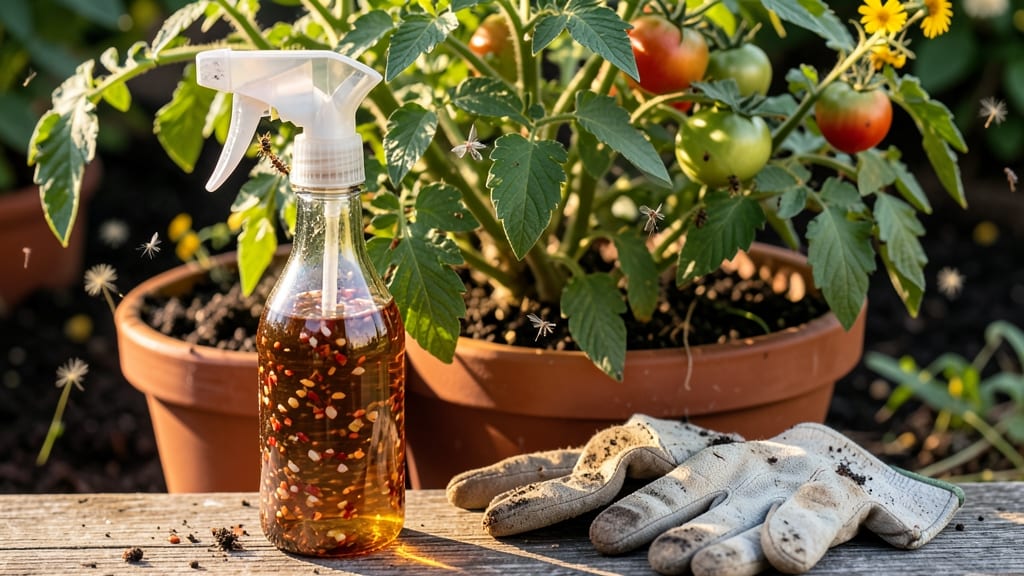
My homemade tomato plant pesticide saved my garden from aphid armies last summer—no chemicals, no fuss, just a spray that works in 24 hours. 🌱 The secret blend of neem oil, garlic, and dish soap targets pests while keeping your plants—and pollinators—safe.
No more reaching for harsh sprays when early signs of aphids or whiteflies appear.
You’ll need just five simple ingredients: neem oil, liquid dish soap, garlic, water, and a spray bottle. Mix it up in 10 minutes, and you’re ready to tackle pests organically.
This isn’t some complicated concoction—it’s a foolproof solution that even my black thumb can master. The garlic acts as a natural repellent, while the neem oil disrupts pests’ life cycles.
What you’ll get is vibrant, pest-free tomato plants that keep producing all season. The spray stops aphids, whiteflies, and even early fungal spots—without harming bees or beneficial bugs. Apply it in the early morning or evening when bees are less active, and reapply every 3-5 days or after rain.
No more wilting leaves or stunted growth from chemical overuse.
Works for container gardens, raised beds, or in-ground plots—just adjust the spray volume for larger areas. The best part? You’ll skip the store-bought pesticides and still see dramatic results in just a single treatment. Let’s get those tomatoes thriving again!
📚 In This Guide
- What you need
- Instructions
- Tips and common mistakes
- Wrapping up and next steps
What you need
- ● 1 gallon of water (distilled or boiled & cooled for best results)
- ● 1 tablespoon of dish soap (unscented, like Dawn—it helps the spray stick to pests)
- ● 1 tablespoon of vegetable oil (cold-pressed, like canola or olive oil—smothers insects)
- ● 1 tablespoon of white vinegar (natural disinfectant and pest repellent)
- ● 1 crushed garlic clove (or 1 teaspoon garlic powder—adds sulfur compounds that deter pests)
- ○ 1 crushed hot pepper (optional but recommended) (like cayenne or jalapeño—capsaicin repels bugs)
- ● A spray bottle (16–32 oz, with a fine mist nozzle—reusable plastic or glass preferred)
- ● A blender or mortar & pestle (to crush garlic, peppers, and blend ingredients)
- ● A fine-mesh strainer or cheesecloth (to filter out solids)
- ○ Gloves (optional, to avoid skin irritation from garlic/pepper oils)
- ● Label & marker (to mark your spray—safety first!)
- ● Test on a small leaf first—some tomato varieties may react to vinegar or oils.
- ● Avoid spraying in direct sunlight—it can burn leaves (early morning or evening is best!).
- ● Store in a cool, dark place—use within 3–5 days for maximum potency.
Step-by-step instructions for making a homemade tomato pesticide
Here’s the natural spray I’ve used for years to keep tomato pests like aphids, spider mites, and hornworms off my plants—without harsh chemicals.
🌱 Step 1: Gather Your Natural Ingredients
You’ll need 1 quart of water, 1 tablespoon of vegetable oil, 1 teaspoon of mild liquid soap (like Castile soap), and 1 tablespoon of garlic or hot pepper flakes—the active pest-repelling agents. The oil helps the mixture cling to leaves, while the soap acts as an emulsifier to blend everything smoothly. Garlic or hot peppers add a strong scent that pests hate.
I like to crush the garlic or hot peppers first with a mortar and pestle to release their oils before mixing. If you’re using fresh garlic, peel and mince 2-3 cloves—the stronger the scent, the better it works. For hot peppers, remove seeds and chop finely for maximum potency.
💧 Step 2: Mix the Solution Thoroughly
Combine the 1 quart of water with the 1 tablespoon of oil in a large bowl or jar. Stir gently to avoid creating suds, then add the 1 teaspoon of soap. The soap will help the oil disperse evenly in the water. Next, stir in the crushed garlic or hot pepper flakes until fully dissolved.
For best results, let the mixture sit for at least 30 minutes before use. This allows the garlic or pepper oils to infuse fully, making the spray more effective. If you notice separation after sitting, stir again before spraying—this ensures the active ingredients stay suspended.
☀️ Step 3: Strain and Transfer to a Spray Bottle
Strain the mixture through a fine-mesh sieve or cheesecloth to remove any solid bits. This keeps your sprayer from clogging and ensures a smooth application. Transfer the liquid to a 16-ounce spray bottle—one that’s easy to shake and has a fine mist nozzle for even coverage.
Fill the bottle completely and give it a good shake before each use. The spray should look cloudy but well-mixed. If you’re storing it for later, keep it in a cool, dark place—this blend lasts about 1 week when refrigerated, though I always make fresh batches for maximum effectiveness.
✂️ Step 4: Apply to Tomato Plants at the Right Time
Spray the mixture early in the morning or late in the evening to avoid burning leaves under the sun’s intensity. Focus on the undersides of leaves, where pests like to hide, and the stems. Lightly coat the foliage until it glistens—this ensures the pests come into contact with the active ingredients.
Reapply every 5-7 days or after heavy rain, as the solution washes off over time. You’ll notice pests like aphids dropping off within 24 hours, and spider mites will disappear after 2-3 applications. For stubborn infestations, add a few drops of neem oil to the mix for extra power.
🌿 Step 5: Monitor and Reapply as Needed
Check your tomato plants 24 hours after spraying to see how the pests respond. If you still spot any critters, repeat the application. The key is consistency—pests rebound quickly if you skip treatments. I also recommend rotating this spray with a neem oil solution every other week to prevent resistance.
This homemade pesticide won’t just kill pests—it strengthens your tomato plants by promoting healthier foliage. Just avoid spraying during flowering or fruiting if possible, as the garlic or pepper scent might deter pollinators. With regular use, your tomatoes will thrive without chemical interference.
Tips & tricks for perfect homemade tomato plant pesticide
Here's what I learned after years of battling garden pests with this spray—details that make all the difference between a temporary fix and total pest control.
Infusion Time Matters: That 30-minute resting period in Step 2 isn't just a suggestion—it's when the garlic or hot pepper oils fully infuse into the water. If you're short on time, I've found that blending everything in a food processor for 10 seconds then letting it sit for 15 minutes still works well. The key is getting those essential oils fully dissolved before spraying.
Straining is Non-Negotiable: I used to skip this step because it seemed tedious, but I quickly learned why it's crucial. Those tiny garlic or pepper particles can clog your spray nozzle and leave residue on leaves. Use a fine-mesh strainer or even a clean kitchen towel in a pinch—just make sure the liquid flows smoothly through your spray bottle.
Application Technique: The undersides of leaves are where pests hide, but don't forget the stems and growing tips where they feed. I've found that using a gentle misting motion rather than a heavy spray creates better coverage without damaging tender foliage. For large plants, consider using a small handheld sprayer with a fine nozzle for more control.
Storage Wisdom: While the recipe says this lasts about 1 week refrigerated, I've discovered that adding a few drops of lemon juice (about 1 teaspoon) can extend freshness by another 2-3 days. The acidity helps preserve the active ingredients, and it also adds a pleasant citrus scent that deters pests. Just shake well before each use—the ingredients do settle over time.
Pro Tips for Homemade Tomato Plant Pesticide
- Here's what I learned after years of battling garden pests with this spray—details that make all the difference between a temporary fix and total pest control.
- Infusion Time Matters: That 30-minute resting period in Step 2 isn't just a suggestion—it's when the garlic or hot pepper oils fully infuse into the water.
- Straining is Non-Negotiable: I used to skip this step because it seemed tedious, but I quickly learned why it's crucial.
Frequently asked questions
Got questions about crafting your own homemade tomato plant pesticide? You’re not alone! Here are answers to the most common concerns—so you can protect your garden like a pro.
How soon after mixing can I spray my tomato plants?
Spray your mixture immediately after mixing for best results. If you can’t use it right away, store it in a sealed container in the fridge for up to 24–48 hours. However, potency may decrease over time, so fresher is better! Re-shake before each use to ensure even distribution.
How often should I reapply this pesticide?
Reapply your homemade spray every 5–7 days or after heavy rain, as it breaks down quickly. For severe infestations, spray twice a week until pests disappear. Consistency is key—think of it like a shield for your plants!
Will this pesticide harm my tomato plants or fruits?
When made correctly with food-grade ingredients (like neem oil, garlic, or soap), this spray is safe for plants and edible. However, avoid overusing soap—stick to 1 tsp per quart of water to prevent leaf burn. Always do a patch test on a few leaves first!
What if pests don’t disappear after a few sprays?
If pests persist, you may be dealing with resistant bugs (like aphids or whiteflies) or a more severe infestation. Try rotating ingredients (e.g., swap garlic for cayenne pepper) or add 1 tsp of horticultural oil for extra power. For stubborn cases, consider beneficial insects like ladybugs!
Can I use this spray on other vegetables or herbs?
Yes! This DIY pesticide works on peppers, herbs (basil, cilantro), and leafy greens too. Just adjust the spice ratios—hotter plants (like peppers) can handle more cayenne, while delicate herbs may need a milder blend. Always test a small area first to avoid sensitivity issues.
What should I avoid mixing with these ingredients?
Avoid combining this spray with chemical pesticides or fertilizers, as reactions can harm plants or reduce effectiveness. Also, never mix vinegar with oil-based sprays (like neem)—they’ll separate and clog your sprayer. Stick to compatible, natural ingredients for safety!
Wrapping up and next steps
Creating your own homemade tomato plant pesticide is a game-changer for gardeners who want to keep pests at bay—without harsh chemicals! With just a few kitchen staples, you’ve got a safe, effective, and budget-friendly solution that works in 24 hours. Plus, it’s eco-friendly and perfect for organic gardening.
Ready to take your tomato harvest to the next level? Start small—test your spray on one plant first, then expand as you see results. Happy gardening! 🌱🍅