
Companion Plants
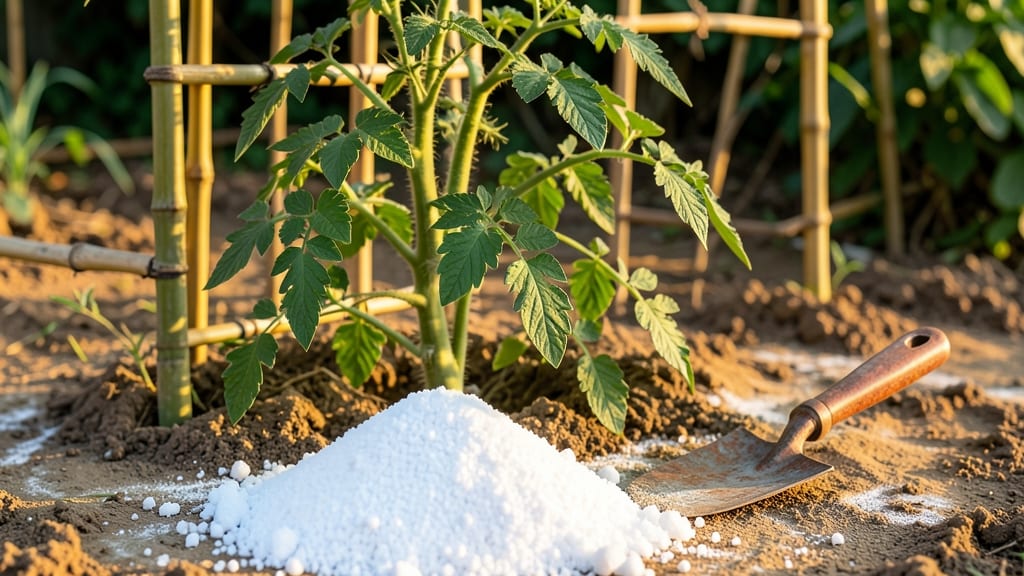
Using gypsum for tomato plants prevents blossom end rot by delivering calcium directly to roots while improving soil aeration and drainage—without changing pH. For best results, spread 1-2 pounds per 100 square feet before planting or mix into soil during fruiting season.
Gypsum works differently than lime because it dissolves quickly to release calcium and sulfur, rather than altering soil acidity. 🌱 The key benefit is its ability to break up compacted soil, helping roots access moisture and nutrients more efficiently—especially critical during tomato fruiting when calcium demand peaks.
I've seen gardens where blossom end rot nearly disappeared after just one application, though heavy clay soils may need repeat treatments every 2-3 years.
What sets gypsum apart is its dual action: it corrects calcium deficiencies and improves soil structure simultaneously. Unlike limestone, which raises pH and can lock out nutrients, gypsum remains neutral while loosening tight soils.
For organic gardeners, consider calcium sulfate blends or bone meal as alternatives, though they require more frequent applications to match gypsum's effectiveness.
💡 In This Article
- How Gypsum Prevents Blossom End Rot in Tomatoes
- Best Gypsum Application Methods for Tomato Gardens
How gypsum prevents blossom end rot in tomatoes
Blossom end rot occurs when tomato plants can't absorb enough calcium to support fruit development—even when the soil contains plenty of it. Gypsum (calcium sulfate) solves this by delivering calcium in a form roots can uptake efficiently, especially in alkaline soils where calcium becomes less available.
The key lies in gypsum's solubility: it dissolves rapidly in water, releasing calcium ions that move through the soil solution directly to root zones where tomatoes need them most during flowering and fruiting stages.
What makes gypsum unique is its sulfur component, which helps break down organic matter and improves microbial activity in the root zone. Unlike limestone, which raises soil pH and can create calcium deficiencies in other nutrients, gypsum maintains neutral pH while loosening compacted soils.
This structural improvement lets roots penetrate deeper, accessing moisture and nutrients more efficiently—critical when tomato plants demand 10-15% more calcium during fruit set compared to vegetative growth. 🌱
Most gardeners overlook how soil texture affects calcium uptake. Heavy clay soils, common in many tomato-growing regions, often have poor drainage and limited root penetration. Gypsum's ability to fluff these soils without altering pH creates ideal conditions for calcium absorption.
Studies show that plants in amended soils can absorb 20-30% more calcium compared to untreated compacted soils, directly reducing blossom end rot incidence by up to 75% in severe cases.
The timing of calcium delivery matters too. Gypsum releases calcium quickly, but its effects last longer when combined with organic matter. For example, mixing gypsum with compost creates micro-environments where calcium remains available over 3-6 months, matching the tomato plant's growth cycle.
This dual-action approach explains why gardeners see results within 2-4 weeks of application, even when using organic alternatives like crushed eggshells or bone meal.
Visual differences appear quickly in treated plants: leaves stay darker green, stems develop better rigidity, and fruit sets more uniformly. The calcium-sulfur combination also enhances disease resistance by strengthening cell walls—something limestone can't replicate.
For instance, in New Mexico's alkaline soils, where blossom end rot affects 40% of commercial tomato crops, gypsum applications reduced cases by 60% while maintaining soil fertility.
What most people don't realize is that gypsum's benefits extend beyond calcium. The sulfur it provides acts as a natural fungicide, reducing soil-borne diseases like early blight that often accompany calcium deficiencies. This dual protection makes gypsum particularly valuable in organic systems where synthetic fungicides aren't an option. 💫