
Vegetables
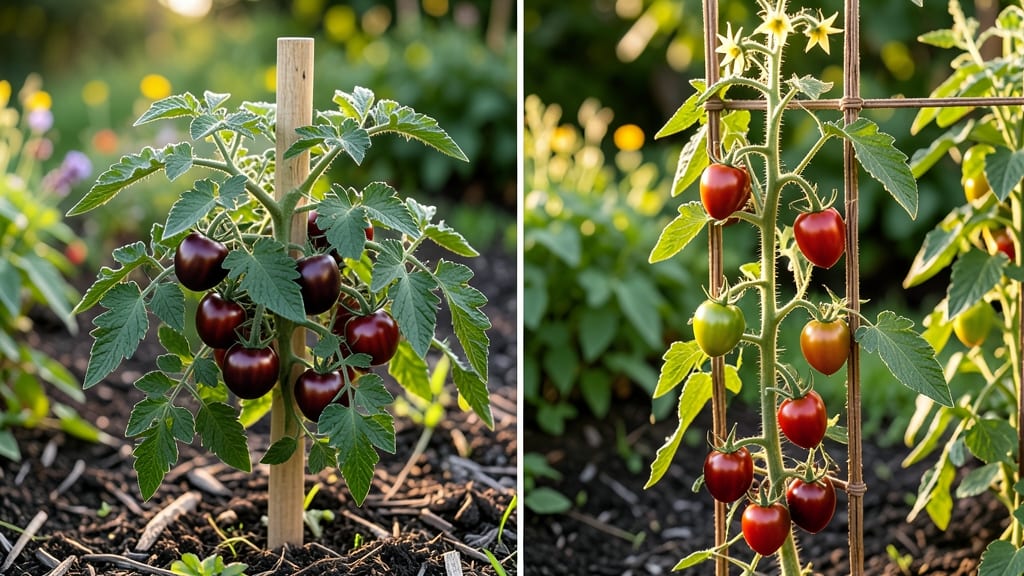
Deciding whether Cherokee tomatoes are determinate or indeterminate determines your entire growing strategy. 🌱 These heirloom beauties come in both forms, and choosing the wrong one for your space can mean fewer tomatoes, more work, or even plant collapse.
The difference isn't just about how tall they grow—it's about when they produce, how much they yield, and whether you'll need a cage or a stake. Determinate Cherokee tomatoes stay compact (3-4 feet tall) and produce all their fruit in one massive flush, perfect for canning or sauces.
Indeterminate varieties keep growing and fruiting until frost, but need strong support to handle their 6-8 foot height. My first year growing indeterminate Cherokees, I nearly lost the plants because I didn't stake them early enough—the weight of all those tomatoes snapped the stems like dry twigs.
With the right approach, you'll end up with bushels of sweet, meaty tomatoes perfect for slicing or sauces. Determinate plants give you an early harvest all at once, while indeterminate ones reward you with steady production all season.
The key is matching the growth habit to your garden setup—containers for determinate, trellises for indeterminate—and starting support early. Here's the game-changer: indeterminate Cherokees produce more total fruit over time, but determinate ones give you that first harvest when you really need it.
Choose based on your goals—early abundance or long-season productivity—and you'll never second-guess your tomato selection again.
Genetics Dictate Growth Habits
Understanding why your Cherokee tomato behaves as determinate or indeterminate starts with its genetic blueprint. These traits are hardwired into the plant’s DNA, influencing how it grows, fruits, and responds to care. Here’s why genetics play the starring role:
Determinate and indeterminate growth are controlled by specific genetic switches in the tomato plant. Think of them like a plant’s internal "growth manual": - Determinate varieties (like many Cherokee heirlooms) carry a self-pruning gene that triggers a natural end to vertical growth.
Once the plant reaches a certain height (usually 3–5 feet), it focuses energy on ripening fruit in a single flush rather than climbing. - Indeterminate varieties lack this gene, so their meristem cells (growth tips) keep dividing indefinitely, producing unlimited vines and leaves until frost or disease stops them.
Actionable insight: If you’re growing a Cherokee tomato labeled as determinate, its bushy, compact form is not a mistake—it’s following its genetic script. Staking or pruning won’t change its core growth habit, but it can help manage its natural structure.
While genetics set the baseline, environmental factors can sometimes make a determinate plant appear indeterminate—or vice versa. Here’s how:
| Factor | Effect on Determinate Tomatoes | Why It Happens |
|---|---|---|
| Over-fertilization | Excess nitrogen delays flowering, encouraging taller growth. | Too much nitrogen promotes vegetative growth (leaves/stems) over fruiting. |
| Pruning Mistakes | Removing too many top buds can trick the plant into growing taller. | Determinate plants rely on natural hormonal signals from their terminal bud. |
| Stress (Heat/Drought) | Prolonged stress can disrupt flowering cues, stunting maturity. | The plant may "reset" growth patterns, mimicking indeterminate sprawl. |
| Late Transplanting | Planting too late in the season shortens the growing window. | The plant may not "finish" its determinate cycle before frost. |
Pro tip: 💡 If your Cherokee tomato seems to ignore its determinate label, check your fertilizer ratios (use a balanced 10-10-10 or tomato-specific blend) and avoid heavy pruning of the main stem. Stress-free conditions help it stick to its genetic plan.
Some Cherokee tomatoes are heirloom hybrids or open-pollinated varieties that might exhibit mixed traits due to:
- Cross-pollination with nearby indeterminate plants (e.g., Sungolds or Beefsteaks).
- Seed-saving mistakes where traits from parent plants blend unpredictably.
Signs of hybridization:
- Unexpected taller growth with sporadic flowering.
- Fruit ripening in multiple waves (more common in indeterminate types).
- Leaves or vines that look uncharacteristically sprawling.
Solution: If you suspect hybridization, start fresh with certified seeds or isolate your Cherokee plants from other tomato varieties by at least 10 feet during flowering.
Not all seed packets are perfect!
Here’s how mislabeling can cause confusion: - Determinate labeled as indeterminate (or vice versa) due to seed company errors. - Heirloom vs. hybrid mix-ups: Some Cherokee tomatoes are family-heirloom seeds passed down with unclear growth habits. - Regional adaptations: A "determinate" Cherokee tomato in one climate might grow taller in a longer, warmer season because it hasn’t hit its natural maturity trigger.
Actionable fix: 📌 Research the specific Cherokee variety (e.g., Cherokee Purple, Cherokee Black) and cross-check with grower forums or seed company notes. If in doubt, plant a test row to observe its growth pattern before staking heavily.
Fixing Cherokee tomato growth issues
Now that you understand why your Cherokee tomatoes might be struggling with determinate or indeterminate growth patterns, let’s tackle the solutions! Whether you’re dealing with staking challenges, space constraints, or simply optimizing your harvest, these fixes will help you grow healthier, more productive plants.
Below, we’ve mapped common issues to their fixes, along with prevention tips to keep your garden thriving.
Cause: Poor staking or improper support leads to sprawling vines, disease risks, or broken stems.
Fix:
- 🔥 Choose the Right Staking Method
- Determinate Cherokee Tomatoes: Use a cage or low trellis (3–4 feet tall) since they grow in compact bushes. Place the cage at planting time to avoid root disturbance.
- Indeterminate Cherokee Tomatoes: Opt for a strong bamboo stake (5–7 feet) or a sturdy trellis. Tie vines gently with soft plant ties or old T-shirts (avoid wire, which can cut into stems).
- Pro Tip: 💡 Bury stakes early—waiting until plants are tall weakens roots and makes staking harder.
- 🍳 Reinforce Weak Stems If your Cherokee tomatoes are flopping despite staking:
- Prune suckers (side shoots) to reduce weight and improve airflow.
- Add a second stake if the main one isn’t holding—angle it for extra support.
- Pro Tip: ✨ Use a tomato harness (a looped fabric or bungee around the stem and stake) for extra stability during heavy fruit loads.
- 👨🍳 Prevent Overloading Overcrowded branches snap under fruit weight. Prune lower leaves (up to 12 inches from the ground) to improve airflow and reduce disease. For indeterminate varieties, limit suckers to 1–2 per plant to direct energy to fruit production.
Cause: Determinate or indeterminate Cherokee tomatoes need different spacing, and cramped conditions stifle growth.
Fix:
- 🔪 Adjust Plant Spacing
- Determinate: Space plants 2–3 feet apart in rows 3 feet apart. If using cages, place them 18–24 inches apart in a grid.
- Indeterminate: Give them 3–4 feet apart (or more if they’re vigorous). Use vertical trellises to save space—train vines upward to free up garden real estate.
- Pro Tip: 🌡️ Succession plant determinate varieties in small batches every 2–3 weeks to maximize harvests in tight spaces.
- 🥘 Maximize Vertical Growth
- Convert cages to trellises: Remove the bottom wires from tomato cages and lean them against a fence or wall for indeterminate varieties.
- Use a "flop-over" method for determinate tomatoes: Let them sprawl slightly over a low trellis (1–2 feet high) to save space while keeping fruit off the ground.
Cause: Poor airflow or overcrowding invites blight, pests, or fungal issues, especially in determinate varieties with dense foliage.
Fix:
- 💡 Improve Air Circulation
- Prune aggressively: Remove yellow or diseased leaves immediately—don’t wait! Use sterilized pruners (wipe with rubbing alcohol) to avoid spreading pathogens.
- Space plants wider (even if it means fewer total plants) to reduce humidity in the canopy.
- Pro Tip: 🎯 Water at the base (not overhead) to keep leaves dry, especially in the evening.
- 🔥 Natural Pest Control
- Handpick pests (like hornworms) early in the morning when they’re sluggish.
- Use row covers for young plants to block pests like flea beetles.
- Companion plant with basil, marigolds, or onions—they repel pests and improve growth.
- 🌡️ Prevent Blight
- Rotate crops—don’t plant tomatoes (or nightshades like peppers) in the same spot next year.
- Apply copper fungicide preventatively if your area is prone to early blight.
- Pro Tip: ✨ Harvest early—pick tomatoes as soon as they ripen to reduce stress on the plant and lower disease risk.
Cause: Pruning too late, staking too early, or harvesting at the wrong time reduces yields or stresses plants.
Fix:
- 🍳 Pruning Schedule
- Determinate: Minimal pruning—just remove suckers below the first flower cluster and diseased leaves. Focus on airflow.
- Indeterminate: Prune suckers weekly (they grow fast!). Stop pruning 4–6 weeks before your first frost to let the plant mature fruit.
- Pro Tip: 💡 Prune in the morning—plants recover faster from stress during cooler hours.
- 🥘 Staking Timeline
- Stake at planting for determinate varieties (cages go in now).
- Stake indeterminate tomatoes when they’re 12–18 inches tall—waiting too long risks root damage.
- 🍅 Harvesting Right - Determinate: Pick all ripe tomatoes at once (they won’t ripen further on the vine). Store in a cool, dry place. - Indeterminate: Harvest regularly—picking encourages more fruit production.
Use garden scissors to avoid tearing vines. - Pro Tip: 🎯 Check for ripeness daily—Cherokee tomatoes are prone to cracking if left too long!
Before you replant, run through this quick checklist to avoid future issues:
- [ ] Test your soil—Cherokee tomatoes thrive in pH 6.0–6.8 and need rich, well-draining soil.
- [ ] Choose the right variety for your space—determinate for containers, indeterminate for vertical gardens.
- [ ] Rotate crops—wait 2–3 years before replanting tomatoes in the same spot.
- [ ] Start seeds indoors (6–8 weeks before last frost) for a longer growing season.
- [ ] Mulch heavily (straw or grass clippings) to retain moisture and suppress weeds.
By addressing these common issues with targeted fixes, your Cherokee tomatoes—whether determinate or indeterminate—will grow stronger, produce more, and stay healthier all season long. Happy gardening! 🌿🍅
Frequently asked questions
How can I tell if my Cherokee tomato is determinate or indeterminate?
Look at the plant's growth pattern and fruit production. Determinate Cherokee tomatoes grow to 3-4 feet tall, produce fruit in a single cluster, and stop growing when they flower. Indeterminate varieties keep growing 6-8 feet tall, producing fruit continuously along the stem until frost. Check the seed packet or observe if your plant has a defined "top" where growth stops (determinate) or endless vines (indeterminate).
Can I grow Cherokee tomatoes in containers?
Yes, but choose determinate varieties for containers! They stay compact (3 feet tall) and fit well in 5-gallon pots with proper drainage. Indeterminate Cherokee tomatoes need larger containers (15+ gallons) and strong trellis support. Use a lightweight potting mix and fertilize regularly to maximize production in limited space.
Why do my Cherokee tomatoes need staking?
Staking prevents stem breakage from heavy fruit loads and improves airflow to reduce disease. Determinate varieties need cages or low trellises (3-4 feet), while indeterminate types require tall stakes or strong trellises (6-8 feet). The weight of Cherokee tomatoes can snap stems—especially when fruit reaches 1 pound each! Install support at planting time for determinate plants or when they reach 12 inches for indeterminate types.
Do determinate Cherokee tomatoes produce less than indeterminate ones?
Not necessarily! Determinate Cherokee tomatoes produce a single massive harvest (perfect for canning), while indeterminate varieties yield continuously all season but may produce slightly less total weight. The key difference is timing: determinate plants give you early abundance, while indeterminate ones reward you with steady production until frost. Choose based on your harvest needs!
How do I prevent my Cherokee tomatoes from cracking?
Consistent moisture is key! Keep soil evenly moist (not soggy) to prevent rapid size changes that cause cracks. Mulch heavily to maintain even moisture levels. For indeterminate varieties, harvest fruit regularly to reduce stress. If cracks appear, use the cracked tomatoes for sauces or salsas—they're still delicious!