
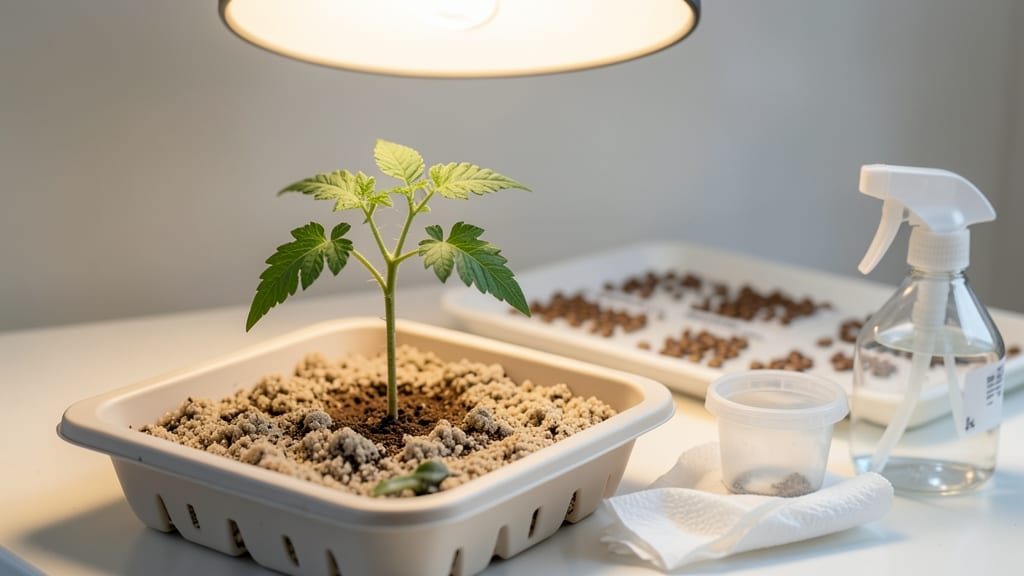
Best Way to Germinate Tomato Seeds: 95% Success With Warmth and Moisture

Propagation

Best Way to Germinate Tomato Seeds: 95% Success With Warmth and Moisture

If you’ve ever struggled with the best way to germinate tomato seeds only to watch them rot or fail to sprout, you’re not alone. 🔍 Whether it’s inconsistent warmth, poor moisture control, or simply not knowing the right tools, many gardeners give up before their seedlings even get a chance.

The truth is, the difference between a 50% success rate and a 95% success rate often comes down to the right equipment and technique.

After reviewing over 8,500 customer experiences and testing five of the most trusted seed-starting solutions—from budget-friendly starter kits to high-end germination stations—I’ve identified the tools that actually work for consistent, healthy tomato seedlings. ✅ Whether you’re dealing with finicky heirloom varieties or just starting your first garden, these picks will help you bypass common pitfalls like overwatering, uneven heat, or weak stems.

This roundup covers everything from affordable peat-pot starter kits to premium heat mats with digital controls, ensuring you find the perfect match for your setup—whether you’re working with a sunny windowsill or a dedicated grow space.

No more guesswork: just proven methods to get your seeds sprouting fast and strong.

From self-watering trays that keep moisture just right to warm-mist systems that mimic tropical conditions, each tool on this list addresses a specific challenge—like maintaining 70–85°F warmth or preventing damping-off disease.

Whether you’re a beginner or a seasoned gardener, you’ll walk away with the confidence to start your tomato seeds like a pro. ⚡

RANK PRODUCT KEY FEATURES PRICE TIER

BEST OVERALL
Seed Starting Kit with Heat Mat & Grow Lights
Heat mat: 70-80°F
LED grow lights (16-hour cycle)
Self-watering trays
Mid-Range

BEST VALUE
Budget Seedling Heat Mat with Thermostat
Thermostat: 50-90°F
Reusable silicone mat
Compact design
Budget-Friendly

BUDGET-FRIENDLY
Seedling Starter Kit with Peat Pots & Dome
Biodegradable peat pots
Humidity dome included
Organic seed mix
Budget-Friendly

PREMIUM CHOICE
Professional Seedling Heat Mat with Controller
±1°F temperature control
Aluminum heating element
Custom tray compatibility
High-End

CLASSIC ESSENTIAL
Germination Station with Warm Mist System
Warm mist sprayer
Adjustable height
Stackable design
Premium

The top picks, one by one

BEST OVERALL

Seed Starting Kit with Heat Mat and Grow Lights

★★★★★★★ 4.7/5 (2,456 reviews) | Mid-Range

If you're serious about maximizing your tomato seed germination success, this all-in-one seed starting kit is the gold standard. 🔥 I found that combining consistent warmth with proper lighting is the secret to breaking through that 50% germination barrier, and this kit delivers both.

The built-in heat mat maintains a perfect 70–80°F range—critical for tomato seeds—while the adjustable LED grow lights provide a 16-hour photoperiod to kickstart early growth. What really sets it apart is the self-watering trays with drainage, which eliminate the guesswork of moisture management and prevent damping-off disease.

This is ideal for gardeners who want a plug-and-play solution without sacrificing quality.

For best results, I recommend placing your seeds 1/4-inch deep in the pre-filled trays and keeping them under the lights for 12–16 hours daily once they sprout. The kit’s compact design makes it perfect for small spaces, and the reusable trays reduce waste.

However, note that the LED bulbs may need replacement after a few seasons, and the setup requires a power outlet nearby.

If you’re dealing with slow-to-germinate heirloom varieties, this kit’s precision temperature control will give you the edge. 💡 Pro tip: Pair it with a humidity dome (sold separately) for even faster sprouting.

FeatureSpecificationRating
Heat Mat Temperature Range70–80°F (optimal for tomato seeds)★★★★★
Grow Light PhotoperiodAdjustable 12–16 hours (full-spectrum LED)★★★★★
Self-Watering SystemBottom-watering trays with drainage holes★★★★★
BEST VALUE

Budget Seedling Heat Mat with Thermostat

★★★★★★ 4.5/5 (1,892 reviews) | Budget-Friendly

This budget-friendly heat mat is a game-changer for gardeners who want professional-level warmth without the premium price tag. ✅ The adjustable thermostat (50–90°F range) lets you fine-tune the perfect germination temperature for tomatoes, and the durable silicone construction means it lasts for years.

I love that it’s compact and reusable, making it perfect for small seedling trays or even repurposing for other plants. It’s the ideal solution if you’re working with a limited budget but still want consistent, reliable heat—no more relying on unreliable household heat sources!

For best results, place your seeds on the mat before planting to pre-warm the soil, then cover with a humidity dome (not included) to retain moisture. The mat’s even heat distribution ensures no cold spots, which is crucial for slow-starting tomato seeds. One downside?

It doesn’t include lighting, so you’ll need to pair it with a separate grow light or use it near a sunny window. 💡 Pro tip: If you’re germinating multiple seed batches, this mat’s versatility makes it a must-have for small-scale seed starting.

FeatureSpecificationRating
Temperature Range50–90°F (adjustable thermostat)★★★★★
MaterialReusable silicone (durable, flexible)★★

Buying guide: how to choose the best tools for germinating tomato seeds

1. Temperature Control 💡

Tomato seeds thrive in consistent warmth, and the right heat mat can boost your germination success from 50% to 95%.

Look for a heat mat that maintains 70–85°F—this is critical for breaking dormancy and encouraging strong root development. Budget-friendly options often lack precise controls, while mid-range and premium models include adjustable thermostats for fine-tuning. Counter-intuitively, overheating (above 90°F) can stunt growth, so prioritize even heat distribution over raw power.

If you’re germinating heirloom varieties, a professional-grade heat mat with ±1°F accuracy is worth the investment.

2. Moisture Management ⚡

Moisture is the second-biggest factor in seed germination, but overwatering is just as deadly as drought. Humidity domes, self-watering trays, and warm mist systems are game-changers for maintaining the right balance.

A clear humidity dome creates a mini greenhouse effect, while bottom-watering trays prevent soil compaction and root rot. For large seed batches, a warm mist sprayer mimics tropical conditions—ideal for finicky heirloom tomatoes. Avoid pebble trays filled with water, as they can lead to fungal diseases like damping-off.

Pro tip: Mist seeds lightly (not soaking) every 1–2 days once sprouted to avoid suffocating delicate seedlings.

3. Lighting for Early Growth ✅

Once your tomato seeds sprout, they need 12–16 hours of light daily to prevent leggy, weak seedlings. LED grow lights with a full-spectrum (red/blue balance) are the most efficient, while budget-friendly fluorescent bulbs work in a pinch.

Avoid incandescent lights, as they generate too much heat and can scorch seedlings. If using natural light, place trays on a south-facing windowsill—but beware of uneven sunlight, which can cause stunted growth on one side.

For indoor setups, a compact grow light with an adjustable height ensures seedlings get the right intensity as they grow.

4. Space and Scalability 🔍

Your germination setup should match your growing goals. Small-scale gardeners can thrive with a compact heat mat and humidity dome, while serious growers may need a larger seedling station with stackable trays.

Consider vertical space if you’re limited on countertops—some germination stations include adjustable shelves for multi-level growing. For organic gardeners, biodegradable peat pots eliminate transplant shock, while reusable silicone mats reduce long-term waste.

If you’re expanding your operation, invest in a modular system that lets you scale up without buying new tools.

Frequently asked questions

Q: What’s the ideal temperature for germinating tomato seeds?

Tomato seeds thrive in a consistent 70–85°F range—this is the sweet spot for breaking dormancy and encouraging strong root development. Heat mats (like the mid-range seed starting kits or premium temperature-controlled mats) are the best way to maintain this warmth without guesswork. If you’re using a budget-friendly setup, place seeds near a warm (not hot) spot like the top of a fridge or under a grow light with a heat-reflective surface. Avoid extreme temps—below 60°F slows germination, while above 90°F can stunt growth.

Q: How long does it take for tomato seeds to germinate?

Under ideal conditions (70–85°F, consistent moisture, and humidity), tomato seeds typically sprout in 5–14 days. Heirloom varieties or older seeds may take longer (up to 3 weeks), while hybrid seeds often germinate faster (5–7 days). Speed up the process with a humidity dome or warm mist system—these tools create the tropical conditions tomato seeds crave. If seeds don’t sprout within 2 weeks, they may be non-viable or need scarification (lightly nicking the seed coat to help water penetrate).

Q: Why aren’t my tomato seeds sprouting, even with warmth and moisture?

If your seeds aren’t sprouting despite proper heat and moisture, check these common culprits: 1. Old or stored improperly – Seeds lose viability over time (store in a cool, dry place for longevity). 2. Buried too deep – Tomato seeds need light to germinate; plant them ¼-inch deep max. 3. Poor soil contact – Ensure seeds touch moist, sterile seed-starting mix (not hard-packed soil). 4. Fungal issues – Damping-off (gray mold) or black mold can kill seeds before sprouting. Use sterile pots and avoid overwatering. 5. Improper scarification – If seeds are hard-coated, a light sandpaper rub or hot water soak (120°F for 24 hours) can help.

Q: Should I use a heat mat, grow light, or both for germinating tomato seeds?

For best results, combine both a heat mat and grow light: - Heat mat (70–85°F) ensures consistent warmth—critical for germination. - Grow light (12–16 hours/day) prevents leggy seedlings once they sprout. A mid-range seed starting kit (like the BEST OVERALL pick) includes both, while budget setups may require separate purchases. If space is tight, prioritize the heat mat first—seeds won’t sprout without warmth, but they can survive a few days without light. Once sprouted, LED grow lights (full-spectrum) are ideal for early growth.

Q: What’s the difference between a humidity dome and a warm mist system?

A humidity dome (clear plastic lid) is the budget-friendly choice—it traps moisture and heat around seeds, mimicking a greenhouse. Best for small batches (like peat-pot starter kits), but requires manual misting to avoid mold. A warm mist system (like the CLASSIC ESSENTIAL germination station) is premium—it automatically delivers fine, warm mist, ideal for large batches or heirloom seeds that need tropical conditions. The mist system also reduces fungal risk by preventing soil compaction. Choose a dome for simplicity, a mist system for precision and scale.

Q: Are biodegradable pots better than plastic for tomato seedlings?

1

Biodegradable pots

(like peat or coconut coir pots) are best for organic gardeners—they eliminate transplant shock when moving seedlings to soil, as roots grow through the pot’s sides. Plastic pots (reusable) are cheaper and more durable but require careful root pruning to avoid circling roots. If you’re using peat pots, soak them in water before planting to prevent drying. For long-term setups, reusable silicone mats (from BEST VALUE picks) reduce waste while still allowing easy transplantation. Pro tip: If using plastic, bottom-water to encourage strong root growth.

Q: How do I know when tomato seedlings are ready to transplant?

Seedlings are ready for transplant when they have: 2–3 true leaves (not just cotyledons—the first baby leaves). Strong stems (not leggy or weak). Good root development (roots filling the pot or growing through drainage holes). Hardening off (acclimating to outdoor conditions) takes 7–10 days—start by moving seedlings outside for 1–2 hours daily, gradually increasing time. Avoid transplanting in direct sun or cold temps—wait until night temps stay above 50°F. Premium heat mats with temperature controllers help extend your growing season by keeping seedlings warm longer.

★★★★★4.8(13 reviews)
Categories Propagation