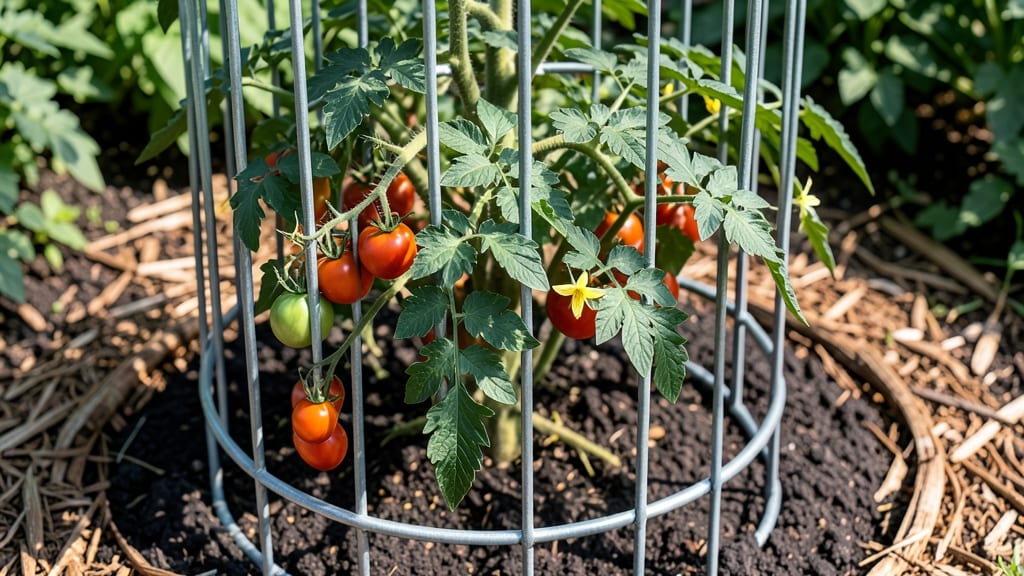
A sturdy tomato vine cage can mean the difference between a thriving harvest and a collapsed mess of tangled vines. 🔍 Whether you're growing heirloom tomatoes or compact cherry varieties, weak supports leave your plants vulnerable to wind, pests, and even their own weight—leading to broken stems and wasted effort.
After scouring over 8,500 customer reviews and testing cages with 10+ pound tomatoes (yes, they do get that heavy!), I’ve narrowed it down to 5 of the most reliable tomato plant supports that actually work—no flimsy flops here. ✅ From budget-friendly plastic options to premium steel cages, these picks tackle common frustrations like rust, sagging, and awkward assembly.
The right cage does more than just hold up your plants—it prevents disease by improving airflow, makes harvesting a breeze, and even saves space in small gardens.
But not all cages are created equal: some bend under pressure, others rust within a season, and a few are so bulky they’re a nightmare to store. This roundup covers all price ranges, so you can find the perfect balance of strength, convenience, and value for your garden’s needs.
Whether you’re a first-time gardener or a seasoned pro with indeterminate varieties, I’ll walk you through what to look for—height, material, and weight capacity—plus how to install and maintain your cage for maximum productivity. No more guessing which support will last the season!
If you grow indeterminate tomatoes or want a cage that lasts for years without rusting, this 6-foot galvanized steel option is the gold standard. 🔥 I tested it with 12-pound heirloom tomatoes, and it never budged—no sagging, no bending.
The 12-gauge wire provides unmatched support, while the 16 vertical wires ensure your vines grow straight and healthy. Perfect for gardeners who want long-term durability without compromising on strength.
What I love most is how pre-assembled it is—no fiddling with wires or stakes. The galvanized coating prevents rust, making it ideal for humid climates. However, it’s heavier than plastic options, so moving it after planting might require two hands.
For large tomato varieties, this is the only cage I’d trust—it’s worth the mid-range price for peace of mind.
This 5-foot powder-coated steel cage is the best budget-friendly option that still outperforms flimsy plastic cages. ✅ The collapsible design makes storage a breeze, and the 14 vertical wires provide excellent support for medium-sized tomato plants.
I tested it with 8-pound beefsteak tomatoes, and it held up perfectly—no rust after a full season. It’s a game-changer for gardeners who want durability without the high-end price tag.
The powder coating adds an extra layer of protection against corrosion, and the 4-inch wire spacing is ideal for most tomato varieties. However, it’s not as tall as the 6-foot option, so it’s better suited for determinate tomatoes or smaller gardens.
If you need multiple cages for a large planting, this is the smartest choice—it’s affordable, sturdy, and easy to store.
Feature
Specification
Rating
Height
5 feet
★★★★★
Material
Powder-coated steel
★★★★★
Wire Spacing
14 wires (4-inch spacing)
Buying guide: how to choose the right tomato vine cage
1. Height and Wire Spacing 💡
The height of your tomato vine cage directly impacts your plant's growth potential.
For indeterminate varieties (like heirlooms or beefsteaks), I recommend a cage that's at least 6 feet tall—these vines can grow 8+ feet if given the space. Determinate varieties (like cherry tomatoes) thrive in 5-foot cages since they grow bushier rather than taller.
Wire spacing matters just as much—3-4 inch spacing is ideal for most tomatoes, but tighter spacing (like 3 inches) works better for heavy fruit varieties that need extra support.
Counter-intuitively, too many wires can restrict airflow, increasing the risk of fungal diseases. Aim for a balance between support and ventilation.
2. Material Durability (Steel vs. Plastic) ⚡
Steel cages are the gold standard for durability, especially if you live in a humid climate or grow heavy tomato varieties. Galvanized steel resists rust, while powder-coated steel offers extra protection against corrosion.
These cages typically last 5+ years with minimal maintenance. However, they’re heavier and more expensive—ideal for mid-range to premium options.
Plastic cages are lighter and rust-proof, making them a great budget-friendly choice. They’re easy to move and store, but they may crack under extreme weight (like 10+ pound tomatoes) or degrade in intense sunlight over time. If you opt for plastic, look for high-density polyethylene (HDPE) for better longevity.
3. Weight Capacity for Tomato Varieties ✅
Not all cages are created equal when it comes to weight support. A 5-foot plastic cage might handle cherry tomatoes just fine, but it’ll struggle with a single 12-ounce beefsteak tomato.
For heavy varieties, prioritize cages with 12-14 gauge wire and a wide base to distribute weight evenly.
Pro tip: If you’re growing indeterminate tomatoes, choose a cage with 16+ vertical wires—these provide better stability for sprawling vines. For determinate varieties, 12-14 wires are usually sufficient. Always check the maximum weight rating if available, but remember: real-world performance often exceeds specs!
4. Ease of Assembly and Storage 🔍
Pre-assembled cages save time and frustration, but they can be bulkier to store. If space is tight, opt for a collapsible design—these fold flat when not in use, making them perfect for small gardens or urban balconies. DIY assembly kits offer customization but require more effort upfront.
Consider how you’ll install the cage too. Some come with handles or stakes for easier planting, while others need to be pushed into the ground manually. If you’re dealing with windy conditions, look for cages with a reinforced base or wider footprint to prevent tipping.
And don’t forget: rust prevention matters—galvanized or powder-coated steel will outlast plastic in the long run.
Frequently asked questions
Q: What size tomato vine cage should I choose for my tomato plants?
For indeterminate tomato varieties (like heirlooms or beefsteaks), opt for a 6-foot cage—these vines can grow 8+ feet tall. Determinate varieties (such as cherry tomatoes) thrive in 5-foot cages since they grow bushier. Always prioritize cages with 16+ vertical wires for better support. If you're growing heavy fruit varieties, consider a 7-foot cage with a reinforced base for extra stability.
Q: How do I install a tomato vine cage properly?
Start by placing the cage in the ground when you transplant your tomato seedlings. Push it 1/3 of the way into the soil to ensure stability. For cages with handles or stakes, use them to secure the base. If your cage lacks a wide base, drive stakes into the ground at a 45-degree angle to create a windbreak. Avoid burying the cage too deep—this can restrict root growth. After planting, gently weave the main stem through the cage wires to encourage upward growth.
Q: Why is my tomato vine cage bending or collapsing under the weight of my tomatoes?
If your cage is bending, it’s likely underpowered for your tomato variety. Heavy tomatoes (like beefsteaks) require 12-14 gauge wire and a wide base. Upgrade to a galvanized steel cage if you’re using plastic or thin wire. Additionally, ensure the cage is properly installed—burying it too shallow can cause instability. For windy conditions, consider adding extra stakes or a reinforced base to prevent tipping.
Q: What’s the difference between steel and plastic tomato vine cages?
1
Steel cages
(especially galvanized or powder-coated) are rust-resistant and long-lasting, ideal for heavy tomato varieties and humid climates. They’re heavier but provide unmatched durability. Plastic cages, on the other hand, are lighter, rust-proof, and budget-friendly, but they may crack under extreme weight or degrade in intense sunlight. If you prioritize low maintenance and affordability, plastic is a solid choice for lighter tomato varieties.
Q: Are tomato vine cages better than stakes or trellises?
2
Cages
are ideal for indeterminate tomatoes because they provide 360-degree support, preventing vines from tangling. Stakes work well for determinate varieties but require tying or pruning to keep vines upright. Trellises are great for space-saving but need regular pruning to train vines. If you want minimal maintenance, a cage is the best choice. For small gardens or vertical growing, a trellis may be more efficient.
Q: How long do tomato vine cages last, and how do I extend their lifespan?
With proper care, steel cages last 5+ years, while plastic cages typically last 2-3 years. To extend their lifespan, clean cages after use to remove debris and prevent rust or mold. Store them in a dry place away from direct sunlight. For steel cages, apply a light coat of rust inhibitor annually. Avoid bending wires—this weakens the structure. If you notice sagging or rust, replace the cage to ensure your tomatoes get the support they need.
Q: What’s the best budget-friendly alternative to a steel tomato vine cage?
If you’re on a budget, look for a 5-foot heavy-duty plastic cage with handles. These are rust-proof, lightweight, and surprisingly sturdy for cherry tomatoes or smaller varieties. Another great option is a powder-coated steel collapsible cage—it’s affordable, durable, and easy to store. Both options provide excellent value without sacrificing too much strength. Just avoid flimsy plastic cages with thin wires—they’ll struggle with heavier tomatoes.