
Vegetables
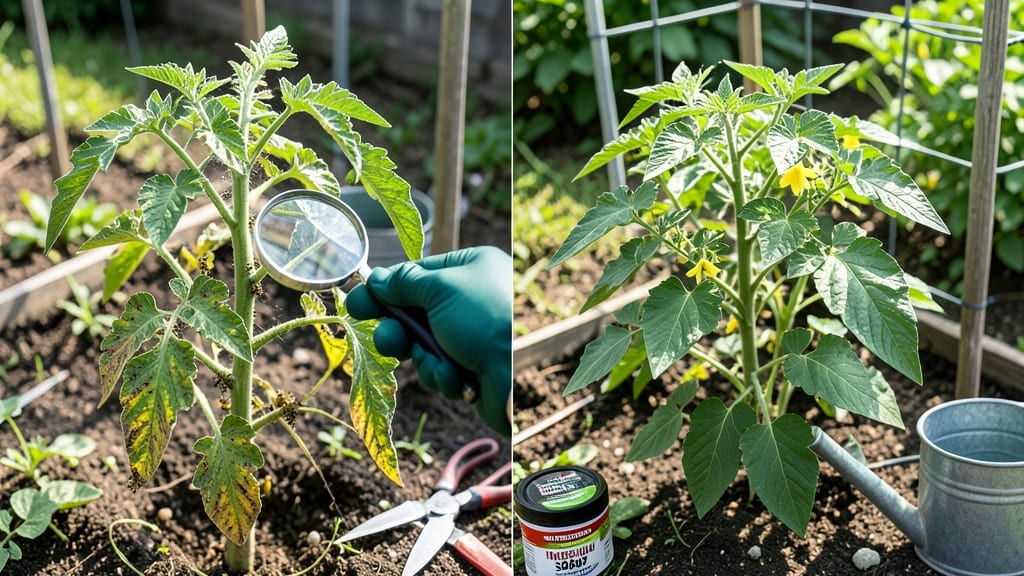
Your tomato stems curling overnight? That heart-stopping sight doesn’t mean your plants are doomed—it’s often a fixable warning sign. 🌱 I’ve seen this happen after a single night, only to have the vines bounce back stronger with the right approach.
The key is acting fast to rule out pests, disease, or stress before it spreads.
The culprits are usually hornworms munching away, fungal infections like fusarium wilt, or sudden heat stress. You’ll spot hornworms by their green, striped bodies and black horns; fusarium shows up as yellowing leaves and wilting despite watering.
The good news? Most issues respond to quick action—like handpicking pests or adjusting watering habits—without harsh chemicals.
Within 24 hours, you can restore health with targeted solutions: neem oil for pests, mulch to stabilize soil moisture, or shade cloth for heat stress. The goal is to keep those vines sturdy and productive, not just save them from collapse.
You’ll know you’re on the right track when new growth appears within a week.
This works for container gardens, raised beds, and in-ground plants alike—no matter your setup. The secret is staying ahead of the problem, not just reacting. Let’s get those tomatoes back on track!
Root Causes Behind Twisted Tomato Vines
When your tomato plants start sending up curled, distorted stems, it’s rarely just a random quirk of nature—it’s a cry for help from the plant itself. Understanding the why behind this symptom is the first step to saving your harvest.
Below, we break down the most common culprits, backed by science, so you can diagnose the issue fast and act with confidence.
Some of the most frustrating causes of stem curling are pests that feed on plant sap, inject toxins, or physically damage the vascular system. Here’s how they do it:
- Tomato Hornworms 🐛:
These voracious caterpillars (up to 4 inches long!) chew on leaves and stems, leaving behind jagged edges and curled growth. Their saliva contains enzymes that disrupt cell structure, causing stems to twist as the plant tries to compensate for damage.
- Look for: Green, black-horned caterpillars or frass (black droppings) on leaves.
- Science note: The plant’s jasmonic acid defense response (triggered by chewing) can also cause abnormal growth patterns.
- Aphids & Spider Mites 🕷️:
These sap-sucking pests pierce stems and leaves, injecting toxins that distort growth. Heavy infestations lead to stunted, curled stems as the plant diverts energy to repair damage.
- Look for: Sticky honeydew residue, webbing (mites), or clusters of tiny insects on undersides of leaves.
- Science note: Their saliva contains proteins that interfere with plant hormones like auxin, disrupting cell elongation.
- Whiteflies 🦋: While they primarily target leaves, severe infestations can weaken stems enough to cause curling. Their feeding also spreads viruses (like Tomato Yellow Leaf Curl Virus), which directly alter plant morphology.
Tomatoes are tough, but push them too far, and their stems will curl in protest. These environmental factors throw their growth cycles into chaos:
| Stressor | How It Causes Curling | Science Behind It |
|---|---|---|
| Extreme Heat 🔥 | Stems curl upward to reduce surface area exposed to scorching sun, a survival tactic called heliotropism. | High temperatures (>95°F) disrupt photosynthesis and denature enzymes like RuBisCO, starving the plant of energy to maintain straight growth. |
| Cold Snaps ❄️ | Frost or near-freezing temps cause cold stress, leading to brittle, curled stems as cell walls rupture. | Ice crystals form in plant tissues, bursting cell membranes and triggering ethylene production—a stress hormone that warps growth. |
| Wind Damage 💨 | Persistent wind whips stems into a spiral shape, while also desiccating them. | Physical abrasion damages the epidermis, and water loss disrupts turgor pressure (the plant’s internal water pressure that keeps stems rigid). |
| Poor Drainage 💦 | Waterlogged soil suffocates roots, cutting off nutrient/water supply and causing stems to curl as they gaspingly seek air. | Oxygen deprivation (hypoxia) in roots triggers abscisic acid (ABA) production, a drought-response hormone that stunts growth and curls leaves/stems. |
A tomato plant’s stem curling can also signal a hunger for specific nutrients. Unlike pests or weather, these issues are silent until they’re severe:
- Potassium Deficiency ⚡:
Potassium regulates osmotic balance and enzyme activity. Without enough, stems weaken, curl, and may even split.
- Signs: Yellowing leaf edges (first on older leaves), weak stems that flop.
- Fix: Add potassium sulfate or compost tea (1 tbsp per gallon of water).
- Magnesium Deficiency 🌿:
Magnesium is central to chlorophyll production. A lack of it causes interveinal chlorosis (yellowing between veins) and distorted, curled stems as the plant struggles to photosynthesize.
- Signs: Yellow patches on leaves with green veins; stems may thicken abnormally.
- Fix: Apply Epsom salt (1 tbsp per foot of plant height) or use magnesium-rich soil amendments.
- Nitrogen Toxicity 💥:
Too much nitrogen (common with over-fertilizing) leads to luxuriant but weak growth. Stems curl as they struggle to support rapid, unbalanced expansion.
- Signs: Dark green, leathery leaves; stems that bow under their own weight.
- Fix: Flush soil with water to leach excess nitrogen; switch to a balanced fertilizer (e.g., 5-5-5).
Fungal, bacterial, and viral infections often hijack a plant’s hormonal signals, forcing stems to curl as part of their life cycle:
- Verticillium or Fusarium Wilt 🍄:
These soil-borne fungi clog the plant’s xylem vessels, restricting water flow. The plant’s response? Curling stems as it tries to bypass blocked pathways.
- Signs: Wilting (even when soil is moist), yellowing leaves, stems that crisp when bent.
- Science note: The fungi produce toxins that disrupt auxin transport, leading to distorted growth.
- Tomato Yellow Leaf Curl Virus (TYLCV) 🦟:
Spread by whiteflies, this virus alters plant gene expression, causing stems to curl upward—a trait that helps the virus spread via aphid vectors.
- Signs: Bright yellow leaves, stunted growth, stems that twist like corkscrews.
- Fix: Remove infected plants immediately; use reflective mulch to deter whiteflies.
- Bacterial Spot (Xanthomonas) 🦠:
This bacteria infects through wounds, releasing toxins that
Fix Twisted Stems Fast
Tomato stems curling can feel like a gardener’s worst nightmare—until you know the right moves to turn things around. Below, we’ve mapped out practical, copper-free solutions tailored to the most common causes, plus pro tips to keep your plants thriving.
No fancy tools or chemicals needed—just smart fixes you can implement today.
---
Fix: If your soil feels soggy or your stems look waterlogged, cut back on watering and improve drainage immediately.
1. Let the soil dry out between waterings—stick your finger 1–2 inches deep. If it’s damp, wait. 2. Amend heavy clay soil with compost or perlite to help water drain faster. 3. Check your pots—if they lack drainage holes, repot or add a layer of gravel at the bottom.
4. Water deeply but less often—tomatoes prefer consistency over daily sips. Aim for 1–1.5 inches per week (adjust for rain).
💡 Pro Tip: Mulch with straw or shredded leaves to lock in moisture without smothering roots. This keeps soil temps stable and reduces evaporation.
---
Fix: Spider mites, aphids, and whiteflies love curling leaves and stems. Act fast with these non-toxic traps:
| Pest | Signs | Fix | |-------------------|-------------------------|-------------------------------------------------------------------------| | Spider Mites | Tiny webs, yellowing | Spray with neem oil + water (1 tbsp per quart) or soapy water. | | Aphids | Sticky residue, curled | Blast off with a strong hose spray or introduce ladybugs. | | Whiteflies | White clouds when shaken| Trap with yellow sticky cards or use kaolin clay as a barrier. |
🔥 Emergency Hack: Wrap stems in aluminum foil (yes, really!) to confuse pests and reflect light away from leaves.
--- Fix: Curling can signal too much nitrogen (leafy growth) or too little potassium (weak stems). Balance it out:
1. Stop high-nitrogen fertilizers (like blood meal) if your plants are all leaves, no fruit. 2. Switch to a balanced 5-10-10 or tomato-specific fertilizer (higher in phosphorus/potassium). 3. Add compost tea or banana peel water (rich in potassium) to the soil.
4. Epsom salt boost (1 tbsp per gallon of water) can help with magnesium deficiencies.
✨ Quick Fix: Sprinkle wood ash (sparingly!) around the base for a potassium and calcium boost.
--- Fix: Tomato stems curl when temps swing above 90°F or below 50°F. Protect your plants:
- Shade cloth (30–50%) during heatwaves—even temporary coverage helps. - Row covers for early/late seasons to trap warmth without smothering. - Water in the morning to cool leaves and soil (avoid evening watering to prevent fungal risks). - Move potted tomatoes to a sheltered spot if outdoor temps drop.
🎯 Prevention: Plant heat-tolerant varieties like ‘Heatmaster’ or ‘Solar Fire’ if your climate is brutal.
--- Fix: Fungal diseases (like early blight) cause curling and brown spots. Stop the spread now:
1. Remove infected leaves (wear gloves!) and dispose of them (don’t compost). 2. Space plants wider (18–24 inches apart) for better airflow. 3. Spray with baking soda mix (1 tsp baking soda + 1 quart water + few drops of soap) every 7–10 days.
4. Water at the base (not overhead) to keep leaves dry.
💡 Pro Tip: Copper-free alternative: Use hydrogen peroxide (3%) as a foliar spray (1:1 with water) to disinfect leaves.
--- Fix: If stems curl after repotting, your tomato is struggling to anchor. Help it recover:
- Stake or cage immediately—even small plants need support to prevent wind/rain damage. - Gently bury stems (up to the first leaves) to encourage stronger root growth. - Hold off on heavy feeding for 1–2 weeks to reduce stress.
⏰ Timeline: Most plants bounce back in 3–5 days with proper care.
--- To avoid future curling, lock in these habits: - Test your soil (pH 6.0–6.8 is ideal for tomatoes). - Rotate crops—never plant tomatoes in the same spot yearly. - Inspect plants weekly for pests/early signs of stress. - Prune suckers (side shoots) to direct energy to fruit, not foliage.
--- Final Thought: Most curling issues are fixable in 24–48 hours with the right approach. Start with one solution (drainage, pests, or nutrients) and monitor your plant’s response. Before you know it, those vines will be strong, straight, and loaded with juicy tomatoes! 🍅💪
Frequently asked questions
Why do my tomato stems curl overnight?
Overnight curling usually signals a sudden stressor like hornworms (check for green caterpillars with black horns) or extreme temperature swings. Cold snaps or sudden heat above 90°F can also trigger this response as the plant tries to protect itself. Act fast—inspect leaves for pests or check soil moisture first.
Can I save a tomato plant with curled stems?
Yes! Most cases are reversible within 24-48 hours if you address the root cause. Start by removing pests (handpick hornworms or spray neem oil), adjust watering (let soil dry between waterings), and provide support (stakes/cages). For nutrient issues, switch to a balanced fertilizer (5-10-10 ratio) immediately.
Is curled stem always a sign of disease?
Not necessarily! While diseases like fusarium wilt or bacterial spot can cause curling, 90% of cases are due to pests, environmental stress, or nutrient imbalances. Look for other symptoms: yellowing leaves (nutrient deficiency), wilting despite water (disease), or visible pests (aphids/hornworms).
How do I prevent tomato stems from curling in containers?
Container tomatoes need extra care to prevent curling. Use well-draining soil with perlite, water consistently (1-1.5 inches per week), and choose compact varieties like 'Tiny Tim'. Add Epsom salt (1 tbsp/gallon) monthly for magnesium, and provide afternoon shade during heatwaves to avoid stress.
Why does my tomato plant curl stems only in the morning?
Morning curling often indicates overnight temperature drops or excessive moisture in the soil. Check if your plants are in a drafty spot or if you've been overwatering. Try moving containers to a sheltered location and let the top inch of soil dry out before watering again. This usually resolves within 2-3 days.