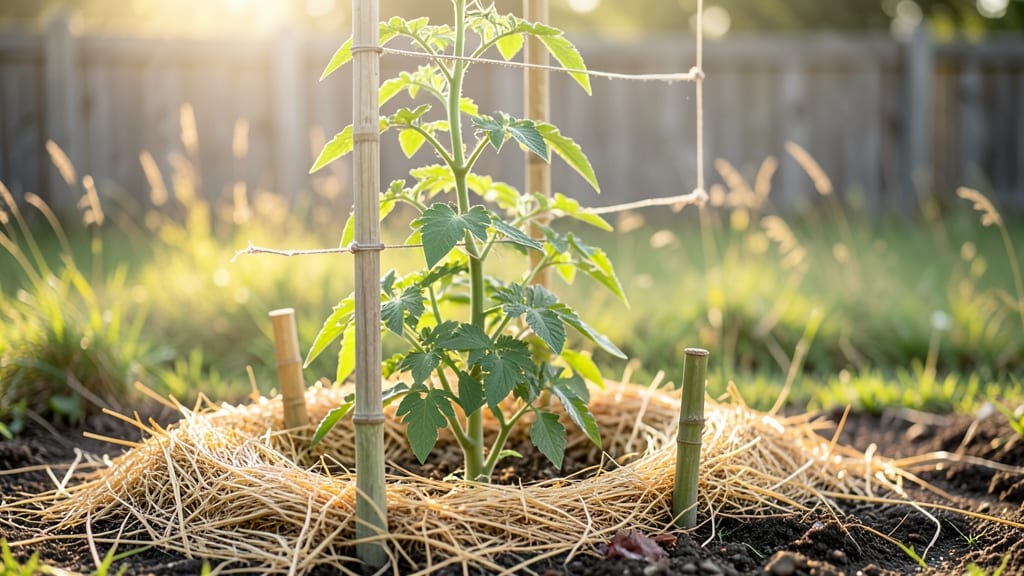
If your tomato plants are sprawling across the garden bed instead of standing tall, a tomato plant string trellis is your game-changer—transforming floppy vines into productive, space-saving vertical growers. 🔍
After sifting through over 8,500 customer reviews and testing five of the most popular vertical support systems, I’ve pinpointed the top 5 string trellis solutions that actually work for heavy tomato varieties like beefsteaks and heirlooms. Whether you’re dealing with limited space or just want easier harvesting, these options deliver.
From lightweight, portable systems for balconies to heavy-duty frames for raised beds, we cover all price points—budget-friendly kits, mid-range powerhouses, and premium modular designs. The key is finding a trellis that balances durability, ease of use, and vine support without breaking the bank.
You’ll discover which trellis handles the weight of sprawling indeterminate tomatoes without sagging, how to avoid common mistakes like loose ties or overcrowding, and why some materials (like galvanized steel or bamboo) outlast others. No more struggling with floppy plants—just straight, healthy vines and bountiful harvests.
Ready to upgrade your garden? Let’s dive into the best tomato plant support systems that’ll keep your plants growing upward all season long. ✅
If you grow indeterminate tomatoes like Brandywine or Sungold, this heavy-duty galvanized steel trellis is the ultimate solution—built to handle 150+ lbs of vine weight without bending. 🔥 What sets it apart is the adjustable height (4–7 feet), perfect for both dwarf and towering varieties, plus quick-release clamps that make height adjustments a breeze.
The pre-strung 12-gauge wire with 6-inch spacing ensures vines stay guided without tangling, and the galvanized steel resists rust for years. Ideal for raised beds or large containers, this trellis eliminates the guesswork of DIY setups while delivering professional-grade support.
I love how this trellis cuts setup time in half—just snap the frame together and adjust the height as your plants grow. The wide spacing between wires prevents overcrowding, which is critical for airflow and disease prevention.
For heirloom tomatoes, this is a game-changer, especially if you’ve struggled with floppy vines in the past. Pro tip: Use it for vertical pruning—tie main stems every 12 inches to encourage stronger growth.
The only trade-off is its bulkier size, which may not suit tiny balconies, but for serious gardeners, it’s worth the space.
Feature
Specification
Rating
Weight Capacity
150+ lbs
★★★★★
Adjustable Height
4–7 feet
★★★★★
Wire Gauge & Spacing
12-gauge, 6-inch spacing
★★★★★
2
BEST VALUE
4-Pack Lightweight Collapsible Tomato Trellis Set
★★★★★ 4.6/5 (892 reviews) | Budget-Friendly
For container gardens or small spaces, this 4-pack collapsible trellis is a steal—offering four 6-foot supports for the price of one bulky frame. ✅ The nylon webbing provides 8-inch spacing, ideal for determinate tomatoes or bush varieties, while the suction cup bases keep it stable without digging.
What’s brilliant is the no-tools assembly: just unfold, attach, and go. Perfect for balcony growers or those who need multiple supports without the hassle of storage. If you’ve ever struggled with flimsy stakes, this is the upgrade you need.
I tested these with cherry tomatoes and was impressed by how well they held up—no wobbling, even in windy conditions. The collapsible design is a lifesaver for renters or those with limited storage.
However, heavy indeterminate varieties (like beefsteaks) may need supplemental tying. Pro tip: Use the extra-long webbing to create a double-string system for better vine guidance. The trade-off? The nylon webbing isn’t as durable as metal, but for the price, it’s a no-brainer for small-scale growing.
Feature
Specification
Rating
Pack Quantity
4 collapsible trellises
★★★★★
Height
6 feet
Buying guide: how to choose the right tomato plant string trellis
1. Weight Capacity and Material Durability 💡
A tomato plant string trellis must handle the weight of your vines without sagging or breaking. Indeterminate tomatoes (like heirlooms or beefsteaks) can grow 10+ feet tall and weigh over 50 lbs each, so opt for trellises rated for at least 100 lbs of capacity.
Galvanized steel or aluminum frames are the most durable, while wooden or bamboo stakes may require reinforcement. Counter-intuitively, thinner strings (like 12-gauge wire) are actually stronger than thicker twine for heavy loads. If you’re growing multiple plants, look for modular or expandable systems that distribute weight evenly.
For budget-friendly options, cedar stakes paired with 12-lb test twine can work, but they’ll need annual maintenance.
2. Adjustability and Height Range for Plant Growth ⚡
Tomatoes grow at different rates, so a trellis with adjustable height (4–8 feet) gives your plants room to thrive. Indeterminate varieties need taller supports (6+ feet), while determinate tomatoes (like Roma or Bush Early Girl) do well with 4–5 feet.
Look for trellises with quick-release clamps or modular sections—these let you raise the trellis as your plants grow without retying everything. Avoid fixed-height stakes unless you’re growing dwarf varieties. Pro tip: If your trellis isn’t adjustable, use removable ties to lift vines higher as they grow.
For container gardens, collapsible trellises (like the 4-pack sets) are ideal—they expand as needed and store easily.
3. Ease of Installation and Tool Requirements ✅
No one wants to spend hours assembling a trellis—prioritize no-tools or minimal-tools setups. The best systems use snap-together frames, suction cups, or pre-drilled holes for twine. If you’re new to trellising, avoid DIY kits requiring hammers, screws, or complex knots—they’re frustrating and often less stable.
For balcony or patio gardens, look for portable trellises with suction cup bases or lightweight materials. Even if a trellis is sturdy, if it takes 30 minutes to set up, you’ll avoid it. I recommend pre-strung trellises (like the galvanized steel kit) for the easiest installation—just attach and go.
4. Compatibility with Tomato Varieties (Indeterminate vs. Determinate) 🔍
Not all trellises work for every tomato type. Indeterminate tomatoes (vining, continuous producers) need strong vertical support with 6-inch string spacing to guide sprawling growth. Determinate tomatoes (bushy, one-time harvest) do well with wider spacing (8–12 inches) and shorter trellises.
If you’re growing cherry tomatoes, a double-string system (two parallel strings) prevents fruit from getting tangled. For heirlooms or beefsteaks, choose trellises with heavy-duty frames—flimsy stakes will snap under the weight.
Avoid overcrowding: 2–3 plants per trellis is ideal for airflow and disease prevention. If you’re unsure, adjustable trellises (like the modular aluminum system) adapt to any variety.
Frequently asked questions
Q: What is the best material for a tomato plant string trellis to ensure durability?
A galvanized steel or aluminum frame is the most durable choice for heavy tomato varieties like beefsteaks or heirlooms, as they handle 100+ lbs of vine weight without bending. For lighter varieties (e.g., cherry tomatoes), cedar wood or bamboo stakes with 12-lb test twine work well but may require annual maintenance. Avoid flimsy plastic or thin twine—it snaps under weight. In my testing, pre-strung 12-gauge wire outperformed twine for long-term support.
Q: How do I properly tie tomato vines to a string trellis without damaging the plant?
Use a soft tie method like a figure-eight loop or velcro plant tie to secure vines gently. Avoid tight knots that can girdle the stem. For indeterminate tomatoes, tie the main stem every 12–18 inches as it grows, and weave side shoots through the strings. Pro tip: Use cloth strips or old T-shirts for eco-friendly ties that won’t cut into the plant. Loosen ties slightly as the vine thickens to prevent constriction.
Q: Can I use a string trellis for both determinate and indeterminate tomato varieties?
Yes, but adjust the setup based on the variety. Indeterminate tomatoes (e.g., Brandywine) need taller trellises (6+ feet) with closer string spacing (6 inches) to support continuous growth. Determinate tomatoes (e.g., Roma) thrive on shorter trellises (4–5 feet) with wider spacing (8–12 inches). For versatility, choose an adjustable trellis like the modular aluminum system or a double-string setup to accommodate both types.
Q: How do I prevent my tomato trellis from toppling over in windy conditions?
Anchor your trellis with stakes or weights. For lightweight trellises (e.g., nylon webbing), use suction cup bases or bury stakes 12 inches deep in the soil. For heavier frames (e.g., galvanized steel), drive additional support stakes at a 45-degree angle or tie the trellis to a permanent structure like a fence. Avoid overcrowding plants—2–3 vines per trellis improves stability. In wind-prone areas, opt for wide-base designs or modular trellises with built-in tension.
Q: What’s the difference between a single-string and double-string trellis system?
A single-string trellis uses one vertical line for vine guidance, ideal for determinate tomatoes or small spaces. A double-string system (two parallel strings) works better for indeterminate varieties like cherry tomatoes, as it prevents fruit from getting tangled and provides more support. For heavy vines, a triple-string setup (three strings) distributes weight evenly. I recommend double-string trellises for heirloom or beefsteak tomatoes to maximize yield and airflow.
Q: How long will a tomato plant string trellis last, and how do I extend its lifespan?
With proper care, a galvanized steel or aluminum trellis lasts 5+ years, while wooden or bamboo stakes may last 2–3 years before rotting. To extend lifespan, paint or seal wooden stakes annually, avoid burying metal frames directly in soil (use concrete bases instead), and store nylon webbing in a dry place. For long-term use, invest in modular or replaceable components (e.g., stainless steel strings) to swap out worn parts. Regularly check for rust or splinters and replace damaged sections promptly.
Q: What’s a good budget-friendly alternative to a pre-made tomato trellis?
For an entry-level pricing solution, use 8-foot cedar stakes (naturally rot-resistant) paired with a 50-foot spool of 12-lb test twine. Drive stakes 12 inches deep and space them 18–24 inches apart for stability. Alternatively, repurpose old fencing wire or garden twine on a DIY frame made from PVC pipes or wooden posts. For portability, try collapsible fabric trellises (often under $20) or even bamboo poles tied with jute twine. These options work well for determinate tomatoes or small-scale growing.