
Diseases
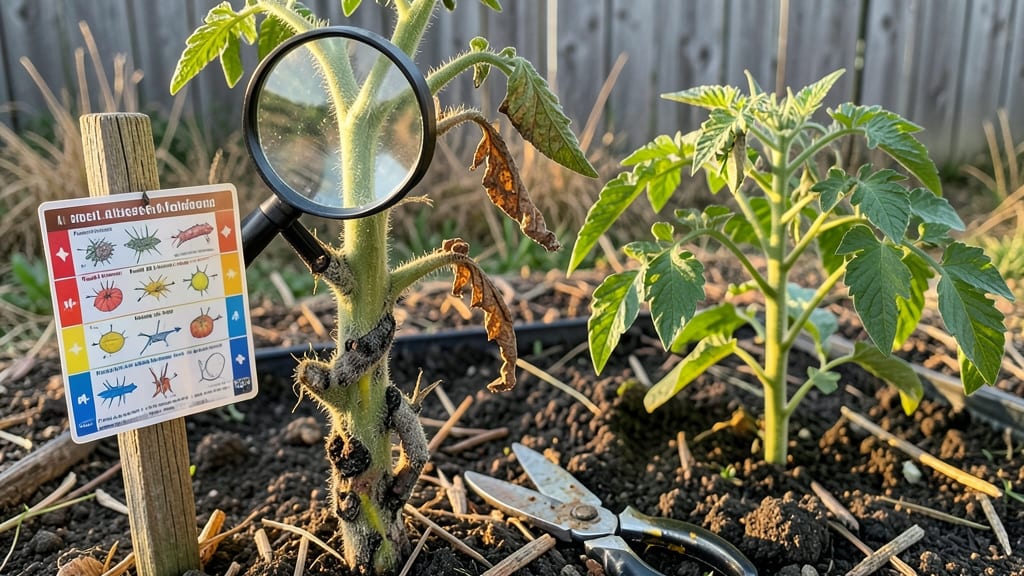
Your tomato plant stem diseases are wilting from the stem down—not from thirst, but from hidden diseases that steal your harvest before you even notice. 🌱 The moment you see that telltale collapse or odd discoloration, you’re already in a race against time to save your plants.
Early intervention can mean the difference between a bountiful summer and a sad, shriveled disappointment.
Most stem diseases—like early blight, Fusarium wilt, or bacterial canker—start with subtle clues: yellowing leaves, dark spots, or stems that ooze when cut. The good news? Organic fixes like copper sprays, neem oil, and proper pruning can turn things around if you catch them fast.
I’ve saved entire plants by acting within days, and I’ll show you exactly how.
You’ll learn to spot the warning signs before they spread, use simple remedies to stop the rot, and even prevent future outbreaks with soil tweaks and disease-resistant varieties. No more losing your hard work to silent stem invaders—just healthier plants and a full basket of tomatoes by season’s end.
Whether you’re dealing with a single plant or an entire garden, these strategies work in backyards, containers, and even small-space setups. Let’s get your tomatoes fighting back before the disease wins.
Root Causes of Stem Weakness
Tomato plant stems can weaken due to a mix of biological, environmental, and cultural factors. Understanding these triggers helps you take action before diseases like Fusarium wilt, Verticillium wilt, or bacterial stem rot take hold.
Below are the key reasons why tomato stems become vulnerable—and how to address them.
Tomato plants thrive in moderate temperatures (65–85°F), but extreme heat or cold can stress stems, making them susceptible to infections. Here’s why:
- Heat stress: High temperatures (>90°F) disrupt the plant’s natural defenses, weakening cell walls. This allows pathogens like Pseudomonas syringae (causal agent of bacterial stem rot) to invade more easily.
- Cold damage: Frosts or chilly nights (<50°F) can cause cracking in stems, creating entry points for fungi such as Phytophthora.
- Sun scorch: Intense midday sun on young stems (especially in dry conditions) leads to necrosis (dead tissue), which pathogens exploit.
Actionable fix: Use mulch (straw or grass clippings) to regulate soil temps, provide afternoon shade with row covers, and avoid planting tomatoes in low-lying areas where cold air pools.
Water is essential, but overwatering or poor drainage creates the perfect breeding ground for stem-rotting pathogens. Here’s how it happens:
- Fungal growth: Soils that stay soggy for >48 hours encourage Fusarium and Verticillium fungi, which release toxins that clog xylem vessels (the plant’s water highways). This causes wilting even when soil is moist.
- Root rot spread: Waterlogged roots can’t absorb nutrients, weakening the stem’s structural integrity. Pythium and Phytophthora then move upward, rotting stems at the base.
- Splashback contamination: Overhead watering splashes spores from infected soil onto stems, accelerating disease spread.
Actionable fix:
- Water deeply but infrequently (1–1.5 inches per week) to encourage deep root growth.
- Improve drainage by amending soil with compost or perlite and planting on mounds.
- Use drip irrigation to avoid wetting foliage.
Many stem diseases are soil-borne, meaning they lurk in the garden for years. Here’s how they infect:
- Persistent fungi: Fusarium oxysporum and Verticillium dahliae survive in soil for 10+ years as chlamdospores. If you’ve grown tomatoes, peppers, or eggplants in the same spot, these pathogens are likely already there.
- Bacterial hitchhikers: Ralstonia solanacearum (bacterial wilt) spreads via contaminated tools, infested plant debris, or even wild hosts like nightshade weeds.
- Insect vectors: Aphids and leafhoppers can transmit Xylella fastidiosa, causing Pierce’s disease, which attacks vascular tissue.
Actionable fix:
- Rotate crops: Avoid planting tomatoes in the same spot for 3–4 years.
- Solarize soil in late summer by covering beds with clear plastic for 4–6 weeks to kill pathogens.
- Disinfect tools with 70% rubbing alcohol or a 10% bleach solution between uses.
Stems weakened by poor growing conditions become easy targets. Common triggers include:
- Nutrient deficiencies: Lack of potassium or phosphorus reduces stem strength, making plants more prone to splitting or cracking.
- Competition for resources: Overcrowded plants compete for sunlight and water, leading to stunted growth and thinner stems that snap easily.
- Transplant shock: Rough handling or root damage during transplanting delays recovery, leaving stems vulnerable to infections.
Actionable fix:
- Space tomato plants 18–24 inches apart for airflow and sunlight.
- Fertilize with balanced organic fertilizer (e.g., 5-5-5) at planting and potassium-rich compost mid-season.
- Use cage supports early to prevent stem bending.
By addressing these root causes, you’ll starve out pathogens before they take hold. Early intervention—like pruning infected stems or boosting plant resilience—can mean the difference between a thriving harvest and a lost crop. 🌱
Quick Fixes for Weakened Tomato Stems
When your tomato plant’s stem starts showing signs of disease—whether it’s wilting, discoloration, or strange growths—acting fast is key. The good news? Most stem issues can be reversed or prevented with simple, organic solutions.
Below, we’ve mapped out practical fixes for common causes, along with prevention tips to keep your plants thriving. No fancy tools or chemicals needed—just elbow grease and a little know-how!
Signs: Dark spots on stems, yellowing leaves, or stems that turn brown and collapse. Fix It:
- Prune aggressively 🔪: Remove infected stems immediately (don’t compost them—dispose in a sealed bag). Use sterilized pruners (wipe with rubbing alcohol between cuts) to avoid spreading spores.
- Boost airflow 🌬️: Space plants 18–24 inches apart and stake or cage them to reduce humidity near the stem. Avoid overhead watering—use a drip irrigation system or water at the base in the morning.
- Copper spray treatment 🛡️: Mix 1 tsp copper sulfate per gallon of water (or use a pre-made organic copper fungicide) and spray every 7–10 days until symptoms disappear. Pro tip: Spray early in the day so the plant dries quickly—fungi love dampness!
- Soil solarization ☀️: For severe cases, cover the soil with clear plastic sheeting for 4–6 weeks in hot sun to kill fungal spores in the ground.
Prevent It:
- Rotate crops 🌱: Never plant tomatoes (or other nightshades like peppers/eggplants) in the same spot next year.
- Strengthen stems 💪: Use compost or balanced organic fertilizer (like 5-5-5) at planting to encourage sturdy growth. Weak stems are more susceptible to fungal invasion.
- Mulch wisely 🌿: Apply straw or grass clippings (not wood chips) to keep soil moist but not soggy.
Signs: Oozing sap, dark streaks inside stems, or sudden wilting (even if leaves stay green). Fix It:
- Isolate infected plants 🚫: Bacterial diseases spread fast. Remove and burn (or deep-trash) infected plants right away—don’t compost!
- Hydrogen peroxide soak 🧴: For canker wounds, mix 1 tbsp 3% hydrogen peroxide per cup of water, soak a cloth, and gently wipe affected areas. Repeat every 3–4 days until healed.
- Neem oil spray 🌿: Mix 1 tbsp neem oil + 1 tsp mild soap per quart of water, shake well, and spray weekly to slow bacterial spread. Caution: Apply in early morning or evening to avoid burning leaves.
- Copper-based bactericide 🛡️: Use copper fungicide (like Bordeaux mixture) as a preventive spray every 10 days during wet seasons.
Prevent It:
- Sterilize tools 🔪: Clean pruners and stakes with bleach (1 part bleach to 9 parts water) or rubbing alcohol between uses.
- Avoid overhead watering 💦: Water at the base only and keep foliage dry. Use a watering wand for precision.
- Plant resistant varieties 🌱: Choose heat-tolerant or disease-resistant tomatoes (like ‘Mountain Merit’ or ‘Defiant PhR’).
Signs: Chewed stems, sticky residue (honeydew), or tiny holes with sawdust-like frass. Fix It:
- Handpick pests 👨🍳: Check stems daily for aphids or borers. Drop them into soapy water (1 tbsp dish soap per gallon).
- Neem oil or insecticidal soap 🛡️: Spray neem oil (1 tbsp + 1 tsp soap per quart of water) every 5–7 days until pests vanish. For borers, inject neem oil into chewed stems with a syringe.
- Beneficial insects 🐝: Release ladybugs or parasitic wasps (available at garden centers) to prey on aphids naturally.
- Diatomaceous earth (DE) 🌊: Sprinkle food-grade DE around the stem base—it dehydrates soft-bodied pests like aphids. Reapply after rain.
Prevent It:
- Row covers 🛡️: Use floating row covers early in the season to block pests before they lay eggs.
- Interplant with herbs 🌿: Grow basil, marigolds, or garlic nearby—they repel pests naturally.
- Inspect seedlings 🔍: Buy pest-free starts and quarantine new plants for 2 weeks before transplanting.
Signs: Soft, mushy stems, yellowing leaves, or stems that snap easily. Fix It:
- Adjust watering 💧: Let the top 1–2 inches of soil dry between waterings. Use a moisture meter or stick your finger in the soil to check.
- Improve drainage 🚿: Amend heavy soil with perlite or compost to prevent waterlogging. If potted, ensure drainage holes are present.
- Shade cloth ☀️: In extreme heat, provide 30–50% shade for 2–3 weeks to help stems recover.
- Support weak stems 🪵: Install stakes or cages immediately to prevent further damage from wind or weight (like heavy fruit).
Prevent It:
- Test your soil 📊: Aim for pH 6.0–6.8 and good aeration. Add sand or coconut coir if drainage is poor.
- Mulch heavily 🌿: Use 2–3 inches of straw to retain moisture without suffocating roots.
- Avoid cold snaps ❄️: If frost is forecast, cover plants with blankets or move pots to a sheltered spot.
💡 Pro Tip: Always rotate your solutions—don’t rely on one fix. Combine pruning, spraying, and soil care for the best results. And remember: Healthy soil = healthy stems! Feed your plants balanced organic fertilizer (like fish emulsion or compost tea) every 4–6 weeks to build resilience.
With these fixes, your tomato plants should bounce back stronger—and you’ll be back to harvesting juicy, disease-free tomatoes in no time! 🍅✨
Frequently asked questions
What are the most common signs my tomato stems are diseased?
Look for dark spots or lesions on stems, yellowing leaves that start at the bottom, or stems that collapse suddenly—even when soil feels moist. Bacterial infections often cause oozy sap or cankers, while fungal diseases may show white mold or black streaks inside stems. Act fast if you see these!
Can I save a tomato plant if its stem is already rotting?
It depends! For early-stage rot, prune the infected area below the damage with sterilized tools, then treat with copper fungicide or neem oil. If the stem is mushy or hollow, the plant is likely beyond saving—remove it completely to prevent spreading. Always sterilize your tools afterward!
How do I know if my tomato stem disease is fungal or bacterial?
Fungal diseases (like early blight) often show concentric rings on stems and thrive in wet conditions. Bacterial issues (like canker) produce watery ooze and spread faster, especially in warm, humid weather. Test with a sterile knife: If the stem oozes, it’s likely bacterial.
Will pruning help stop stem diseases from spreading?
Prune infected stems immediately—cut 6 inches below the visible damage—and sterilize tools between cuts. Remove all debris (don’t compost it!) to prevent spores from reinfecting. For severe cases, solarize soil (cover with plastic for 4–6 weeks) to kill lingering pathogens.
Are there tomato varieties that resist stem diseases?
Yes! Look for disease-resistant hybrids labeled ‘V’ (Verticillium-resistant), ‘F’ (Fusarium-resistant), or ‘N’ (Nematode-resistant). Top picks include ‘Mountain Merit’ (blight-resistant) and ‘Defiant PhR’ (multi-resistant). Even organic growers can benefit from these varieties!