
Watering
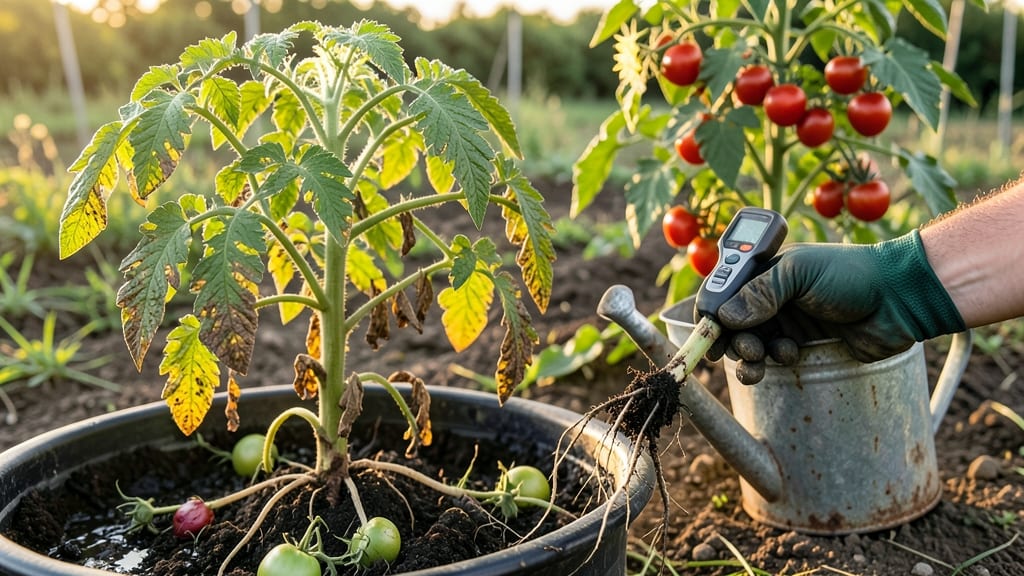
Your tomato plants are drowning in the symptoms of tomato overwatering, and the yellow leaves and mushy roots are the first clues. 🌱 I’ve watched overwatered tomatoes turn from vibrant green to sad, limp messes—and the fix starts with recognizing the subtle (and not-so-subtle) signs before it’s too late.
The good news? Most plants recover if you catch it early, but the damage can spread fast if you ignore it.
Yellowing leaves, especially on the lower stems, are the classic warning sign, but don’t assume it’s just old age. Check the soil—if it’s soggy or smells like rot, you’ve overdone it.
Mushy, dark roots and wilting despite wet soil mean root rot is setting in, and blossom end rot (that ugly black scab on fruit) often follows. The key? Soil that drains well and stays moist, not soaked.
Here’s the fix: stop watering immediately and let the soil dry out between drinks. Amend heavy clay soil with compost to improve drainage, and consider raised beds if your garden holds too much moisture. Within a week, you’ll see new growth pushing through—proof your tomatoes are bouncing back.
Prevention is easier than cleanup. Water deeply but less often, and always check the top inch of soil before adding more. Mulch helps too, keeping moisture steady without drowning the roots. With these tweaks, your plants will thrive instead of turning into soggy sad sacks.
Root Causes Of Overwatering
Tomato plants thrive on balance—too little water, and they wilt; too much, and they suffocate. Overwatering isn’t just about dumping extra water; it’s a cascade of environmental and human factors that disrupt the plant’s delicate equilibrium.
Understanding these causes helps you adjust your care routine before damage sets in. Let’s break down the science behind why your tomatoes might be drowning in their own soil.
Soil texture and composition play a critical role in how water moves through the root zone. If your tomato’s soil is heavy, compacted, or lacks organic matter, water pools around roots instead of draining away. Here’s why this happens:
- Clay-heavy soil: Tiny particles pack tightly, creating pockets where water sits like a sponge that never dries. Roots in clay suffocate because oxygen can’t reach them—leading to anaerobic conditions (low or no oxygen), which triggers root rot.
- Lack of organic matter: Compost or aged manure improves soil structure by creating air pockets. Without it, water clings to particles, and roots struggle to breathe.
- Compacted soil: Foot traffic, machinery, or even container gardening with dense mixes (like pure potting soil) compresses the soil. Compacted layers act like a dam, trapping water at the root level.
Actionable fix: Amend your soil with perlite, vermiculite, or coconut coir to improve aeration. For containers, use a 50/50 mix of potting soil and perlite. Test drainage by filling a pot with water—if it doesn’t drain within 10–15 minutes, your mix is too dense.
Tomatoes need consistent moisture, but frequency ≠ depth. Many gardeners make these mistakes:
- Watering on a schedule: Rain or not, sticking to a daily or every-other-day routine ignores the plant’s actual needs. Soil moisture levels fluctuate based on weather, pot size, and plant maturity.
- Light, shallow watering: A quick sprinkle wets only the top inch of soil, encouraging roots to stay near the surface. When the topsoil dries, roots panic and absorb more water—leading to osmotic stress (where roots take in too much water and dilute their cells).
- Ignoring container size: Small pots dry out fast, but they also drain quickly. Overwatering to “keep them moist” keeps roots soggy because the soil never has a chance to dry between waterings.
Actionable fix: Water deeply until 20–30% of the water drains out the bottom (for pots) or until the soil is moist 6 inches down (for in-ground plants). Use the finger test: Stick your index finger 2 inches into the soil—if it’s damp, wait. If it’s dry, water thoroughly.
Not all overwatering is your fault. Humidity, temperature swings, and even wind can turn your watering routine into a disaster. Here’s how:
- High humidity: Moist air slows evaporation, so soil stays damp longer. In tropical climates or during summer, roots may not dry out between waterings, even if you’re not adding extra water.
- Cold or rainy weather: Cool temperatures reduce a plant’s ability to absorb water efficiently. If you water as usual, excess moisture lingers, increasing the risk of Pythium or Phytophthora (fungal root rots).
- Wind or poor airflow: Wind desiccates leaves, making plants think they’re thirsty. You might overcompensate by watering more, but the roots still can’t keep up if the soil is already saturated.
Actionable fix:
- In humid climates, water in the morning to allow foliage to dry before nightfall (reducing fungal risks).
- Use mulch (straw or wood chips) to regulate soil temperature and moisture.
- Move potted tomatoes to shaded or sheltered spots during extreme weather.
Growing tomatoes in containers offers control, but they’re high-risk for overwatering due to:
| Issue | Why It Happens | Fix |
|---|---|---|
| Small pot size | Roots fill the container quickly, leaving no room for oxygen. Water evaporates fast, but roots can’t “breathe” between waterings. | Upgrade to at least 5-gallon pots for dwarf varieties, 10+ gallons for indeterminate tomatoes. |
| No drainage holes | Water pools at the bottom, creating a waterlogged root zone. Even “self-watering” pots can fail if not monitored. | Drill holes in the bottom and add a 2-inch layer of gravel or broken pottery at the base. |
| Cheap potting mix | Some mixes lack perlite or compost, compacting easily and holding too much moisture. | Use a high-quality, peat-free mix with added perlite or worm castings. |
Pro tip: Weigh your pot before and after watering. A 10% weight increase means it’s time to water again—no guesswork needed!
Overwatering is often a mix of well-intentioned mistakes and unseen soil conditions. The good news? Once you identify the root cause (pun intended), fixing it is straightforward. Next up: how to spot the signs before your tomato plant throws in the towel.
Fixing Overwatered Tomatoes
Now that you’ve identified the signs of overwatering—yellowing leaves, wilting, or that dreaded mushy root smell—it’s time to take action. The good news? Tomatoes are resilient, and with the right steps, you can nurse them back to health.
Below, we’ll map out practical fixes for each common symptom, plus prevention tips to keep your plants thriving.
If your tomato leaves are turning yellow (especially the lower ones), the roots are likely suffocating from excess moisture. Here’s how to revive them:
1. Adjust Your Watering Schedule
- Stop watering immediately until the top 1–2 inches of soil feel dry to the touch (use your finger to test).
- Water deeply but less frequently—tomatoes prefer a drench-and-dry cycle.
Aim for 1–1.5 inches of water per week (including rainfall). - Water in the morning to allow foliage to dry before evening, reducing fungal risks.
2. Improve Soil Drainage
- Aerate compacted soil by gently loosening the top 6 inches with a fork or trowel (avoid damaging roots).
- Add organic matter: Mix in compost, perlite, or coconut coir to improve drainage.
Aim for 20–30% amendment in heavy clay soils. - Raise containers: If growing in pots, ensure they have drainage holes and elevate them slightly to prevent water pooling.
3. Prune Damaged Foliage
- Snip off yellow or blackened leaves with clean pruners to redirect energy to healthy growth.
- Avoid over-pruning—remove only 10–20% of the plant to prevent stress.
If your tomato’s roots smell foul or the base of the stem feels soft, root rot has set in. Act fast:
1.
Emergency Root Rescue - Remove the plant carefully from the soil, shaking off excess dirt to inspect roots. - Trim away mushy, dark roots with sterilized scissors (healthy roots are firm and white). - Soak roots in a fungicide solution (like hydrogen peroxide 3% diluted to 1:10 or neem oil spray) for 10–15 minutes to kill pathogens.
2.
Repot in Fresh, Dry Soil - Use a well-draining potting mix (avoid garden soil—it retains too much moisture). - Choose a slightly larger pot (only 1–2 inches wider) to prevent overpotting, which traps moisture. - Water lightly after repotting and keep the soil dry for 3–5 days to let roots recover.
3. Prevent Future Rot
- Avoid mulching too close to the stem—leave a 2-inch gap to prevent moisture buildup.
- Use drip irrigation instead of overhead watering to keep leaves dry.
- Monitor soil moisture with a moisture meter or your finger (never let soil stay soggy).
Wilting from overwatering often looks like underwatering—but the fix is the opposite:
1. Let the Soil Dry Out
- Hold off on watering for 2–3 days to allow roots to recover.
- Check for other stressors: Wilting can also signal blossom end rot (calcium deficiency) or heat stress—address those if present.
2. Support the Plant
- Stake or cage tomatoes to prevent stems from snapping under their own weight.
- Provide afternoon shade if temperatures exceed 90°F (32°C) to reduce transpiration stress.
3. Boost Root Health
- Fertilize lightly with a balanced, water-soluble fertilizer (like 10-10-10) to encourage root regrowth.
- Avoid nitrogen-heavy feeds until the plant shows new growth—too much can delay recovery.
Once your tomatoes bounce back, keep these habits to avoid future overwatering:
| Problem | Solution |
|---|---|
| Heavy clay soil | Amend with sand, perlite, or compost before planting. |
| Poor drainage | Plant in raised beds or containers with holes. |
| Inconsistent watering | Use a soaker hose or drip system on a timer. |
| Over-mulching | Mulch 2–3 inches deep, keeping it away from the stem. |
| Ignoring weather | Adjust watering for rain (skip watering if >0.5 inches fell in 24 hours). |
- Yellow leaves: New growth should appear in 7–14 days if roots are healthy.
- Root rot: Recovery takes 2–4 weeks—be patient and avoid overwatering.
- Wilting: Plants may perk up in 24–48 hours once soil dries out.
Pro Tip 💡: Overwatering is reversible—but speed matters. The sooner you act, the better your tomatoes’ chances of bouncing back. And remember: When in doubt, check the soil! A quick finger test saves more plants than any rulebook. 🌿
Frequently asked questions
Why do my tomato leaves turn yellow first when overwatered?
Yellowing leaves—especially on the lower stems—are the first sign of overwatering because excess moisture blocks oxygen from reaching roots. When roots suffocate, they can't absorb nutrients, causing leaves to lose their green chlorophyll and turn yellow. This often starts at the bottom since those leaves are oldest and most sensitive to stress.
Can I save a tomato plant with root rot from overwatering?
Yes, but you must act fast! Gently remove the plant, trim away mushy black roots, and repot in fresh, well-draining soil. Soak healthy roots in a hydrogen peroxide (3% diluted 1:10) solution for 10 minutes to kill fungi. Keep soil dry for 3-5 days while roots recover. If over 50% of roots are rotted, recovery may not be possible.
How often should I water tomatoes to avoid overwatering?
Water tomatoes when the top 1-2 inches of soil feel dry—about 1-1.5 inches per week (including rain). For containers, water when 20-30% of the water drains out. Morning watering prevents evening moisture buildup. Use a moisture meter or finger test to avoid guesswork.
Will mulch help prevent overwatering in my tomato plants?
Mulch helps regulate moisture but can backfire if overused. Apply 2-3 inches of organic mulch (straw or wood chips) but keep it 2 inches away from the stem to prevent rot. Mulch slows evaporation, reducing how often you water—but don't use it if your soil already drains poorly.
Can I fix blossom end rot caused by overwatering?
Blossom end rot (black scabs on fruit) often appears with overwatering because it disrupts calcium uptake. While you can't reverse the damage on existing fruit, you can prevent new cases by ensuring consistent moisture (never letting soil dry completely) and adding calcium-rich fertilizer or crushed eggshells. Prune affected fruit to redirect energy to healthy growth.