
Pests and Diseases
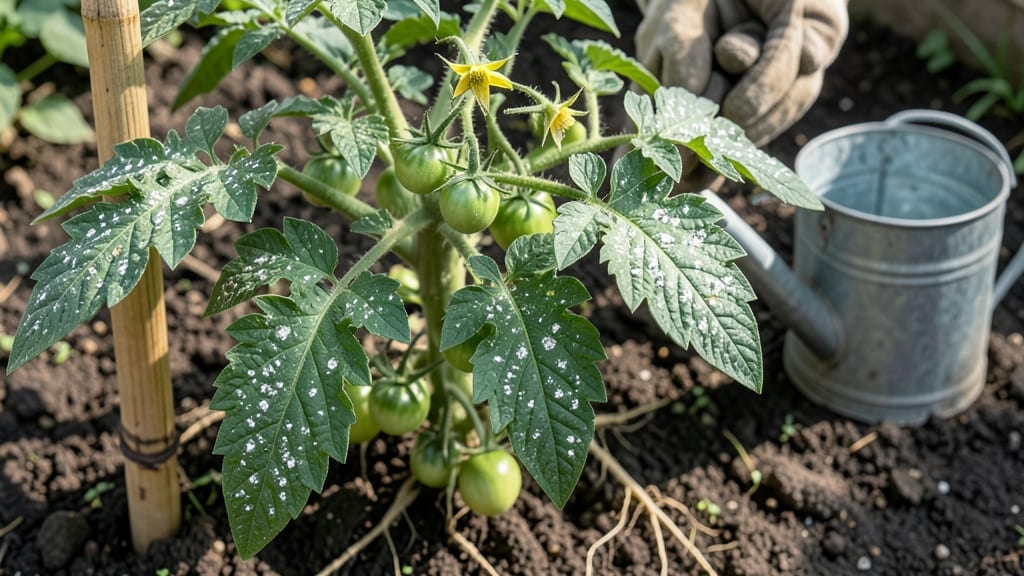
Those tiny white spots on your tomato leaves aren’t just unsightly—they’re a warning sign your plants are fighting powdery mildew. 🌱 I’ve battled this fungal foe for years, and I’ll show you how to stop it before it spreads, using a simple baking soda spray that works faster than store-bought fungicides.
Powdery mildew thrives in warm, humid conditions and starts as faint white spots that grow into fuzzy patches. If left unchecked, it weakens plants, reduces fruit production, and can even kill your tomatoes. The good news? This problem is 100% preventable with proper spacing, airflow, and a few organic treatments.
With a foolproof baking soda spray (just 1 tablespoon baking soda, a drop of dish soap, and a gallon of water), you’ll see improvement within 3-5 days of treatment. The spray disrupts the fungus’s life cycle while keeping your plants safe and chemical-free.
This method works for garden beds, containers, and even houseplants—no matter how severe the infection. Let’s get those leaves clean and your tomatoes thriving again before the season’s over.
Root Causes Of Leaf Spotting
Tiny white spots on tomato leaves aren’t just a cosmetic annoyance—they’re often a warning sign that something’s disrupting your plants’ health. Understanding the why behind these spots is the first step to fixing the problem.
Below, we break down the most common culprits, from fungal invaders to environmental stressors, and explain how they trigger these unsightly (and sometimes harmful) symptoms.
---
Fungi are the #1 cause of white spots on tomato leaves, and powdery mildew is the most notorious offender. Here’s how it happens:
- Spores Love Humidity 🌧️: Powdery mildew thrives in high humidity (70%+) with poor air circulation. When spores land on leaves, they germinate and form a white, powdery film—that’s the spots you’re seeing.
Unlike bacteria, fungi don’t need water to spread; they just need moisture in the air.
- Weakened Plants Are Targets 🌱⚠️: Stressors like overcrowding, nutrient deficiencies, or drought weaken tomato plants, making them easier prey. Fungi exploit this by penetrating leaf surfaces through tiny openings (like stomata) and feeding on plant sugars.
- How It Spreads ➡️: Once established, powdery mildew releases more spores, which hitchhike on wind, tools, or even your shoes. If left unchecked, it can cover entire leaves, blocking sunlight and stunting growth.
---
Not all white spots are fungal. Sometimes, environmental factors trigger stress responses that manifest as spots. Here’s what’s likely happening:
- Excessive Moisture or Poor Drainage 💧🚫: Splashing water (from overhead irrigation or rain) can spread fungal spores, but even overwatering can cause edema—a condition where leaves develop blister-like white spots due to waterlogged cells.
Check your soil: if it’s soggy for more than a day, drainage is the issue.
- Sunburn or Heat Stress ☀️🔥: In hot climates, intense sunlight + dry air can cause white or yellowish spots (called sunscald). Tomato leaves may also curl or scorch at the edges. Solution? Provide light shade (like a row cover) during peak afternoon heat.
- Mineral Buildup in Soil 🧪: If your water is hard (high in calcium or magnesium) or you’ve been using fertilizer salts, excess minerals can crust on leaf surfaces, creating white, powdery deposits. This is more common in container-grown tomatoes or greenhouses.
---
Some white spots aren’t from disease—they’re pest byproducts or physical damage. Here’s how insects contribute:
- Spider Mites & Whiteflies 🕷️✈️: These tiny pests feed on plant sap, leaving behind white, stippled spots (from saliva or excrement). Heavy infestations cause leaf yellowing and webbing. Check the undersides of leaves for tiny bugs or sticky residue.
- Mealybugs & Scale Insects 🐌🛡️: These pests cluster in crevices, secreting a white, cottony substance (mealybugs) or hard, shell-like bumps (scale). Their feeding weakens plants, making them more susceptible to secondary infections.
- Aphids & Their Honeydew 🐞🍯: While aphids themselves are green/black, their sticky honeydew can attract sooty mold—a black/fuzzy fungus that grows on the residue. Over time, this can discolor leaves and block sunlight.
--- Sometimes, overzealous gardening causes white spots. Here’s how:
- Salt Burn from Fertilizers 🧂🔥: Too much synthetic fertilizer (especially high in nitrogen or salts) can burn leaf tissue, causing white or brown crusty spots. This is common in container gardens where salts accumulate. Flush soil with water to dilute excess salts.
- Chlorine or Hard Water Damage 💦🚫: If you’re using tap water with high chlorine or mineral content, it can leach out nutrients and damage leaf cells, leading to white, necrotic spots. Let water sit out for 24 hours before using or switch to rainwater.
--- White spots can also signal nutrient imbalances, particularly:
- Calcium Deficiency (Blossom End Rot’s Cousin) 🧀🚫: While blossom end rot affects fruit, calcium deficiency can also cause white or necrotic spots on leaves, especially in fast-growing tomatoes. Improve soil calcium levels with crushed eggshells or lime.
- Magnesium Deficiency (Interveinal Chlorosis) 🌿⚪: If spots appear between leaf veins (with veins staying green), your plants may be magnesium-deficient. This is common in sandy or acidic soils. Amend with Epsom salt (magnesium sulfate).
--- To diagnose correctly, ask: ✅ Are spots powdery? → Likely powdery mildew. ✅ Are they sticky or webbing? → Pests (mites, aphids). ✅ Do they appear after watering? → Edema or chemical burn. ✅ Are they crusty or mineral-like? → Fertilizer salt buildup.
Next up: How to Treat & Prevent these issues—so your tomatoes stay spot-free and thriving! 🍅✨
Quick Fixes for Leaf Spots
If your tomato plants are showing tiny white spots on their leaves, don’t panic—there are simple, effective ways to tackle the issue before it spreads. The key is identifying the cause (whether it’s powdery mildew, aphids, or environmental stress) and applying the right treatment.
Below are targeted solutions to restore your plants to full, healthy glory.
Powdery mildew is the most common culprit behind those pesky white spots. Luckily, it responds well to natural remedies and proper garden hygiene. #### 🍳 Homemade Baking Soda Spray (Best for Early Stages)Baking soda disrupts fungal growth while being safe for plants and pets. Mix:
- 1 tsp baking soda
- 1 quart (32 oz) water
- 1 tbsp horticultural oil or dish soap (helps the solution stick)
- Optional: 1 tsp neem oil for extra antifungal power
Stir well, then spray both sides of leaves in the early morning or evening (avoid direct sunlight to prevent leaf burn). Reapply every 7–10 days or after rain.
#### 🌡️ Improve Air Circulation & LightPowdery mildew thrives in humid, shaded conditions. To prevent it from returning:
- 🔥 Space plants 18–24 inches apart for better airflow.
- 🌞 Prune overcrowded branches to let sunlight reach all leaves.
- ✨ Water at the base (not overhead) to keep foliage dry.
- 💡 Use a fan on low speed (if growing indoors) to reduce humidity.
If the mildew is widespread, try these store-bought solutions:
- Neem oil spray (apply at dusk, repeat weekly).
- Sulfur-based fungicides (follow label instructions carefully).
- Potassium bicarbonate sprays (e.g., Bonide Fung-onil).
If the white spots are actually tiny insects or their eggs, you’ll need a different approach to eliminate the pests and protect your tomatoes.
#### 👨🍳 DIY Insecticidal Soap SprayThis gentle but effective spray kills soft-bodied pests like aphids and whiteflies:
- 2 tbsp castile soap or mild dish soap
- 1 quart water
- Optional: 1 tsp neem oil
Spray directly on infested areas until leaves are thoroughly wet. Reapply every 3–5 days until pests disappear.
#### 🌿 Natural Predators & TrapsEncourage beneficial insects to do the work for you:
- 🐞 Ladybugs (eat aphids—buy them online or attract with dill/marigolds).
- 🕷️ Lacewings (devour whiteflies and mites).
- 🪲 Yellow sticky traps (catch whiteflies and fungus gnats).
Stop pests before they start with these proactive steps:
- 🌱 Inspect new plants before bringing them indoors or into the garden.
- 🍅 Remove yellowing or heavily infested leaves immediately.
- 🌿 Interplant with herbs like basil or thyme to repel pests.
- 💦 Avoid over-fertilizing with nitrogen (attracts soft-bodied insects).
Sometimes, white spots aren’t pests or fungi—they’re a sign of environmental factors like sun scorch, mineral buildup, or heat stress.
#### 🌞 Shield from Harsh Sun & HeatIf spots appear only on sun-exposed leaves, your tomatoes may be getting too much direct heat:
- 🌿 Use shade cloth (30–50%) during peak afternoon sun.
- 🍅 Mulch heavily to keep roots cool and soil moisture even.
- 💧 Water deeply in the morning to prevent midday wilting.
If your water has high calcium or magnesium (common in hard water), white crusty spots can form:
- 🚰 Use rainwater or filtered water for irrigation.
- 🌧️ Gently rinse leaves with clean water every few weeks.
- 🌱 Avoid over-fertilizing with lime or calcium supplements.
Once your tomato leaves are spot-free, keep them that way with these expert tricks:
- 🌱 Rotate crops annually to prevent soil-borne diseases.
- 🍅 Plant disease-resistant varieties (e.g., ‘Mountain Merit’ or ‘Celebrity’ tomatoes).
- ✨ Harvest regularly to reduce stress on the plant.
- 🔍 Monitor plants weekly for early signs of trouble.
With these solutions, your tomato plants should bounce back quickly—and you’ll be rewarded with juicy, blemish-free fruits in no time! 🍅✨
Frequently asked questions
Are those tiny white spots always powdery mildew?
Not necessarily! While powdery mildew is the most common cause, white spots can also come from pests like spider mites (which leave stippled damage), mineral buildup from hard water, or even sun scorch. Always check for powdery texture first—if it wipes off, it's likely mildew.
Will baking soda really cure powdery mildew?
Yes, but only for early-stage infections! The baking soda spray creates an alkaline environment that disrupts fungal growth. For severe cases, combine it with neem oil or horticultural oil for better results. Apply in the early morning or evening to avoid leaf burn from sunlight.
Can I still eat tomatoes from plants with white spots?
It depends! If the spots are from powdery mildew, the fruit itself is usually safe (the fungus doesn't penetrate tomatoes). However, if spots are from pesticides or chemical burns, avoid eating affected fruit. Always wash tomatoes thoroughly before consuming, regardless of leaf condition.
Why do my container tomatoes get white spots more often?
Container tomatoes are more susceptible because they often face poor airflow, overcrowding, and mineral buildup from fertilizer salts. Use well-draining soil, water at the base, and flush containers with clean water monthly to prevent salt accumulation.
How do I know if my plants need fungicide instead of home remedies?
Use fungicides only if 50%+ of leaves are covered in mildew or spots appear within 24 hours after treatment. For early-stage issues, stick with baking soda or neem oil. Always follow label instructions carefully—some fungicides can harm beneficial insects.