
Neem Oil
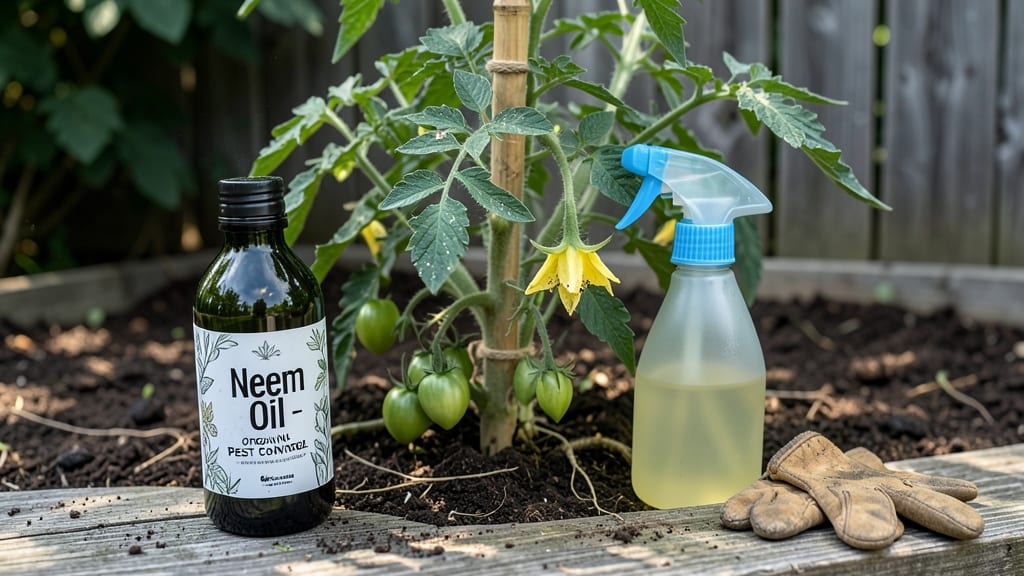
Neem oil for tomato plants prevents fungal spots by disrupting pathogen cell membranes and inhibiting spore germination, while also repelling pests like aphids and whiteflies. Apply at dusk with water and mild soap for best results.
Neem oil works like nature's fungicide for tomato plants, thanks to its powerful compounds that attack fungal spores at their source. 🌱 The active ingredient, azadirachtin, weakens fungal cell walls, preventing early blight and leaf spots from taking hold.
I've seen it stop outbreaks before they even appear—just one application can create a protective shield that lasts for weeks. The bonus? It also confuses pests like aphids, making them less likely to settle on your plants.
For best results, I recommend mixing 1 teaspoon of neem oil with 1 quart of water and a few drops of mild soap to help it stick.
Spraying at dusk avoids burning leaves while maximizing coverage. This isn't just about prevention—it's about giving your tomatoes the fighting chance they need against common garden threats.
💡 In This Article
- How Neem Oil Blocks Fungal Growth on Tomato Leaves
- Best Application Methods for Neem Oil on Tomato Plants
How neem oil blocks fungal growth on tomato leaves
Neem oil's antifungal power comes from its complex blend of compounds, with azadirachtin leading the charge. This natural chemical disrupts fungal cell membranes by interfering with ergosterol—a key component that maintains fungal cell integrity.
When applied to tomato leaves, azadirachtin creates tiny pores in the fungal cells, causing them to leak essential nutrients and eventually collapse. 🌿 This process is particularly effective against early blight and septoria leaf spot, two common tomato diseases that thrive in warm, humid conditions.
The oil also contains salannin and nimbin, which inhibit spore germination by blocking enzymes that fungi need to grow. Studies show these compounds can reduce fungal spore viability by up to 90% when applied at the right concentration.
For tomato plants, this means fungal infections often never get a foothold. The protective effect lasts about 7-14 days after application, depending on weather conditions—heavy rain can wash it away, so reapplication may be needed after storms.
What makes neem oil unique is its multi-pronged approach. While it directly attacks fungal cells, it also creates a hydrophobic barrier on leaf surfaces that repels water, making it harder for spores to land and germinate.
This is why you'll see fewer dark spots on treated leaves compared to untreated plants. The oil's slight stickiness helps it adhere better than many commercial fungicides, giving tomato foliage an extra layer of defense against airborne pathogens.
For maximum effectiveness, the oil must make direct contact with both the fungal spores and leaf surfaces. That's why thorough coverage is crucial—missed spots can become infection hotspots.
The oil's natural properties also make it safer for beneficial insects like bees when used properly, unlike synthetic fungicides that can harm pollinators. This targeted action explains why organic gardeners rely on neem oil as their first line of defense against tomato diseases.
Consider this comparison: A typical chemical fungicide might kill existing fungal growth but leave spores intact for future infections. Neem oil, however, attacks both existing pathogens and prevents new spores from germinating, creating a more comprehensive protective effect.
The oil's ability to penetrate plant tissues slightly also helps deliver active compounds directly to infection sites, enhancing its curative properties alongside its preventative benefits.