
Planting
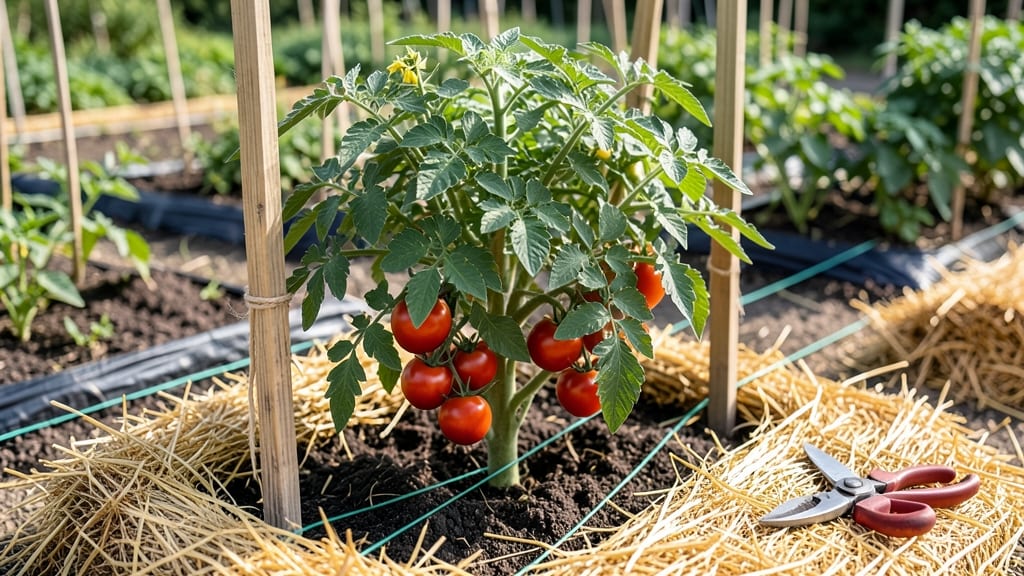
Spacing determinate tomatoes at 18 inches apart isn’t just a rule—it’s the difference between a bountiful harvest and a struggling plant 🍅.
Picture this: your determinate tomatoes are packed too closely, competing for nutrients, and suddenly you’re staring at blight-ridden leaves instead of plump fruit. That’s why the 18-inch rule exists—not just to save space, but to give each plant the airflow and root room it needs to thrive.
Whether you’re working with in-ground beds, containers, or raised rows, getting the spacing right means fewer diseases, bigger yields, and tomatoes that ripen faster. Below, I’ll break down exactly how to space them for your setup and what happens when you get it wrong.
You’ll also learn how to adjust spacing for container growing, fix common mistakes mid-season, and even squeeze in a few extra plants without sacrificing quality. Let’s get those tomatoes the room they deserve!
Why 18-Inch spacing maximizes determinate tomato yield & health
Determinate tomatoes are the workhorses of the garden—compact, productive, and perfect for heavy fruit loads in tight spaces. But why does the 18-inch spacing rule consistently deliver better yields? The answer lies in three key factors: airflow optimization, root competition balance, and structural support.
These elements work together to create healthier plants with fewer diseases and more fruit per square foot.
When you plant determinate tomatoes too closely, they compete for nutrients and water, leading to stunted growth and smaller yields. Conversely, spacing them too far apart wastes garden space. The 18-inch rule strikes the perfect balance, ensuring each plant gets enough resources while still maximizing your harvest density.
This spacing also makes harvesting easier—no more crowding or lost tomatoes in the foliage!
Here’s how the science breaks down in a simple comparison:
The 18-inch spacing creates a microclimate where air circulates freely around each plant. This airflow is critical for preventing fungal diseases like early blight and septoria leaf spot, which thrive in humid, stagnant conditions.
In my own garden, I’ve seen determinate varieties like ‘Celebrity’ and ‘Roma’ stay healthier and produce longer when spaced this way compared to plants crammed into 12-inch gaps.
Root competition is another game-changer. Determinate tomatoes have a shallow but wide root system, and 18 inches gives them enough room to spread without stealing nutrients from neighbors. When roots overlap too much, plants become nutrient-starved, leading to yellowing leaves and poor fruit set.
Proper spacing ensures each plant gets its fair share of phosphorus and potassium—key nutrients for fruit development.
Don’t overlook the structural benefits of 18-inch spacing. Determinate tomatoes produce all their fruit at once, creating a heavy load on the stem. When plants are too close, their stems lean or break under the weight.
With 18 inches between plants, they develop stronger stems and better canopy stability, reducing the risk of snapped branches and lost harvests. I’ve even seen ‘Patio’ tomatoes (a compact determinate) thrive in containers with this spacing!
For container growing, the 18-inch rule translates to using 5-gallon pots or larger for each plant. Smaller containers force roots to compete, stunting growth. In raised beds, you can fit two rows with 18-inch spacing between plants and 24 inches between rows for even better airflow.
This layout works perfectly for high-yield varieties like ‘San Marzano’ or ‘Better Boy’ determinate types.
One common misconception is that determinate tomatoes can handle tighter spacing because they’re bushier than indeterminate varieties. While they are compact, their fruit clusters still need room to mature without rubbing against each other.
This friction can cause sunscald or cracking, reducing quality. The 18-inch rule gives each cluster enough space to develop evenly.
If you’re growing in high-density layouts, like square-foot gardening, you might reduce spacing to 12 inches—but only if you’re willing to accept slightly lower yields and increased disease risk.
For most home gardeners, 18 inches is the sweet spot: it maximizes yield while keeping plants healthy and manageable. Trust me, your tomatoes—and your back—will thank you!
🌱
How to space determinate tomatoes for different garden layouts
Determinate tomatoes thrive when given the right space to spread their compact bushes and support heavy fruit loads. Unlike their indeterminate cousins, these varieties produce all their fruit at once, making proper spacing critical for both yield and plant health.
The standard 18-inch spacing rule works for most layouts, but adjustments are needed for containers, trellises, or high-density gardens. Let’s break down the best approaches for your specific setup.
Your garden layout determines how much room each plant needs. In in-ground beds, the classic 18-inch spacing between plants and 36-inch rows creates ideal airflow to prevent fungal diseases like early blight.
For containers or raised beds, you can reduce spacing to 12-16 inches since roots are confined, but ensure each plant has its own pot or cell. Trellising determinate tomatoes lets you squeeze in extra plants by spacing them 12-15 inches apart vertically, while high-density planting (like square-foot gardening) allows 4-9 plants per square foot.
| Layout Type | Plant Spacing | Row Spacing | Adjustments |
|---|---|---|---|
| In-Ground Beds | 18 inches apart | 36 inches apart | Add compost for fertility; prune lower leaves for airflow |
| Containers (5-gallon+) | 1 plant per container | N/A | Use well-draining mix; stake for support |
| Trellis/Vertical | 12-15 inches apart | 24 inches apart | Tie stems every 6 inches; harvest frequently |
| High-Density (Square Foot) | 4-9 plants/sq ft | N/A | Plant with companion plants like basil; monitor for pests |
Climate plays a surprising role in spacing. In hot, humid zones (8-10), increase spacing to 24 inches to improve airflow and reduce blight risk. In cooler zones (4-6), you can stick to 18 inches but add mulch to retain heat.
Soil fertility also affects spacing: Poor soil? Space plants slightly wider (20 inches) to give roots more room to forage for nutrients. Amend with compost or a balanced fertilizer like 10-10-10 to support compact growth.
Companion planting can help you maximize space efficiently. Pair determinate tomatoes with bush beans or lettuce to utilize vertical space without competing for sunlight. Avoid planting near corn or fennel, which attract pests that target tomatoes.
If using cage supports, place them at planting to avoid disturbing roots later. For staking, use soft ties and check weekly to prevent stem damage as fruit swells.
Don’t forget to adjust spacing for your specific tomato variety. Smaller varieties like ‘Patio’ or ‘Tiny Tim’ can thrive in 12-inch spacing, while larger types like ‘Roma’ need 20 inches. Always account for mature plant size—even determinate tomatoes can spread wider if over-fertilized with nitrogen.
After planting, water deeply to settle soil and encourage root growth, then maintain consistent moisture to prevent stress.
Pro tip: Use a grid layout tool or string lines to mark spacing before planting. This ensures even distribution and makes harvesting easier later. With the right spacing, your determinate tomatoes will produce heavy, disease-free yields while keeping your garden organized and productive all season. 🌱