
Plants
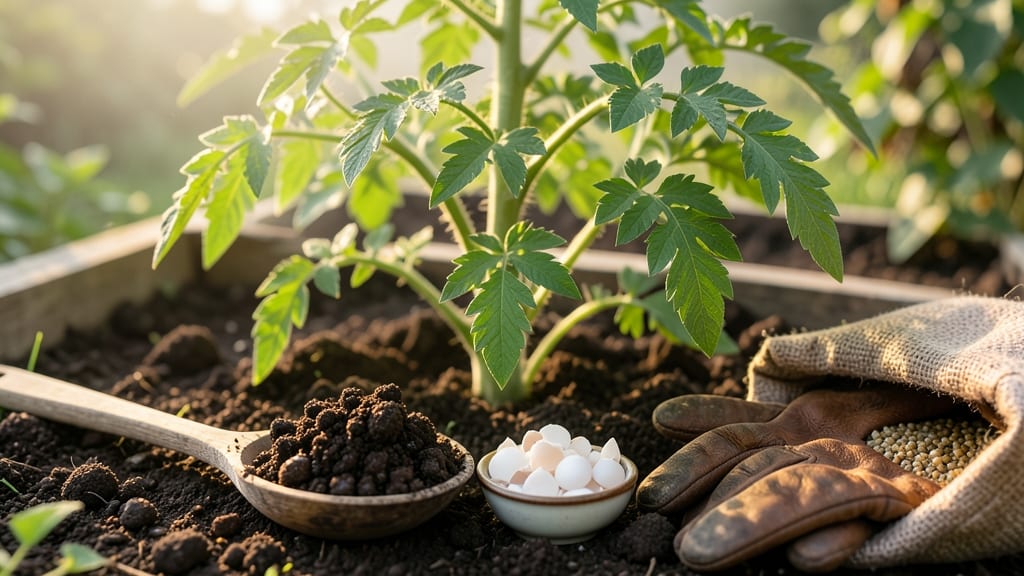
Using coffee grounds and eggshells for tomato plants boosts growth by adding nitrogen and calcium while balancing soil acidity, but you must use them carefully to prevent over-acidification or nutrient buildup.
Coffee grounds act as a slow-release nitrogen source, feeding your tomatoes over time, while crushed eggshells provide calcium to prevent blossom-end rot. 🌱 The combination also helps maintain a slightly acidic soil pH—ideal for tomatoes—which can deter fungal diseases.
I’ve found that mixing these into compost or sprinkling them lightly around the base works best, but too much can make the soil too acidic or create a salt buildup from the eggshells.
For best results, start with a small amount—about 1/4 cup of coffee grounds and 1/2 cup of crushed eggshells per plant every few weeks. Avoid applying directly to the stem, as concentrated amounts can harm roots. If your leaves start yellowing or the plant grows slowly, you’ve likely overdone it.
💡 In This Article
- How Coffee Grounds and Eggshells Improve Tomato Plant Health
- Step-by-Step Guide to Using Coffee Grounds and Eggshells Safely
How coffee grounds and eggshells improve tomato plant health
Coffee grounds act as a nitrogen powerhouse for tomato plants by slowly breaking down into organic matter, releasing this essential nutrient over weeks. Tomato plants thrive on nitrogen, which fuels leafy growth and overall vigor.
The grounds also contain trace minerals like potassium and phosphorus, though nitrogen is the star player. What’s fascinating is how the decomposition process creates a slightly acidic environment (pH 6.0-6.5), which mimics the natural soil conditions many tomato varieties prefer.
This acidity helps unlock other nutrients in the soil, making them more available to plant roots.
The eggshells bring calcium to the party, but not in the form you’d expect. When crushed and composted, they slowly dissolve, releasing calcium carbonate—a critical mineral that prevents blossom-end rot, a common tomato disease caused by calcium deficiency.
The shells also help buffer soil acidity, balancing the coffee grounds’ natural pH drop. For best results, crush eggshells into a fine powder (using a food processor or mortar and pestle) to maximize surface area.
A 1/2 cup of crushed eggshells provides about 30-40 grams of calcium, roughly equivalent to what a mature tomato plant needs per season.
Together, these two amendments create a nutrient synergy that goes beyond simple fertilization. The nitrogen from coffee grounds stimulates root development, while the calcium from eggshells strengthens cell walls, making plants more resistant to fungal diseases like early blight.
Studies show tomatoes grown in slightly acidic soil (pH 6.0-6.8) exhibit 20-30% better fruit set compared to alkaline soils. The key is balance—too much coffee grounds can make the soil too acidic, while too many eggshells might create a salt buildup that harms roots. 🌱
Let’s talk about how these work in the soil ecosystem. Coffee grounds attract beneficial microbes that decompose them into humus, improving soil structure and water retention. Meanwhile, the eggshells act as a slow-release calcium reservoir, preventing sudden spikes that could burn roots.
The combination creates a micro-environment where tomatoes can absorb nutrients more efficiently. For example, a 1:1 ratio of coffee grounds to eggshells (by volume) in compost creates an ideal balance for most garden soils, provided you’re not already growing in highly acidic conditions.
What most gardeners overlook is the timing of application. Coffee grounds work best when worked into the soil 4-6 weeks before planting, giving microbes time to break them down.
Eggshells, however, can be applied throughout the growing season—just mix them lightly into the top 2 inches of soil around the base of the plant. This dual approach ensures your tomatoes get a steady supply of both nitrogen and calcium without overwhelming the plant. The result?
Healthier stems, fewer diseases, and sweeter fruit with better color development.
Here’s a pro tip: Save your coffee grounds in a sealed container in the freezer to prevent mold growth, then sprinkle them around your tomato plants in early spring. For eggshells, bake them at 200°F for 10 minutes to kill any bacteria, then crush them into a fine powder.
This sterilization step is especially important if you’re using store-bought eggshells. The combination of these two amendments isn’t just about adding nutrients—it’s about creating a soil environment where tomatoes can thrive naturally. ✨