
Light Requirements
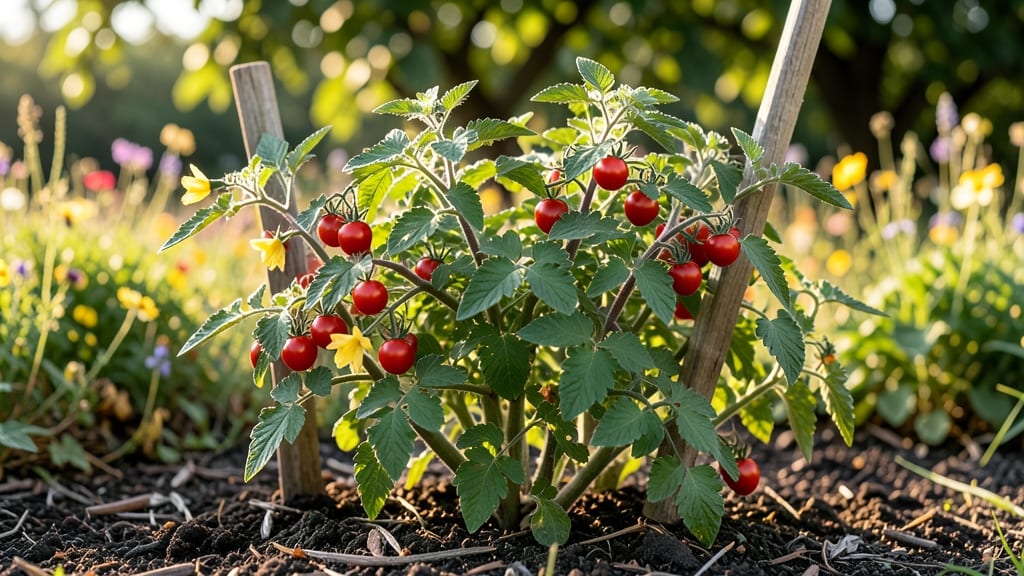
Cherry tomatoes have specific sun requirements—they need 6+ hours of direct sun daily to burst with sweetness—any less and you’ll get bitter, mealy fruit that falls short of that perfect burst of flavor. 🌞 I’ve learned this the hard way: my first year, I planted them in partial shade, and the tomatoes were so pale and bland I almost gave up on growing them again.
The difference between 6 hours and 8 hours of sun is night-and-day sweetness, and it all comes down to how you position your plants.
Full sun means 6+ hours of unfiltered sunlight, ideally from morning through early afternoon when the sun is strongest. If your garden gets partial shade—say, 4-6 hours—you can still grow cherry tomatoes, but expect smaller yields and less vibrant flavor.
In hot climates, afternoon shade helps prevent sunscald, but morning sun is non-negotiable. High-altitude gardens? You’ll need more sun—up to 8+ hours—because thinner air means less light reaches the plants.
You’ll know you’ve got it right when vines are thick and leafy, flowers bloom freely, and fruit ripens uniformly from top to bottom. Even in urban spaces with limited sun, a south-facing window, balcony, or reflective surfaces can stretch sunlight exposure.
The payoff? Tomatoes so sweet they’ll make you question store-bought flavors forever.
Adjust for your climate: cooler regions can handle morning sun and afternoon shade, while hot, dry areas need afternoon shade to prevent stress. A simple trick? Use reflective mulch or white-washed pots to bounce extra light onto the plants. Small tweaks make a big difference in flavor and productivity.
Light Shortfalls Behind Poor Growth
When your cherry tomatoes refuse to thrive despite your best efforts, the culprit is often insufficient or improper sunlight. These vibrant plants are light-hungry—they need the right intensity, duration, and timing to produce sweet, juicy fruit.
Let’s break down the key reasons why light deprivation stunts growth, weakens plants, and leads to bitter or small tomatoes.
Cherry tomatoes are photoperiod-sensitive, meaning they rely on 6+ hours of direct sunlight daily to fuel photosynthesis—the process that converts light into energy. Without enough sunlight:
- Weak stems and leaves: Plants stretch (a condition called etiolation) to reach light, becoming leggy and fragile.
- Slow fruit development: Flowers may drop, or tomatoes stay small and hard due to lack of energy for ripening.
- Pale, yellowing foliage: Chlorophyll production drops, leading to chlorosis (yellowing leaves) as the plant struggles to absorb light.
Why it happens: Most homes or gardens don’t provide consistent sunlight—shade from trees, buildings, or neighboring plants can block critical rays. Even partial shade (e.g., <6 hours of direct light) triggers stress responses in tomatoes.
Actionable fix: Monitor sunlight patterns with a sunlight tracker or relocate plants to sunnier spots by mid-morning (when UVB rays are strongest).
Not all sunlight is equal. Low-intensity light (e.g., dappled shade or overcast skies) fails to provide the blue and red spectrum wavelengths tomatoes need for optimal growth. Here’s how it backfires:
- Stunted photosynthesis: Blue light (400–500 nm) drives leaf expansion, while red light (600–700 nm) triggers flowering. Without both, plants grow slowly and sparsely.
- Poor pollination: Weak stems can’t support flowers, and bees avoid sparse blooms, leading to blossom drop.
- Leggy, weak plants: Tomatoes prioritize height over fruit when light is dim, leading to rank growth (long, thin stems with few leaves).
Why it happens: Greenhouse plastic, thick foliage canopies, or north-facing windows filter out critical wavelengths. Even "full sun" spots under tall trees may lack direct, unobstructed rays.
Actionable fix: Use reflective surfaces (like white walls or mirrors) to bounce light onto plants. For indoor growers, LED grow lights with a 10:1 red-to-blue ratio mimic natural sunlight.
Tomatoes thrive on predictable light cycles. Sudden changes—like moving plants frequently or exposing them to intermittent shade—disrupt their internal clocks (circadian rhythms) and metabolism. The fallout includes:
- Flower abortion: Inconsistent light confuses the plant’s hormonal balance, causing buds to fall off before fruiting.
- Uneven ripening: Some tomatoes ripen while others stay green due to stress-induced ethylene suppression.
- Reduced sweetness: Sugar accumulation in fruit requires stable light; erratic exposure leads to watery, bland tomatoes.
Why it happens: Common triggers include:
- Moving potted tomatoes between shaded and sunny spots.
- Cloudy spells lasting >3 days without supplemental light.
- Indoor grow lights turned on/off at inconsistent times.
Actionable fix: Commit to a fixed light schedule (e.g., 6–8 hours daily for outdoor plants; 12–16 hours under grow lights). Use timers for indoor setups to maintain consistency.
Sunlight alone isn’t enough—temperature extremes can negate its benefits. Cherry tomatoes need warmth (70–85°F during the day) to process light efficiently. When heat and light are mismatched:
- Sunburnt leaves: High light + low humidity causes necrosis (brown, crispy leaf edges).
- Bolting (premature flowering): Too much heat + light triggers stress flowering, leading to bitter, undersized fruit.
- Root stress: Overheated soil (from intense sun) reduces water/nutrient uptake, starving the plant.
Why it happens: Common in hot climates or when tomatoes are planted too early (before soil warms). Black plastic mulch or dark containers can also overheat roots.
Actionable fix:
- Use light-colored mulch or shade cloth (30–50%) to reduce soil heat.
- Water deeply in the early morning to cool roots and leaves.
- Avoid planting until soil reaches 60°F+ (use a soil thermometer).
Fixing Sunlight Struggles for Cherry Tomatoes
Now that you understand why your cherry tomatoes might not be getting enough sun, let’s turn things around with practical, step-by-step solutions. Whether your plants are wilting, producing bland fruit, or struggling to thrive, these fixes will help you optimize sunlight exposure and prevent future issues.
If your cherry tomatoes are in a shady spot, they’re not getting the 6+ hours of direct sunlight they crave. Here’s how to remedy it:
🔥 Move Plants to a Sunnier Spot
- Check sunlight patterns in your garden or balcony.
Observe where the sun hits strongest between 10 AM and 4 PM—this is prime tomato-growing time. - Relocate pots or beds to a south-facing area (in the Northern Hemisphere) or north-facing (in the Southern Hemisphere) for maximum sunlight. - Use a sun tracker if your space is limited.
Rotate pots every few days to ensure even exposure.
🏡 Extend Sunlight Indoors or in Shade
- Place near a south-facing window if growing indoors.
A sunny windowsill can work, but supplement with grow lights (12–16 hours/day) if natural light is weak. - Use reflective surfaces like mirrors or white walls to bounce extra light onto plants. - Choose compact, bush varieties (like ‘Tiny Tim’ or ‘Sweet 100’) if space is tight—they tolerate slightly less sun better than vining types.
🌱 Adjust Plant Spacing for Better Airflow & Light
- Thin out crowded plants so leaves aren’t blocking sunlight for others.
Aim for 18–24 inches apart for bush types and 2–3 feet for indeterminate varieties. - Prune lower leaves (up to 12 inches from the ground) to improve airflow and let more light reach the fruit.
If your tomatoes are getting too much intense sunlight (especially in scorching climates), they may scorch or struggle to ripen properly. Balance is key!
🌿 Provide Light Shade During Peak Hours
- Use shade cloth (30–50%) during midday (11 AM–3 PM) when the sun is harshest.
This prevents leaf burn while still allowing plenty of light. - Plant near taller crops (like corn or sunflowers) to create natural shade, or use trellises with drip irrigation to keep foliage cool. - Mulch heavily with straw or grass clippings to keep soil temperatures stable and reduce stress.
💧 Hydrate to Handle Heat Stress
- Water deeply in the morning (1–2 inches per week) to encourage strong root growth and heat tolerance.
- Avoid wetting leaves at night to prevent fungal diseases like blight, which thrive in humidity.
- Use drip irrigation instead of overhead sprinklers to keep foliage dry while roots stay moist.
Once you’ve fixed the issue, keep these pro tips in mind to maintain happy, sun-loving cherry tomatoes:
- 💡 Plan your garden layout in early spring. Map out sun exposure and rotate crops yearly to avoid soil depletion. - 🌱 Start with sun-loving varieties. Some cherry tomatoes (like ‘Sungold’ or ‘Black Cherry’) thrive in full sun better than others. - 🌡️ Monitor weather forecasts.
If a heatwave is coming, prepare shade solutions in advance. - 🔄 Rotate containers if growing in pots to ensure even sunlight exposure as the sun’s angle changes. - 🌿 Fertilize wisely.
Use a balanced fertilizer (10-10-10) when planting, then switch to low-nitrogen, high-phosphorus (5-10-10) when fruits set to boost sweetness.
Need a fast solution?
Try these same-day adjustments: - 🍅 Move potted tomatoes to a sunnier spot immediately—even a few extra hours of light can make a difference. - 🌿 Trim overgrown leaves blocking sunlight to neighboring plants. - 💦 Water thoroughly if soil is dry, then mulch to retain moisture and cool roots.
With these fixes, your cherry tomatoes will soon be soaking up the perfect amount of sun, leading to sweeter, juicier, and more abundant harvests**. 🍅✨
Frequently asked questions
How do I know if my cherry tomatoes are getting enough sunlight?
Look for dark green, thick leaves and vigorous vines. If leaves are pale yellow or plants stretch toward light (etiolation), they need more sun. Check for 6+ hours of direct sunlight daily—use a sun tracker app to measure exposure accurately.
Can cherry tomatoes grow in partial shade?
Yes, but expect smaller yields and less sweet fruit. Partial shade (4-6 hours of sun) works for bush varieties like ‘Tiny Tim,’ but indeterminate types need full sun. In hot climates, afternoon shade helps prevent leaf burn while still allowing morning sun.
What’s the best time of day for cherry tomato sunlight?
Prioritize morning sun (10 AM–2 PM) when UVB rays are strongest. Afternoon sun (especially in hot climates) can scorch leaves, so provide 30–50% shade cloth during peak hours. Rotate pots if needed to balance exposure.
How do I maximize sunlight in a small urban space?
Use reflective surfaces (white walls, mirrors) to bounce light, and place pots on south-facing balconies (Northern Hemisphere). For windowsills, supplement with LED grow lights (12–16 hours/day). Choose compact varieties like ‘Sweet 100’ to save space.
Will cloudy weather affect my cherry tomatoes?
Yes! Tomatoes need bright, direct light—overcast skies reduce photosynthesis. If clouds persist >3 days, use grow lights or move plants to sunnier spots. Monitor leaf color: yellowing means light deprivation is stressing the plant.