
Companion Plants
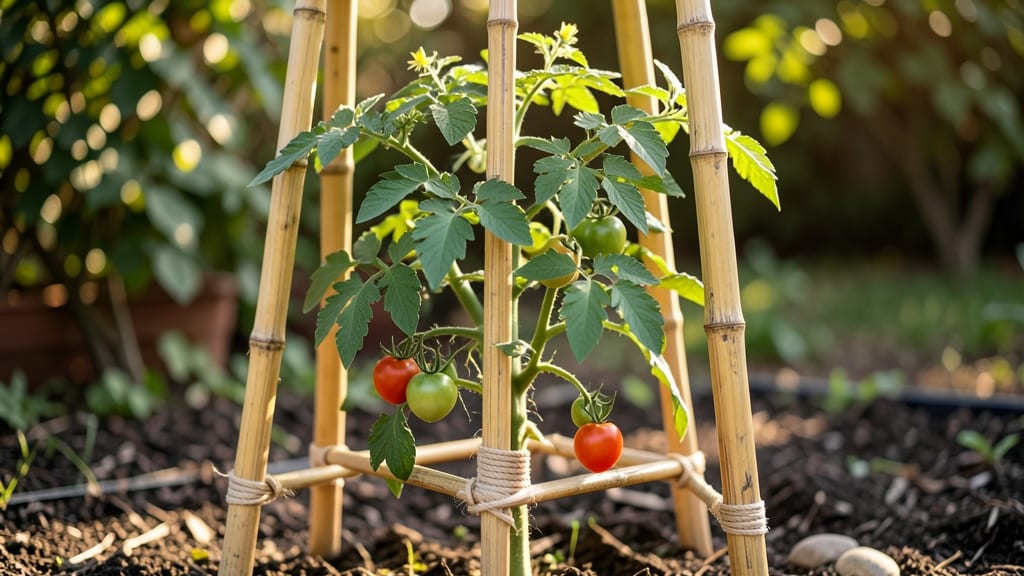
Using bamboo sticks for tomato plants is the easiest way to turn floppy vines into sturdy, high-yielding 🍅 powerhouses—no fancy trellises required.
Picture this: your tomato plants sagging under the weight of ripe fruit, leaves dragging in the dirt, and a harvest that’s half lost to rot or pests. It’s a gardener’s nightmare, but bamboo sticks can fix it in minutes with just a few simple steps.
Why bamboo? It’s lightweight, affordable, and strong enough to handle 6-foot indeterminate varieties without bending. Plus, it blends into your garden naturally—no ugly metal or plastic in sight.
In this guide, I’ll walk you through exactly how to set them up, the best varieties for staking, and common mistakes that turn supports into flops. Let’s get those tomatoes growing straight and strong!
How to properly use bamboo sticks for tomato vine support
Tomato plants need strong support to handle their heavy fruit loads, and bamboo sticks are my go-to solution for keeping vines upright without breaking the bank. Unlike flimsy plastic stakes, bamboo offers natural flexibility and strength, making it perfect for both indeterminate (vining) and determinate (bush) varieties.
The key lies in proper placement, securing techniques, and adjusting as your plants grow—let’s break it down step by step.
Before you begin, gather your supplies: 5-6 foot bamboo stakes (thicker than ½ inch for stability), soft plant ties (not wire!), and pruning shears. Indeterminate tomatoes will need taller stakes (6+ feet) since they can grow 6-10 feet tall, while determinate types only require 3-4 foot stakes.
The right setup prevents snapped stems and maximizes your harvest potential.
Step-by-Step Guide to Setting Up Bamboo Supports
- 🌱 Step 1: Choose the Right Stakes
Select 5/8-inch diameter bamboo sticks—thicker than ½ inch to prevent bending. For indeterminate varieties, use 6-foot stakes; for determinate, 3-4 foot works. Soak stakes in water for 24 hours to prevent splitting.
- 📏 Step 2: Position Stakes at Planting
Place stakes 2-3 inches from the stem when transplanting seedlings. For multiple plants, space stakes 18-24 inches apart in rows to avoid overcrowding. Drive stakes 6-8 inches deep into moist soil for stability.
- 🪢 Step 3: Secure the First Tie
Use soft velcro or cloth ties (never wire!) to attach the main stem to the stake when the plant reaches 6-8 inches tall. Tie loosely—too tight restricts growth. Reposition ties as the stem thickens to prevent girdling.
- 🌿 Step 4: Train Vines as They Grow
For indeterminate tomatoes, gently weave vines around the stake in a spiral pattern. Prune suckers (side shoots) to direct energy to fruit production. For determinate types, only 1-2 stakes per plant are needed—they stay bushy.
- ✂️ Step 5: Adjust and Reinforce
Check ties weekly—loosen if stems thicken. Add secondary stakes (4-5 feet tall) for heavy fruit clusters. If wind is an issue, stake at a 5-degree angle away from prevailing winds to reduce stress.
- 🍅 Step 6: Harvest with Support
As fruit develops, tie clusters to the stake with soft ties to prevent snapping. Remove overripe tomatoes promptly to avoid weighing down vines. Extend stakes with bamboo extensions if vines outgrow initial supports.
One of my biggest mistakes early on was using thin bamboo stakes that bent under the weight of cherry tomatoes. Always opt for thicker stakes—they’re worth the extra cost.
For heavy producers like 'Sungold' or 'Beefsteak', consider two stakes per plant arranged in a "V" shape for maximum stability.
Tying techniques matter just as much as stake selection. I’ve found that velcro ties are gentler than cloth and adjust easily as stems grow. Avoid wire—it can cut into stems and cause damage. Pro tip: Use old T-shirts cut into strips as a budget-friendly alternative to store-bought ties.
For container-grown tomatoes, choose stakes that fit your pot’s depth. A 5-gallon container needs stakes at least 3 feet tall to support vines. Place stakes next to the plant when transplanting to avoid disturbing roots later.
If your container is shallow, use heavier stakes or add a base support like a brick to anchor them.
Wind is a silent enemy of tomato plants. If you live in a windy climate, bury stakes deeper (8+ inches) and angle them slightly away from prevailing winds.
For extra protection, weave stakes together in a small group (3-4 plants) to create a windbreak. This works especially well for tall indeterminate varieties like 'Brandywine'.
Don’t forget to prune suckers regularly—these are the small shoots that grow in the leaf axils. Removing them redirects energy to fruit production and keeps vines manageable.
Aim to prune once every 2 weeks during peak growth (June-August). For determinate tomatoes, minimal pruning is needed since they naturally stay compact.
As your tomatoes near harvest, monitor for fruit weight stress. If clusters sag, add extra ties or a secondary stake beneath the heaviest fruit. For large varieties, consider horizontal supports (like a small trellis) to distribute weight. Always harvest regularly—overripe fruit pulls nutrients from new growth.
With the right setup, your tomato plants will thrive all season long. Bamboo sticks are a low-cost, eco-friendly solution that works for beginners and experts alike. Just remember: thicker stakes, soft ties, and regular maintenance are the keys to a bountiful, flop-free harvest. 🌱
Bamboo sticks vs. other tomato plant supports: pros, cons, and best uses
When choosing supports for your tomato plants, the options can feel overwhelming—especially when balancing cost, durability, and ease of use. Bamboo sticks are a popular choice, but how do they stack up against wire cages, trellises, and wooden stakes?
Let’s break down the key differences to help you decide what’s best for your garden and tomato varieties.
Bamboo sticks are lightweight, affordable, and biodegradable, making them ideal for small gardens or container-grown tomatoes. However, they may not hold up as well as metal cages for heavy producers like indeterminate varieties.
Meanwhile, trellises offer vertical space but require more upfront investment and space. Each option has unique trade-offs depending on your garden’s size and your tomato plant’s needs.
Bamboo Sticks for Tomato Plants
- Cost-effective ($1–$3 per stick)
- Lightweight and easy to handle
- Biodegradable (eco-friendly)
- Great for small gardens or containers
- May bend under heavy fruit loads
- Requires frequent tying as vines grow
- Less stable in windy conditions
- Not ideal for large indeterminate varieties
For indeterminate tomatoes, like Sungold or Brandywine, wire cages (3–5 feet tall) provide superior support and reduce the need for constant tying. These cages are sturdy enough to handle heavy fruit loads and last multiple seasons.
However, they take up more space and can be difficult to move once installed.
If you’re working with limited space but need long-term support, consider trellises. They maximize vertical growth and work well for heirloom varieties that produce large fruit. Trellises are also reusable, but they require more assembly and may not be as budget-friendly as bamboo sticks.
For small-scale gardens, a combination of bamboo stakes and soft ties can offer a cost-effective compromise.
Wooden stakes are another durable option, especially for determinate tomatoes. They’re long-lasting and easy to install, but they lack the flexibility of bamboo or the space-saving benefits of trellises. If you choose wooden stakes, opt for untreated wood to avoid chemical leaching into the soil.
For container tomatoes, bamboo sticks or small cages are often the best fit due to their compact size.
Ultimately, the best support depends on your garden layout, tomato variety, and budget. Test a few options in your garden to see what works best—your harvest’s success will thank you! 🌱