
Size
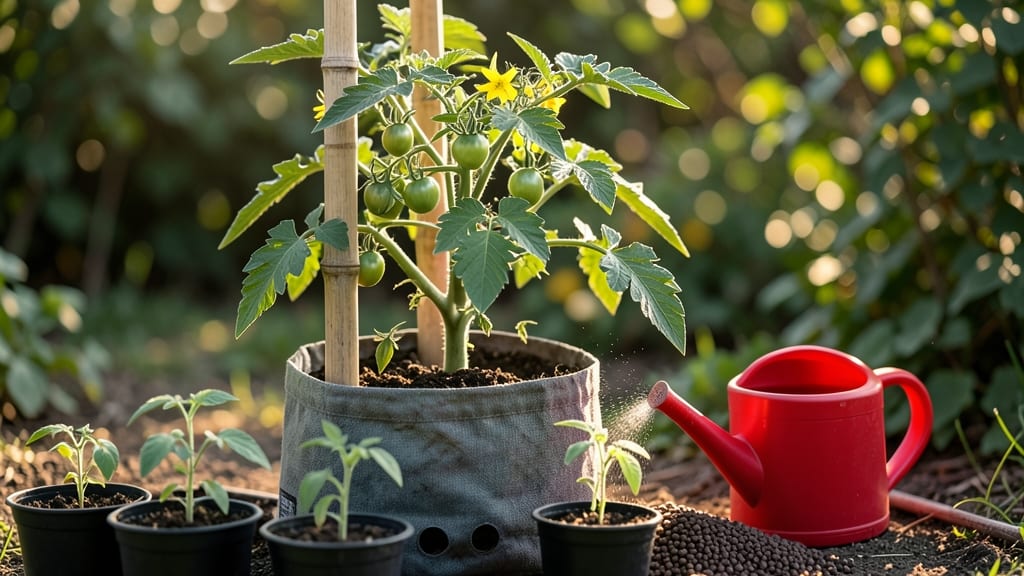
Growing tomato plants in pots lets you enjoy garden-fresh tomatoes even on a balcony or patio. 🌱 I’ve grown tomatoes in containers for years, and the secret isn’t fancy equipment—it’s choosing the right pot, soil, and sunlight.
My first attempt with a tiny 5-gallon bucket failed, but after switching to a 15-gallon container, I now harvest dozens of ripe tomatoes every summer.
The key is matching your tomato variety to your pot size: cherry tomatoes thrive in 5-gallon containers, while larger varieties need at least 10 gallons. Use well-draining potting mix and place your pots where they’ll get 6–8 hours of sunlight daily.
Overwatering is the biggest mistake—let the top inch of soil dry out between waterings, and always use a pot with drainage holes.
By mid-summer, you’ll be snipping ripe tomatoes straight from the vine, and the flavor? Unbeatable. The plants stay compact, produce more fruit, and resist common diseases better than their in-ground counterparts. Even my black thumb can’t kill these with the right care.
Works for apartments, rooftops, or small yards—just adjust pot sizes and varieties. Here’s how to set it up without the guesswork.
📚 In This Guide
- What you need
- Instructions
- Tips and common mistakes
- Wrapping up and next steps
What you need
- ● 1-3 large pots (5+ gallons each, with drainage holes). Pro tip: Wider pots = better stability for heavy plants! 🌡️
- ○ Optional: Self-watering pots or grow bags for convenience.
- ● High-quality potting mix (avoid garden soil—it compacts!).
- ● Compost or organic fertilizer (like worm castings or 10-10-10 NPK blend).
- ○ Slow-release granules (optional but helpful for steady nutrients).
- ● 1-2 tomato plants (determinate varieties like ‘Roma’ or ‘Cherry’ work best in pots!).
- ● OR 3-5 tomato seeds (if starting from scratch).
- ● Trowel or small shovel for planting.
- ● Watering can with a fine rose (avoid overhead watering).
- ● Stakes or cages (for support—indeterminate varieties need these!).
- ● Mulch (straw or shredded leaves) to retain moisture.
Step-by-step instructions for growing tomato plants in pots
Here’s how I turn small spaces into productive tomato gardens every season—no backyard needed.
🪴 Step 1: Choose the Right Containers and Prepare Soil
Start with pots at least 12-18 inches deep and 12-18 inches wide—tomatoes need room for strong roots. I use fabric grow bags for my plants because they prevent root circling and wick moisture evenly. Drill extra drainage holes if your container lacks them, then line the bottom with 1 inch of gravel to improve airflow.
Fill the pot with a mix of 50% premium potting soil and 50% compost—this gives roots both structure and nutrients. Avoid garden soil; it compacts in containers and suffocates roots. Moisten the mix until it’s damp like a wrung-out sponge, but not soggy. A well-draining, airy blend is critical—waterlogged soil leads to root rot within weeks.
🌱 Step 2: Plant Transplants or Sow Seeds at the Right Time
If starting from seed, sow 6-8 weeks before your last frost date indoors under grow lights. For transplants, wait until nighttime temperatures stay above 50°F—cold snaps stunt growth. Bury the stem up to ⅓ of its height when transplanting; this encourages stronger root systems. I pinch off the lower leaves to prevent disease and focus energy on upward growth.
Plant one tomato per pot unless using a 5-gallon+ container, where you can fit two dwarf varieties. Space seeds ¼ inch deep if sowing directly, or dig a hole twice as wide as the root ball for transplants. Gently firm the soil around the stem—this eliminates air pockets that could dry out roots.
☀️ Step 3: Position for Maximum Sun and Support
Tomatoes need 6-8 hours of direct sun daily, so place pots in the southernmost spot possible. A balcony railing or trellis works perfectly—I use bamboo stakes or tomato cages to support vining varieties. Install supports immediately after planting; waiting until vines are heavy risks breaking stems.
Rotate pots quarter-turn weekly to prevent leaning toward the light. You’ll notice leaves yellowing or stems bending if light is insufficient. If indoors, supplement with a full-spectrum LED grow light kept 4-6 inches above the plant for 14-16 hours daily. Leggy growth is your first sign of insufficient light.
💧 Step 4: Water Deeply and Consistently
Water deeply every 2-3 days until 1 inch of soil feels dry—check by sticking your finger 2 inches down. I water at the base in the morning to reduce evaporation and fungal risks. Avoid wetting leaves, which spreads disease. If soil dries too fast, your pot is too small or lacks moisture-retentive mix.
Container tomatoes dry out faster than in-ground plants. Mulch with 2 inches of straw to retain moisture and keep roots cool. During heatwaves, increase watering to daily—wilting leaves often recover quickly, but prolonged dryness causes blossom drop and stunted fruit.
✂️ Step 5: Prune and Fertilize for Bountiful Fruit
Prune suckers—those little shoots in the leaf axils—weekly to redirect energy to fruit. I leave 1-2 main stems for determinate varieties and 1-2 primary branches for indeterminate types. Remove lower leaves touching the soil to improve airflow and prevent disease.
Fertilize every 2-3 weeks with a balanced 10-10-10 or tomato-specific formula once flowers appear. Over-fertilizing with nitrogen leads to lush foliage but few tomatoes. Watch for yellowing leaves—this often signals nutrient deficiency or overwatering. Adjust your routine based on plant response.
Tips & tricks for growing tomato plants in pots
These small but mighty tricks will help you coax the most flavorful harvests from your container tomatoes—even when space is limited.
Container Selection Matters: Fabric grow bags are my go-to because they prevent root circling and allow excess moisture to evaporate, but any container must meet those 12-18 inch depth and width requirements. If repurposing containers, ensure they have proper drainage—no exceptions. I've learned the hard way that skipping this leads to root rot within weeks, even with what seems like adequate watering.
Soil Mix Secrets: The 50-50 potting soil to compost blend is non-negotiable for container tomatoes. I always add a handful of perlite to improve aeration, especially in smaller pots. This prevents that dreaded compacted soil syndrome where roots suffocate. Think of it as giving your tomato's feet the perfect breathing room—literally.
Light Optimization: Those 6-8 hours of direct sun are critical, but don't overlook the indoor solution. A full-spectrum LED grow light kept 4-6 inches above your plants for 14-16 hours daily mimics summer sunlight perfectly. I've seen container tomatoes produce just as well indoors with proper lighting as they do outside—it's all about replicating natural conditions.
Pruning Strategy: When pruning suckers weekly, focus on keeping just 1-2 main stems for indeterminate varieties. This might seem counterintuitive, but it forces the plant to put all its energy into fewer, larger fruits. I also remove any leaves touching the soil to prevent disease—this simple step can mean the difference between a healthy plant and one struggling with fungal issues.
Pro Tips for How Do You Grow Tomato Plants In Pots
- These small but mighty tricks will help you coax the most flavorful harvests from your container tomatoes—even when space is limited.
- Container Selection Matters: Fabric grow bags are my go-to because they prevent root circling and allow excess moisture to evaporate, but any container must meet those 12-18 inch depth and width requirements.
- Soil Mix Secrets: The 50-50 potting soil to compost blend is non-negotiable for container tomatoes.
Frequently asked questions
Got questions about growing tomatoes in pots? You’re not alone—let’s tackle the most common ones to help you grow like a pro!
What’s the best pot size for tomato plants?
For determinate (bush) tomatoes, aim for 5-gallon pots (12–18 inches deep). Indeterminate (vining) varieties need at least 10 gallons (18–24 inches deep) to support their growth. Larger pots retain moisture better and reduce root competition.
How often should I water potted tomatoes?
Water when the top inch of soil is dry—usually every 1–2 days in hot weather. Pots dry out faster than ground soil! Use self-watering pots or drip irrigation to keep moisture consistent. Overwatering is risky, so ensure pots have drainage holes.
When is the best time to transplant tomato seedlings into pots?
Wait until after the last frost and when seedlings are 6–8 inches tall with 4–5 true leaves. Harden them off (acclimate to outdoor conditions) for 7–10 days before transplanting. Morning or evening is ideal to avoid stress from midday sun.
Can I grow cherry tomatoes in smaller pots?
Yes! Cherry tomatoes are compact and thrive in 3–5 gallon pots. Their smaller size makes them perfect for balconies or patios. Just ensure they get full sun (6–8 hours/day) and regular pruning to boost fruit production.
What should I do if my potted tomatoes get pests or diseases?
Start with prevention: Use neem oil for pests like aphids or whiteflies, and copper fungicide for early blight. Improve airflow with pruning, and avoid overhead watering. If issues persist, repot in fresh soil or rotate crops next season.
What can I plant with tomatoes in pots to improve growth?
Try companion plants like basil (repels pests), marigolds (deter nematodes), or onions (reduce disease). Avoid planting fennel or brassicas (they stunt tomato growth). Just ensure the pot has enough space for all plants!
Wrapping up and next steps
Growing tomatoes in pots is totally doable—even for beginners! With the right container, soil, and care, you’ll enjoy juicy, homegrown tomatoes in small spaces. Start small, experiment with varieties, and don’t forget to prune and support your plants for the best results.
Ready to dive in? Pick your favorite tomato type and grab a pot—your first harvest could be just weeks away! 🌱🍅