
Companion Plants
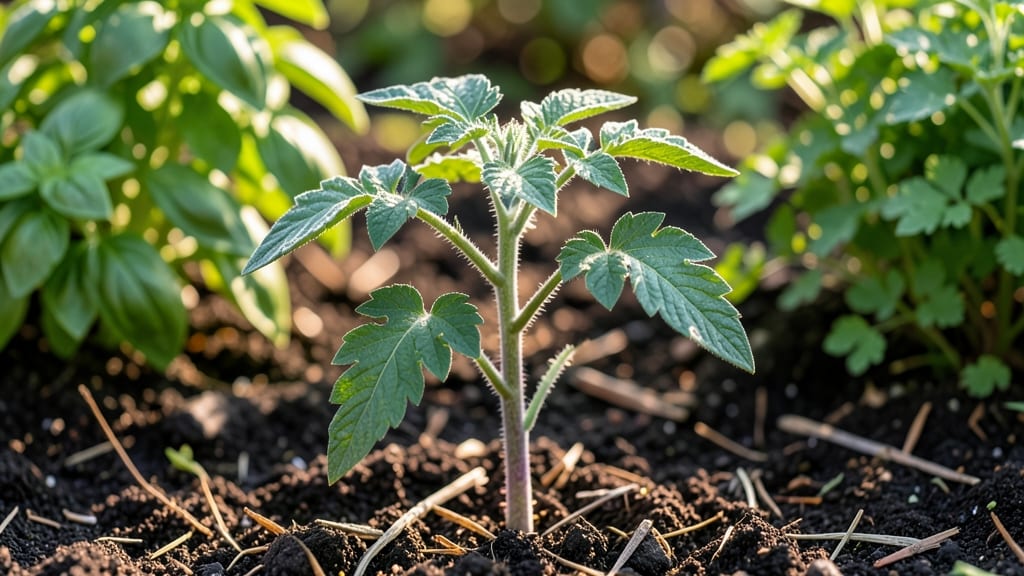
Your six-week-old tomato plants are about to transform from delicate seedlings into powerhouse producers—if you prune them right. 🌱 The secret to bushier growth and bigger fruit isn’t just cutting stems; it’s redirecting energy where it matters most, and I’ll show you exactly how to do it without stressing the plants.
Start by removing the lower leaves below the first flower cluster—they’ll rot before they photosynthesize. Then, snip any suckers (those little shoots between the main stem and branches) larger than a pencil, but leave the smaller ones to develop.
This simple technique boosts airflow, prevents disease, and sends more nutrients to the fruit you’ll be harvesting in 8-10 weeks.
You’ll notice thicker stems and more blossoms within 2-3 weeks of consistent pruning. The plants will stand taller, support heavier fruit, and resist common issues like blossom-end rot. Just remember: prune in the morning on cloudy days to reduce stress on the plant.
This method works for both determinate (bush) and indeterminate (vining) varieties, though indeterminates need more aggressive pruning. Whether you’re growing in containers or garden beds, these tricks will give you tomatoes so productive your neighbors will ask for cuttings.
📚 In This Guide
- What you need
- Instructions
- Tips and common mistakes
- Wrapping up and next steps
What you need
- ● Pruning shears or sharp scissors: Clean, sterilized, and sharp (bypass pruners work best for delicate stems). Quantity: 1 pair.
- ● Gloves: Garden gloves (to protect hands from thorns and dirt). Quantity: 1 pair.
- ○ Disinfectant (optional but recommended): Rubbing alcohol (70%+) or a 10% bleach solution (to sterilize tools between cuts).
- ○ Small container or bucket: For collecting pruned clippings (optional but helpful for composting).
- ○ Garden twine or stakes (if needed): For supporting heavy branches after pruning (optional, but useful for indeterminate varieties).
- ● Healthy 6-week-old tomato seedlings: Plants should be sturdy, with 3-5 true leaves (not just seed leaves) and no signs of disease.
- ● Sunny location: Choose a spot with at least 6-8 hours of sunlight daily (pruning is best done in the morning or late afternoon).
- ● Water nearby: A hose or watering can (to keep plants hydrated before and after pruning).
Pruning 6-Week-old tomato plants for stronger growth
Here's how to shape young tomato plants for bigger yields and sturdier stems—no guesswork involved.
🌱 Step 1: Identify and Remove Weak Stems
Start by examining each plant closely. Look for the main central stem—this is your plant's primary leader, and it should be the thickest, most upright stem. Any thinner, spindly stems growing from the base or lower leaves are called suckers, but at this stage, we're focusing on truly weak growth.
Use clean, sharp pruning shears to snip off any stems that are less than half the diameter of the main stem. These weak stems compete for nutrients and won't contribute to fruit production. I always prune just above a leaf node where new growth can emerge—this prevents unsightly stubs and encourages healthy regrowth.
✂️ Step 2: Prune Lower Leaves for Airflow
Remove all leaves from the bottom 6 inches of the plant. This might seem counterintuitive, but lower leaves block airflow and create damp conditions that invite disease. Focus on leaves that touch the soil or are crowded against the stem—these are prime spots for fungal infections.
Use your fingers to gently pinch off leaves rather than cutting them. This prevents tearing the stem and reduces the risk of introducing pathogens through cuts. You'll notice the plant's center looks more open after this step—that's exactly what we want for better air circulation and sunlight penetration to the lower fruit clusters.
☀️ Step 3: Encourage Bushier Growth with Strategic Cuts
Now focus on the plant's growth habit. Look for secondary stems growing from the main stem's leaf nodes. These are your plant's natural branches. Select the two strongest stems below the first flower cluster and leave them intact—they'll become your primary branches.
For any remaining suckers (stems growing between the main stem and branches), pinch them off when they're no more than 2 inches long. This redirects the plant's energy into the branches you've chosen. Watch for new growth emerging from the leaf nodes—these are your plant's way of telling you it's responding well to the pruning.
💧 Step 4: Water and Support After Pruning
After pruning, give your plants a deep watering to help them recover. The roots will need to compensate for the reduced leaf surface area, and proper hydration supports this adjustment. Water at the base rather than overhead to prevent spreading any potential pathogens from the pruning.
Now's also the time to install stakes or cages if you haven't already. Your plants are still young but growing fast, and proper support prevents stems from breaking under the weight of future fruit. I like to use 5-foot bamboo stakes tied with soft plant ties—this gives the plants room to grow while keeping them stable.
Tips & tricks for pruning 6-Week-old tomato plants
These pruning secrets will transform your tomato plants into sturdy, high-yielding powerhouses—without the guesswork.
Tool Selection: Never use dull or dirty pruning shears—they tear stems and introduce pathogens. I sterilize my tools with rubbing alcohol between plants, and I always use bypass pruners (not anvil types) to make clean cuts. For delicate work like pinching suckers, I find a small pair of fingernail clippers works better than larger shears.
Visual Growth Cues: In Step 3, when selecting your two strongest secondary stems, look for ones that grow at a 45-degree angle from the main stem. These branches will naturally support fruit better than vertical or horizontal growth. Also, prioritize stems with visible leaf buds—these indicate the plant's natural energy flow.
Pruning Timing: The best time to prune is on a dry, sunny morning when the plants are actively photosynthesizing. This gives them time to recover before evening. Avoid pruning after rain or when plants are stressed from heat—this increases the risk of disease entry points.
Support System: When installing your 5-foot bamboo stakes, drive them in at a 45-degree angle rather than straight up. This creates a more stable anchor against wind and fruit weight. Use soft plant ties (not wire or zip ties) to gently secure the main stem, leaving room for growth—tight ties can girdle the stem as it thickens.
Pro Tips for 6 Week Old Tomato Plants
- These pruning secrets will transform your tomato plants into sturdy, high-yielding powerhouses—without the guesswork.
- Tool Selection: Never use dull or dirty pruning shears—they tear stems and introduce pathogens.
- Visual Growth Cues: In Step 3, when selecting your two strongest secondary stems, look for ones that grow at a 45-degree angle from the main stem.
Frequently asked questions
Got questions about nurturing your 6-week-old tomato plants? You’re not alone! Here are answers to the most common concerns—so you can keep those vines thriving and your harvests bursting with flavor.
How do I know if my 6-week-old tomato plants are ready for pruning?
Prune when your plants have at least 3-4 sets of true leaves and a sturdy main stem (about 12-18 inches tall). Look for suckers—those tiny shoots growing in the "V" between the stem and branches. Remove them with your fingers or pruners to encourage bushier growth.
When is the best time of day to prune tomato plants?
Prune in the early morning (before 9 AM) to give plants time to recover before evening stress. Avoid pruning in peak sun or late afternoon—it can shock the plant. If you must prune later, water thoroughly before and after to reduce stress.
What if my tomato plants look wilted or stressed after pruning?
Wilting is normal for 24-48 hours post-pruning. Keep soil consistently moist (but not soggy) and provide light shade if temps exceed 85°F. If wilting persists beyond 48 hours, check for over-pruning or pests like aphids. A balanced fertilizer (like 10-10-10) can also help recovery.
Can I use household items (like scissors or my fingernails) to prune tomato suckers?
Yes! For small suckers, your fingers or clean fingernails work great—just pinch them off at the base. For larger stems, use sterilized pruners or small garden shears to avoid tearing. Never use scissors—they can crush stems and spread disease.
What should I do if my tomato plants don’t have suckers by 6 weeks?
Some varieties (like cherry tomatoes) produce fewer suckers naturally. Focus on pruning lower leaves to improve airflow and fertilizing lightly with phosphorus (like bone meal) to encourage branching. If growth is sparse, check for underwatering or nutrient deficiencies (yellow leaves = nitrogen; purple stems = phosphorus).
Pro Tip: Label your pruning tools!
Use a permanent marker to label scissors or shears for tomato plants only. This prevents cross-contamination with other crops (like peppers or herbs) and keeps your tools disease-free. A quick wipe-down with rubbing alcohol between uses also helps!
Wrapping up and next steps
Your 6-week-old tomato plants are just hitting their growth stride, and with the right pruning techniques, you’re setting them up for a bountiful harvest! 🌱 By removing suckers, shaping your plants, and encouraging strong stems, you’ll promote bushier foliage and bigger, healthier fruit.
Now’s the perfect time to stay consistent—a little effort now means tomatoes the size of your palm later!
Ready to take it to the next level? Monitor your plants weekly, adjust pruning as they grow, and consider adding companion plants like basil or marigolds to boost their health. Happy gardening—your future tomato feasts are waiting! 🍅✨