
Watering
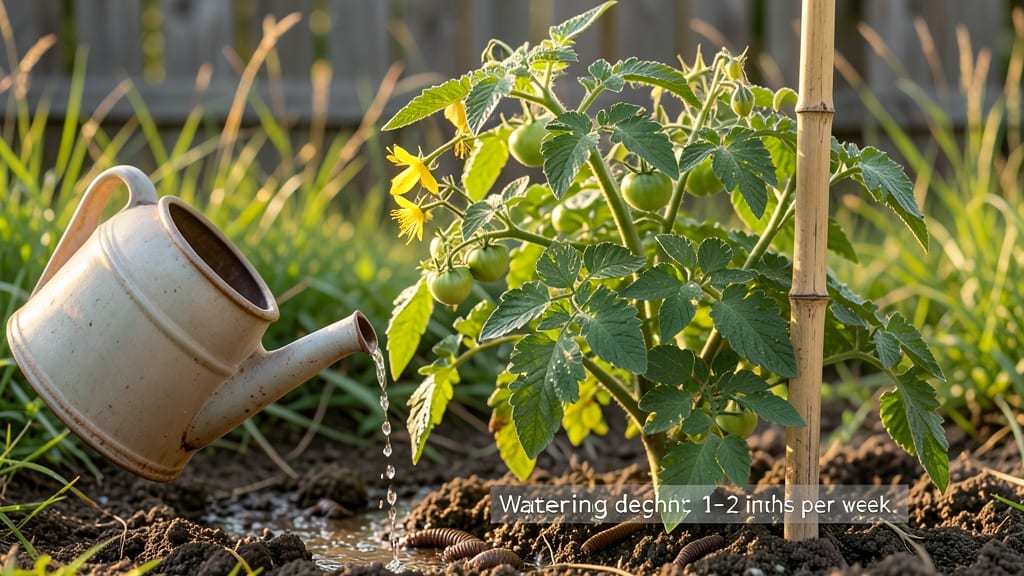
Watering tomato plants every day can actually harm your 🍅 harvest by drowning roots and inviting disease, even though it seems like the safest bet during dry spells.
Overwatering tomato plants is a silent killer—yet many gardeners unknowingly drown their vines by sticking to a rigid daily watering routine. The truth? Tomato plants need consistent moisture, but not necessarily daily doses.
Instead of guessing, check soil moisture first: stick your finger an inch deep. If it feels dry, water deeply in the morning to encourage strong roots and prevent fungal issues. Too much water leads to blossom end rot, while too little causes wilting and stunted growth.
Below, I’ll break down the science-backed schedule for each growth stage, from seedlings to fruiting, plus how climate and soil type change the rules. You’ll learn when to cut back, how to spot stress, and why morning watering makes all the difference.


The ideal watering frequency for tomato plants based on growth stage
Tomato plants thrive on consistent moisture, but their watering needs change dramatically as they transition from seedlings to fruit-bearing vines. Unlike many plants, tomatoes don’t tolerate soggy soil or drought equally—both extremes stress the plant and reduce yield.
The key is adapting your watering routine to match each growth stage, while accounting for your local climate conditions like humidity and temperature.
I’ve grown tomatoes in USDA Zone 6a for over a decade, and the biggest mistake I see is treating all stages the same. Seedlings need gentle hydration to prevent rot, while flowering plants demand deep watering to support heavy fruit loads.
Let’s break down the science-backed schedule for each phase, so you can water like a pro and avoid common pitfalls like blossom end rot or stunted growth.
During the seedling stage, I water my tomatoes every 1-2 days using a spray bottle or gentle watering can to keep the top inch of soil damp. Overwatering now can cause damping-off disease, which kills young plants before they even sprout.
A simple trick I use is the finger test: stick your finger 1 inch into the soil—if it’s dry, it’s time to water.
As plants enter the vegetative growth stage (weeks 4-6), I switch to deeper watering every 2-3 days, aiming for 1 inch of water per session. This encourages roots to grow downward rather than staying shallow.
I always water at the base of the plant in the morning to prevent fungal diseases like early blight, which thrives in wet foliage.
The flowering stage (weeks 6-8) is where most gardeners make mistakes. Tomatoes need consistent moisture during this phase to prevent flower drop, but I’ve learned that overwatering can actually cause blossom end rot by disrupting calcium uptake.
My solution? I water deeply every 2 days and mulch heavily with straw to retain moisture while keeping roots cool.
Once tomatoes start fruiting, I increase the depth to 1.5-2 inches per watering while spacing sessions to every 2-3 days. The goal here is to avoid sudden moisture fluctuations, which can lead to cracked fruit.
In high-heat conditions (like my summer afternoons in Zone 6a), I might water daily but only give ½ inch at a time to prevent runoff.
Environmental factors like humidity and wind also play a huge role. In humid climates, I reduce frequency slightly to prevent fungal issues, while in dry, windy areas, I water more frequently to compensate for evaporation.
A self-watering system or drip irrigation can help maintain consistency, especially if you’re traveling or dealing with unpredictable weather.
One common misconception is that tomatoes need daily watering. While they do love moisture, daily shallow watering actually encourages weak root systems. Instead, I prioritize deep, infrequent watering—think of it like giving your plant a long drink rather than sipping all day.
This method builds stronger roots and leads to healthier, more productive vines.
To test soil moisture like a pro, I use a simple tool: a soil moisture meter or even a clean screwdriver. Push it into the soil near the plant’s base.
If it comes out clean, water immediately. If it’s damp, wait another day. This method has saved me from both underwatering and overwatering countless times over the years.
Remember, every garden is unique. Your local climate, soil type, and even the specific tom
Signs you’re overwatering (or underwatering) tomato plants—and how to fix it
Your tomato plants might be screaming for help—but you’re not listening. Yellowing leaves, mushy stems, or blossom end rot are classic red flags. These symptoms often mean you’re either drowning your plants or leaving them parched.
The key is learning to read their soil moisture and leaf signals before irreversible damage occurs.
I’ve seen gardeners water their tomatoes every single day out of fear of drought, only to watch their plants collapse from root rot. Others skip watering entirely, assuming tomatoes are drought-proof—until their leaves curl and fruit shrivels.
The truth? Tomatoes need consistent moisture, but not a soggy swamp. Let’s decode the signs and fix them fast.
⚠️ Should You Water Tomato Plants Everyday?
No—unless it’s extreme heat (90°F+) or sandy soil that drains too fast. Daily watering is overkill for most gardeners and leads to root rot, fungal diseases, and blossom end rot. Instead, aim for 1-1.5 inches of water per week, adjusting for rain and heat. Morning watering is best—it reduces evaporation and fungal risks.
Pro Tip: Stick your finger 1-2 inches deep into the soil. If it’s dry, water deeply. If it’s damp, wait. Your tomatoes will thank you!
Start with the leaves. Yellowing between veins is a classic underwatering sign, while yellowing with crisp edges often means overwatering. Check the stem base—if it’s mushy or black, you’ve overdone it.
For underwatering, leaves may curl inward or feel dry and papery to the touch. These visual cues are your early warning system.
Don’t ignore the fruit. Blossom end rot—those dark, sunken spots on the bottom of tomatoes—is usually a calcium deficiency triggered by inconsistent watering. While calcium amendments help, fixing your watering routine is the real solution.
Keep soil moisture even by mulching and watering deeply every 2-3 days in hot weather.
Here’s my 3-step fix for water stress: First, test soil moisture with your finger or a moisture meter. Second, adjust your schedule—deep watering beats frequent shallow drinks. Third, improve drainage by amending heavy soil with compost or perlite. These tweaks can turn a dying plant around in days.
Remember, tomatoes are thirsty but not drowning machines. Pay attention to the weather, soil type, and plant’s signals. With the right balance, you’ll go from stressed vines to a bountiful harvest in no time. Your future salads will thank you!