
Companion Plants
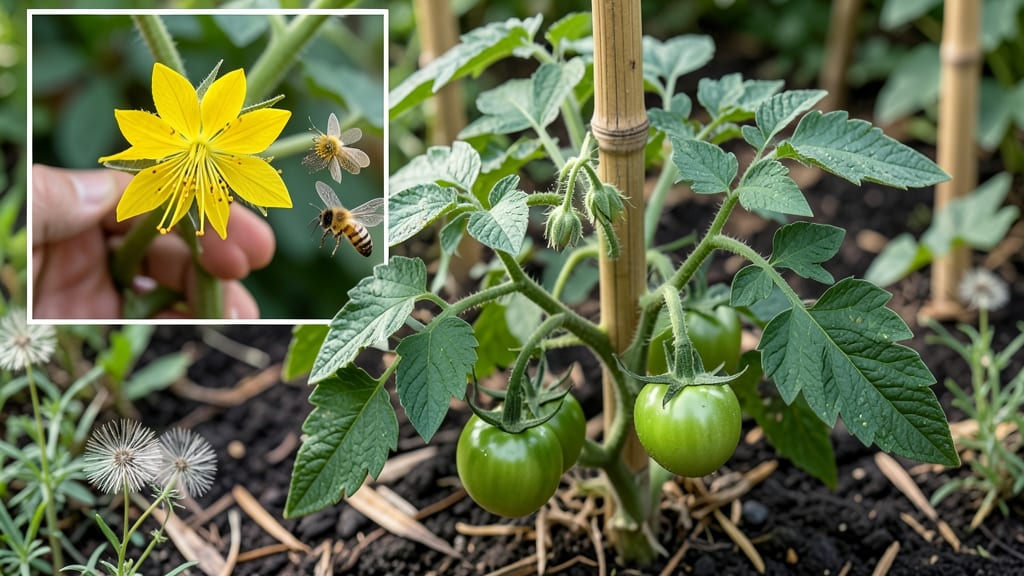
Tomato plants require pollination to develop fruit, as their flowers need pollen transfer between blossoms—whether through self-pollination, wind, bees, or manual help.
Most tomato varieties rely on pollen transfer to form fruit, but the method varies by type. 🌿 Determinate tomatoes (like Roma or Bush Early Girl) often self-pollinate thanks to their compact growth, while indeterminate varieties (such as Cherry or Beefsteak) depend on wind or pollinators like bees.
Without proper pollination, flowers may drop off or fail to develop into fruit—especially in greenhouses or during rainy weather, when natural pollinators are scarce. I've found that giving a gentle shake to plants or using a small paintbrush to transfer pollen can make a huge difference in fruit production.
This process is critical because tomato flowers have both male and female parts, but pollen must physically move from the anthers (male) to the stigma (female) for fertilization. 🌸 The good news?
Even if your garden lacks bees, you can mimic nature's work by hand-pollinating in the early morning when flowers are freshest. Just tap the blossoms lightly or brush them with a soft paintbrush—it’s a simple trick that boosts your harvest significantly.
💡 In This Article
- How Tomato Pollination Works: Self-Fertilizing vs. Hand-Pollinated Varieties
- Best Practices for Ensuring Tomato Fruit Set in Your Garden
How tomato pollination works: self-fertilizing vs. hand-pollinated varieties
Tomato flowers have a unique two-phase reproductive system that explains why pollination is so critical. Each blossom contains both male (anthers) and female (stigma) parts, but they mature at different times—a phenomenon called dichogamy.
The stigma typically opens first, followed by the anthers 24-48 hours later, which prevents self-pollination unless pollen is transferred externally. This timing gap means wind or pollinators must physically move pollen from one flower to another for successful fertilization. 🌸
The difference between determinate and indeterminate varieties comes down to growth habit and flower positioning. Determinate tomatoes (like Roma or Patio varieties) grow in compact bushes with flowers clustered at the top, making self-pollination more likely through gentle plant movement.
Indeterminate types (such as Sungold cherry or Brandywine) grow vine-like with flowers spaced along the stem, relying heavily on bees or wind since their blossoms don't naturally brush against each other.
The pollen grains themselves are sticky and lightweight, measuring about 0.03-0.05 mm in diameter—perfect for wind dispersal but easily disrupted by rain.
What most gardeners don't realize is how temperature affects pollination success. Ideal conditions for natural pollination are 70-85°F with moderate humidity—below 55°F or above 90°F, pollen production slows dramatically. This is why greenhouse-grown tomatoes often need manual help: the controlled environment lacks natural pollinators.
The stigma also has a 24-hour window to receive pollen before it dries out and becomes infertile, which explains why early morning hand-pollination works best when dew keeps the stigma moist. 🌡️
Poor fruit set often stems from environmental stress rather than pollination failure. For example, sudden temperature swings (like nighttime drops below 50°F) can cause blossom drop, where flowers abort before setting fruit.
Similarly, excessive humidity (>85%) creates a hostile environment for pollen tubes to grow down the style to the ovary. This is why determinate varieties sometimes produce fewer fruits than expected—their compact growth limits air circulation, trapping moisture and inhibiting pollination. The solution?
Prune for better airflow and hand-pollinate during dry, sunny mornings.
Here's a quick comparison of how these factors play out in real gardens:
- Determinate varieties: Often self-pollinate due to clustered flowers but may need shaking if humidity is high
- Indeterminate varieties: Require wind/bees or manual pollination; produce more flowers but spread them out over the growing season
- Greenhouse conditions: Always need hand-pollination due to lack of natural pollinators and controlled climates
- Outdoor summer heatwaves: Pollen viability drops below 80°F—morning pollination is critical
The key takeaway is that while some tomatoes are more self-sufficient, all varieties benefit from proper pollination timing and conditions. Even determinate plants may fail to set fruit if environmental stressors interfere with the delicate 24-hour pollen-stigma window. 💡